Breathe Easy: The Ultimate Knoxville Guide to AC Filter Replacement
Key Takeaways:
- Energy Efficiency: A clean filter can reduce AC energy consumption by 5% to 15%.
- The Knoxville Schedule: Change filters every 30–60 days during peak summer/winter; every 90 days in shoulder seasons.
- Prevention: Clogged filters are the leading cause of frozen evaporator coils and system failure.
- Airflow Matters: High-efficiency filters (MERV 13+) improve air quality but may require professional verification to ensure they don’t strain your blower motor.
- Safety Protocol: Always power down your system at the thermostat before removing a filter.
Is Your Knoxville Home Breathing Clean Air?
If you’ve lived in East Tennessee for a single summer, you know the routine: the humidity sets in, the pollen counts soar, and your air conditioner starts working double shifts. But while we focus on the temperature on the thermostat, we often forget about the “lungs” of our home—the air filter.
At Chaffee HVAC, Plumbing, & Electrical, we see it all the time. A homeowner calls us, wondering, “Why is my AC not cooling?” More often than not, the culprit is a simple, inexpensive piece of fabric that hasn’t been touched in months. Knowing how often to change AC filter units isn’t just about chores; it’s about protecting your family’s health and your wallet.
Energy Savings Fact: According to Energy.gov, replacing a clogged filter with a clean one can reduce your air conditioner’s energy consumption by up to 15%.
The “Knoxville Factor” – Why Tennessee Homes are Different
In Knoxville, our HVAC systems battle a specific set of environmental stressors that can clog a filter faster than in other climates:
- The Humidity Trap: Tennessee’s high humidity makes airborne particles “heavy” and sticky. When a filter gets slightly damp, it becomes a magnet for dust and, potentially, mold.
- The Pollen Wave: Knoxville consistently ranks as a top “Allergy Capital.” Your filter is the primary shield against the yellow pollen that permeates our region every spring.
- Historical Dust: Older homes in neighborhoods like Bearden or Fourth & Gill often have original ductwork that can hold decades of dust, putting additional strain on new filters.
Pet Owner Alert! If you have pets that shed, your filter is working twice as hard. Check your filter every 30 days regardless of the “manufacturer’s recommendation” on the box.
The Chaffee Standard: How Often Should You Really Change Your Filter?
While “every 90 days” is the generic advice, Knoxville’s seasonal swings require a more nuanced approach.
Our Recommended Timeline:
- Peak Summer & Winter: Every 30–60 days. When the unit is running 18 hours a day, it processes an immense volume of air.
- Spring & Fall: Every 90 days. During the “shoulder seasons,” your system cycles less frequently.
- Vacation Homes: Every 6 months or per visit.
Signs Your Filter Needs Replacing Right Now:
- The “Light Test”: Hold your filter up to a bright light. If you can’t see the light through the fibers, the air can’t get through either.
- Dusty Surfaces: If you notice a thin layer of dust on furniture just 24 hours after cleaning, your filter is likely “bypassing” or saturated.
- Hot Spots: Restricted airflow often leads to uneven cooling in certain rooms.
Cheap vs. Expensive – Finding the “Sweet Spot”
Homeowners often ask if the $30 filter is worth it compared to the $5 flat fiberglass version.
- Fiberglass (Flat): These are “equipment protection” filters. They keep rocks and big dust bunnies out of your motor, but they do almost nothing for your lungs.
- Pleated (MERV 8-11): The “Sweet Spot.” These provide excellent filtration for pollen and dander without overworking your system.
- High-Efficiency (MERV 13+): Great for severe asthma, but they are very thick. If your system isn’t designed for this “static pressure,” it can actually burn out your blower motor.
Think of a high-MERV filter like a N95 mask. It’s great at filtering, but it’s harder to breathe through. Your HVAC motor feels the same way. Always consult a pro before jumping to the highest filtration level.” — Chaffee Senior Technician
DIY Replacement – Do It Safely
Changing a filter is a simple DIY task, but safety comes first.
Should you turn off the AC when changing the filter?
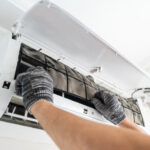
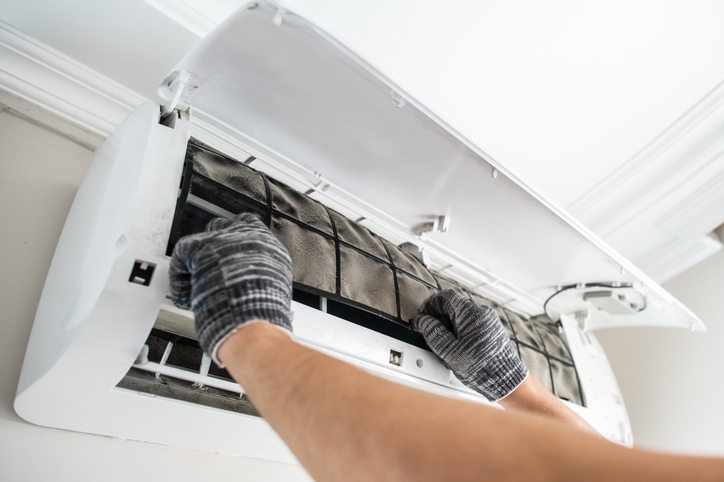
Absolutely. Always turn the system off at the thermostat. If the fan kicks on while the filter is out, it can suck loose debris—or the filter itself—directly into the delicate evaporator coils, leading to a costly air conditioning repair Knoxville visit.
Why Choose Chaffee HVAC, Plumbing, & Electrical?
A filter is just one part of the puzzle. At Chaffee, we provide the deep-level care that keeps Knoxville homes running smoothly.
- Whole-Home Expertise: We are licensed experts in HVAC, Plumbing, and Electrical. We don’t just fix your AC; we ensure your water heater and electrical panel are safe, too.
- Preventative Focus: Our maintenance plans include coil cleanings that go far beyond a simple filter swap.
- Local Roots: We know Knoxville weather because we live in it. We recommend solutions tailored to the Tennessee Valley, not a national script.
Section 6: Safety & Prevention Tips
- Arrow Direction: Always ensure the arrow on the filter frame points toward the unit (the direction of airflow).
- Set a Recurring Reminder: Use your phone to set a “Filter Check” alert for the 1st of every month.
- Never Run “Naked”: Never operate your system without a filter, even for an hour. This can coat your coils in grime that requires professional chemicals to remove.
Protecting Your Knoxville Investment
Your HVAC system is one of the most expensive investments in your home. In our humid climate, a clogged filter is the #1 cause of frozen evaporator coils. When air can’t move over the coils, they drop below freezing and turn into a block of ice. This can lead to water damage and total compressor failure. Regular HVAC maintenance in Knoxville TN is the only way to catch these issues before they become emergencies.
Conclusion
Maintaining your air filter is the simplest, most effective way to lower your bills and breathe cleaner air. But even the best filter can’t replace the eye of a trained professional.
For expert help you can trust, contact Chaffee HVAC, Plumbing, & Electrical in Knoxville today to schedule your seasonal tune-up!
Frequently Asked Questions
How do I know if my AC needs a filter?
Visually inspect it. If it’s gray or you can see “caked” dust, it’s time. Also, listen for your system “whistling”—this is often the sound of a motor struggling to pull air through a clogged filter.
Is it better to buy cheap AC filters?
Not for your health. Cheap fiberglass filters only protect the machine. For cleaner air, choose a pleated filter with a MERV 8 rating.
How much do HVAC filters typically cost?
Standard pleated filters range from $10–$20. While high-efficiency filters cost more, the real “cost” is in energy bills if you let a cheap filter get too dirty.
Should I turn off the AC when replacing the filter?
Yes. This prevents “blow-by” (dust entering the unit) and ensures the fan doesn’t start moving while your hands are near the intake.