The Resilient Healthy Home: Defending Your Investment in East Tennessee

In 2026, the Knoxville real estate and home improvement market will have undergone a fundamental shift. Homeowners are moving away from superficial “Remodeling for Resale” and toward “Investing for Durability.” Our local environmentcharacterized by dense red clay soil and humidity that frequently pushes past 60% is uniquely aggressive toward building materials. To truly defend your property, you must look beyond aesthetics and focus on the systems that govern the “health” of the structure. Central to this mission is the optimization of heating and air in Knoxville, Tennessee, as the gateway to a dry, breathable, and energy-independent sanctuary.
1. The Foundation: Crawlspace Encapsulation & The “Stack Effect.”
Many Knoxville homes are “sandwiched” between a humid attic and a damp crawlspace. Because of a physical phenomenon known as the “stack effect,” air from your crawlspace rises through the floorboards and into your living area. If that air is damp and filled with soil gases, your HVAC system has to work twice as hard to dehumidify your home.
The 2026 Standard
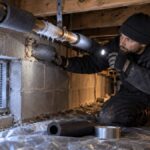
The modern solution is complete crawlspace encapsulation. This involves sealing the ground with a heavy-duty, 20-mil vapor barrier and insulating the foundation walls.
- HVAC Integration: A resilient home pairs encapsulation with a dedicated crawlspace dehumidifier. By controlling moisture at the source, you reduce the latent load on your primary heating and air in Knoxville, Tennessee, allowing the main unit to run more efficiently.
- The Benefit: This setup prevents wood decay fungus and “radon production,” while making your first floor significantly warmer during those unpredictable East Tennessee winters.
2. Energy Resilience: Solar + BESS Integration
As the Tennessee Valley experiences more volatile weather patterns, energy independence has become a top priority. Relying solely on the grid during a spring supercell storm is a risk many are no longer willing to take.
The BESS Advantage
Knoxville is seeing a rapid increase in Battery Energy Storage Systems (BESS). By pairing rooftop solar with batteries, homeowners can ensure their heating and air in Knoxville, Tennessee, remains operational during an outage.
- Critical Loads: Residents are now programming their smart panels to prioritize “critical loads”—keeping the HVAC running in a single zone, powering medical equipment, and maintaining refrigeration.
- Predictable Pricing: Supported by KUB and the Tennessee Valley Authority, these systems allow you to store excess solar energy during the day to power your home at night, effectively “shaving” peak grid prices and lowering your monthly overhead.
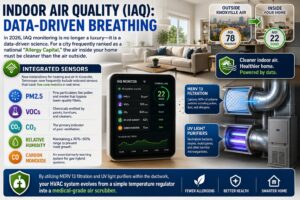
3. Indoor Air Quality (IAQ): Data-Driven Breathing
In 2026, IAQ monitoring is no longer a luxury it is a data-driven science. For a city frequently ranked as a national “Allergy Capital,” the air inside your home must be cleaner than the air outside.
Integrated Sensors
New installations for heating and air in Knoxville, Tennessee, now frequently include onboard sensors that track five core metrics in real-time:
- PM2.5: Fine particulates like pollen and smoke that bypass lower-quality filters.
- VOCs: Chemicals emitted by paints, furniture, and cleaners.
- CO2: The primary indicator of poor ventilation.
- Relative Humidity: Maintaining a 30%–50% range to prevent mold growth.
- Carbon Monoxide: An essential early-warning system for gas-hybrid systems.
By utilizing MERV 13 filtration and UV light purifiers within the ductwork, your HVAC system evolves from a simple temperature regulator into a medical-grade air scrubber.
4. Smart Water & Leak Detection: The Circular Economy
The “take, use, dispose” model of water is giving way to circular economy principles in the 379xx area codes. In Knoxville, this means smarter operations and protecting the home from the inside out.
Early Detection AI
AI-driven sensors and remote monitoring have moved into the mainstream. These systems find anomalies in your water flow detecting a pinhole leak behind a wall before it causes catastrophic structural rot or feeds a mold colony.
- Water Reuse: There is a growing trend toward selective water recovery for irrigation or cooling, improving home resilience during dry Tennessee autumns.
5. Financial Strategy for a Resilient Home
Building a healthy home is an investment, but in 2026, the financial path is paved with incentives.
When looking for heating and air in Knoxville, Tennessee, always verify that your contractor is part of the TVA Quality Contractor Network (QCN). This ensures that your “Resilient Home” upgrades are eligible for all available local and federal funds.
The 2026 Value Proposition
A resilient home in Knoxville is “dry, clean, and thermally controlled.” By investing in crawlspace encapsulation, BESS energy storage, and advanced IAQ monitoring, you are doing more than just maintaining a house—you are protecting your family’s health and your property’s long-term structural integrity.
Are you ready to turn your home into a fortress against the East Tennessee elements?
For expert help you can trust, contact Chaffee HVAC, Plumbing, & Electrical in Knoxville today to schedule your no-obligation electrical safety inspection.
Frequently Asked Questions
What does "Investing for Durability" mean for Knoxville homeowners?
The local housing market has undergone a fundamental shift away from superficial cosmetic remodeling. Because the East Tennessee environment features dense red clay soil and a regional climate where humidity routinely climbs past 60%, building materials face aggressive and constant wear. Homeowners protect their real estate investments by prioritizing long-term structural defense, focusing directly on foundational systems like moisture control, power resilience, and high-performance heating and air conditioning.
What is the physical phenomenon known as the "stack effect," and how does it strain residential HVAC systems?
The “stack effect” is a physical phenomenon where air from a damp crawlspace naturally rises through the floorboards and enters the main living areas of a home. In Knoxville’s humid environment, this rising air introduces excess moisture and harmful soil gases into the structure. This forces the primary heating and air conditioning system to run longer cycles and work twice as hard to dehumidify the interior spaces, accelerating mechanical wear.
What is the standard for a complete crawlspace encapsulation?
To permanently block the stack effect, the modern engineering standard requires completely isolating the home’s foundation from the surrounding ground. This comprehensive process includes:
- Sealing the raw earth with a heavy-duty, 20-mil vapor barrier.
- Heavily insulating the perimeter foundation walls.
- Integrating a dedicated crawlspace dehumidifier directly at the source to manage the baseline moisture load before it migrates upward.
What are the structural and health benefits of encapsulating a crawlspace?
By controlling moisture levels directly under the house, crawlspace encapsulation delivers multiple critical protections:
- It actively prevents wood decay fungus from damaging structural floor joists.
- It mitigates radon production and blocks toxic soil gases from infiltrating the living space.
- It drastically lowers the latent cooling load on your main HVAC unit, improving overall energy efficiency.
- It leaves your home’s first floor significantly warmer during unpredictable and volatile East Tennessee winters.
How do Battery Energy Storage Systems (BESS) pair with solar arrays to build energy resilience?
With the Tennessee Valley experiencing increasingly volatile weather patterns, including destructive spring supercell storms, homeowners rely on Battery Energy Storage Systems (BESS) for energy independence. A BESS captures and stores excess solar power generated during the day. If a severe storm knocks out the local power grid, the system automatically kicks in, keeping your heating and air infrastructure fully operational during an outage.
What are "critical loads," and how are they managed through a smart electrical panel?
When the power grid goes down, a residential battery system cannot typically run an entire house indefinitely. Homeowners use smart electrical panels to program and prioritize “critical loads.” During an outage, the system automatically redirects stored battery power exclusively to essential zones and devices, such as:
- Maintaining HVAC functionality in a single, designated thermal safety zone.
- Powering vital household medical equipment.
- Keeping kitchen refrigeration operational to prevent food spoilage
What five indoor air quality (IAQ) metrics do modern Knoxville HVAC sensors track in real-time?
Because Knoxville is frequently ranked as a national “Allergy Capital,” modern heating and air conditioning installations feature onboard, data-driven sensors that continuously monitor five core health indicators:
- PM2.5: Microscopic fine particulates like pollen, dust, and smoke.
- VOCs: Volatile organic compounds emitted by synthetic household cleaners, fresh paint, and manufactured furniture.
- CO2: Carbon dioxide levels, which serve as the primary indicator of stagnant, poor home ventilation.
- Relative Humidity: Tracked strictly to maintain a safe 30% to 50% range that halts mold growth.
- Carbon Monoxide: A critical early-warning safety monitoring metric required for gas-hybrid heating systems.
How does a standard HVAC system evolve into a "medical-grade air scrubber"?
To combat severe regional allergens and environmental contaminants, standard air handlers are upgraded with advanced filtration components integrated directly inside the ductwork. By pairing a high-density MERV 13 air filter with specialized UV light purifiers, the system shifts from a simple temperature regulator into an active air purification unit capable of trapping and neutralizing microscopic spores, pollen, and airborne bacteria.
How does AI-driven leak detection protect a property and support a circular water economy?
In local area codes, homeowners protect their investments using smart, AI-driven sensors and remote monitoring devices. These systems continuously audit the home’s plumbing footprint to detect microscopic pinhole leaks hidden inside walls before they cause catastrophic structural wood rot or fuel toxic mold colonies. Additionally, these systems pair with modern water recovery setups, allowing homeowners to recycle select graywater safely for yard irrigation or auxiliary system cooling during dry autumn months.
How do homeowners qualify for local and federal financial incentives on home durability upgrades?
Pro Financial Strategy: When scheduling home durability or HVAC upgrades, always verify that your selected contractor is a verified member of the TVA Quality Contractor Network (QCN).
Working with a QCN-certified professional is a mandatory prerequisite enforced by local utilities like KUB and the Tennessee Valley Authority. It is the only way to ensure your structural upgrades, solar integrations, and high-efficiency heating and air modifications successfully qualify for all available local rebates, EnergyRight funds, and federal financial incentives.