(865)-247-8888
Water Heater Problems: Common Warning Signs, Repairs, and Maintenance Tips Homeowners Should Know
Introduction
Few things disrupt a home routine faster than stepping into a cold shower when you expect hot water.
Your water heater works quietly behind the scenes every day, providing the comfort and convenience your household depends on. From morning showers and washing dishes to laundry and cleaning, a properly working water heater is easy to overlook until something goes wrong.
Many homeowners assume a water heater failure happens suddenly. In reality, most water heater problems develop over time. Small changes, such as longer heating times, strange noises, rusty-colored water, or minor leaks, often appear before a major breakdown.
The challenge is knowing which signs are harmless and which ones require professional attention.
Understanding how your water heater works, recognizing common warning signs, and keeping up with routine maintenance can help prevent unexpected failures, reduce repair costs, and protect your home from water damage.
This guide explains the most common water heater issues homeowners experience, what causes them, and how to determine whether your system needs repair, maintenance, or replacement.
Keypoints
- Most water heater problems develop gradually and provide warning signs before complete system failure.
- No hot water, unusual noises, leaks, and inconsistent temperatures are common indicators that your system needs attention.
- Regular water heater maintenance helps prevent sediment buildup, improve efficiency, and extend equipment life.
- Repair is not always the best option age, condition, and repair costs should all be considered when deciding whether to replace a unit.
- Professional inspections help identify hidden issues before they lead to water damage or emergency repairs.
How Does a Water Heater Work and What Causes Problems?
Before troubleshooting water heater problems, it helps to understand how the system operates.
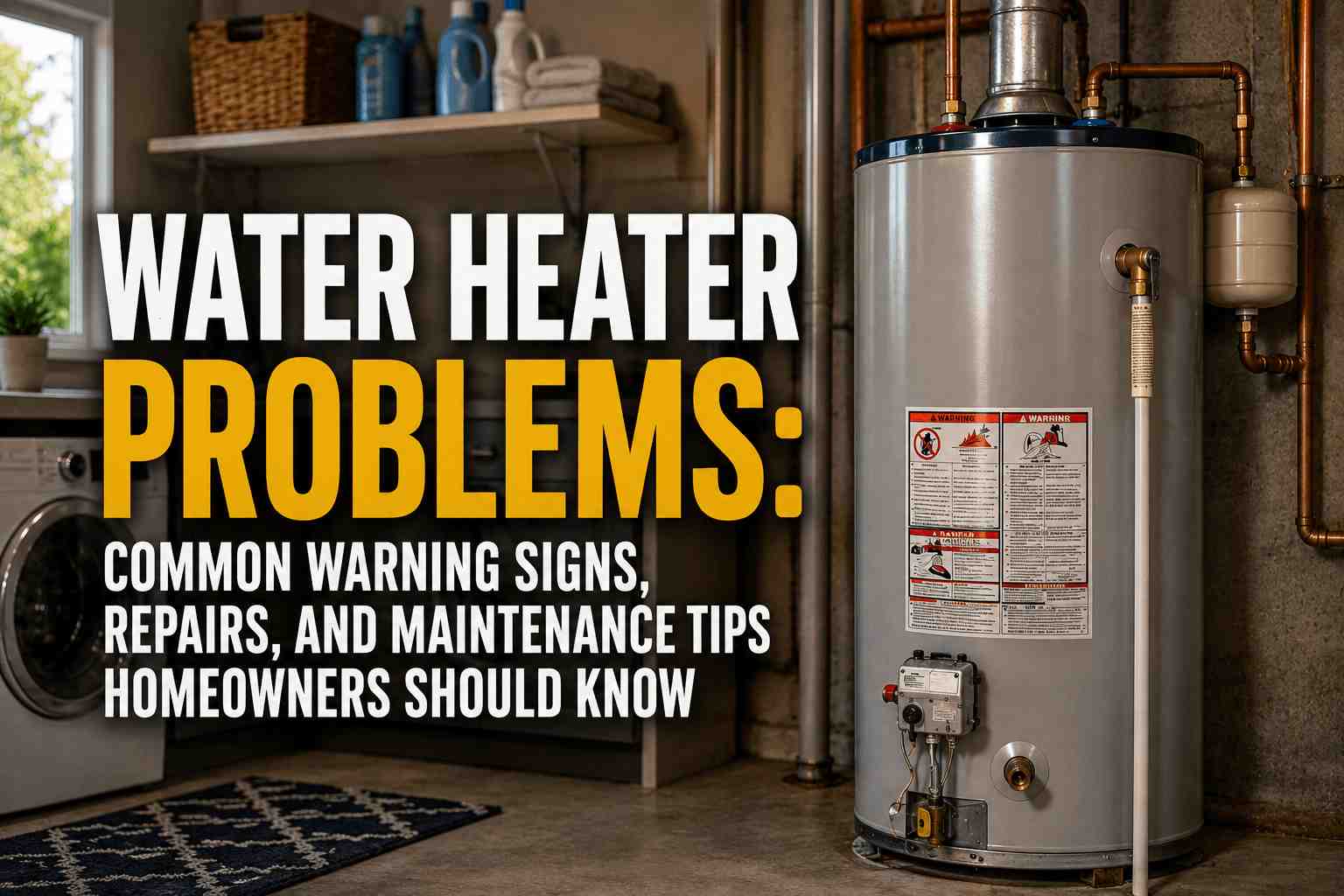
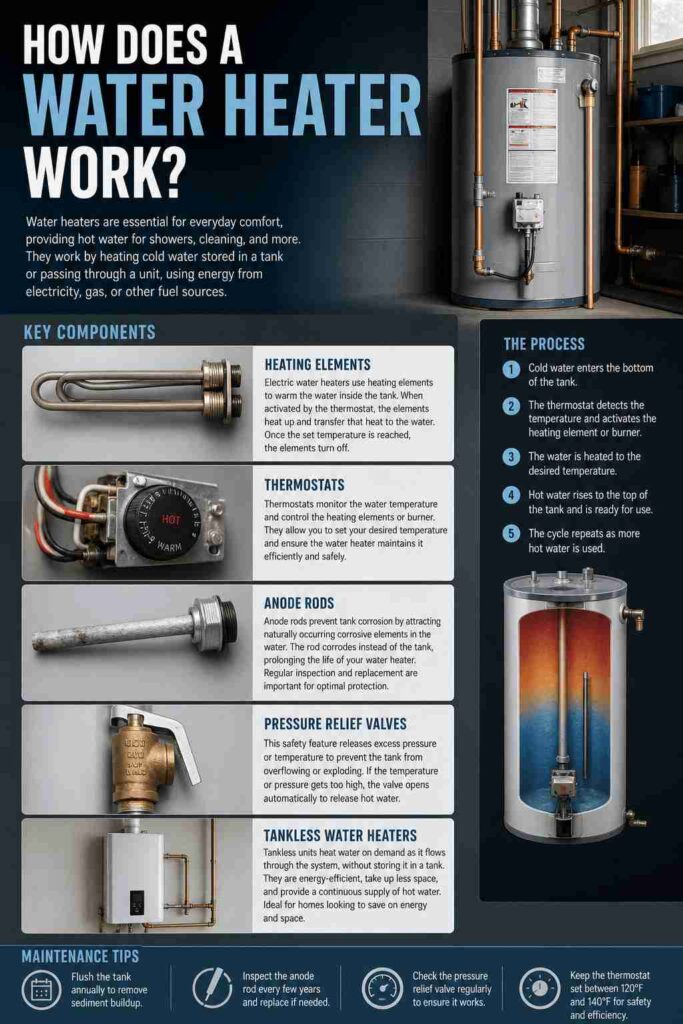
A traditional tank water heater stores and heats a supply of water inside an insulated tank. When you turn on a faucet or shower, hot water leaves the tank and travels through your plumbing system.
Several components work together to keep the system operating safely and efficiently:
- Heating element or burner: Provides the heat needed to warm the water.
- Thermostat: Controls water temperature and signals when heating is needed.
- Anode rod: Helps protect the tank from corrosion.
- Pressure relief valve: Releases excess pressure to improve safety.
- Drain valve: Allows water and sediment to be removed during maintenance.
Tankless water heaters operate differently. Instead of storing heated water, they warm water only when it is needed. This can improve efficiency and save space, but proper sizing and installation are important to ensure the system can keep up with household demand.
Because water heaters involve heat, electricity or gas, and water pressure, even small component problems can affect performance and safety.
What Are the Most Common Water Heater Problems?
One of the most common mistakes homeowners make is waiting until their water heater completely stops working before addressing a problem.
During inspections, plumbing professionals often find that a system has been showing warning signs for months. Recognizing these signs early can help prevent larger repairs.
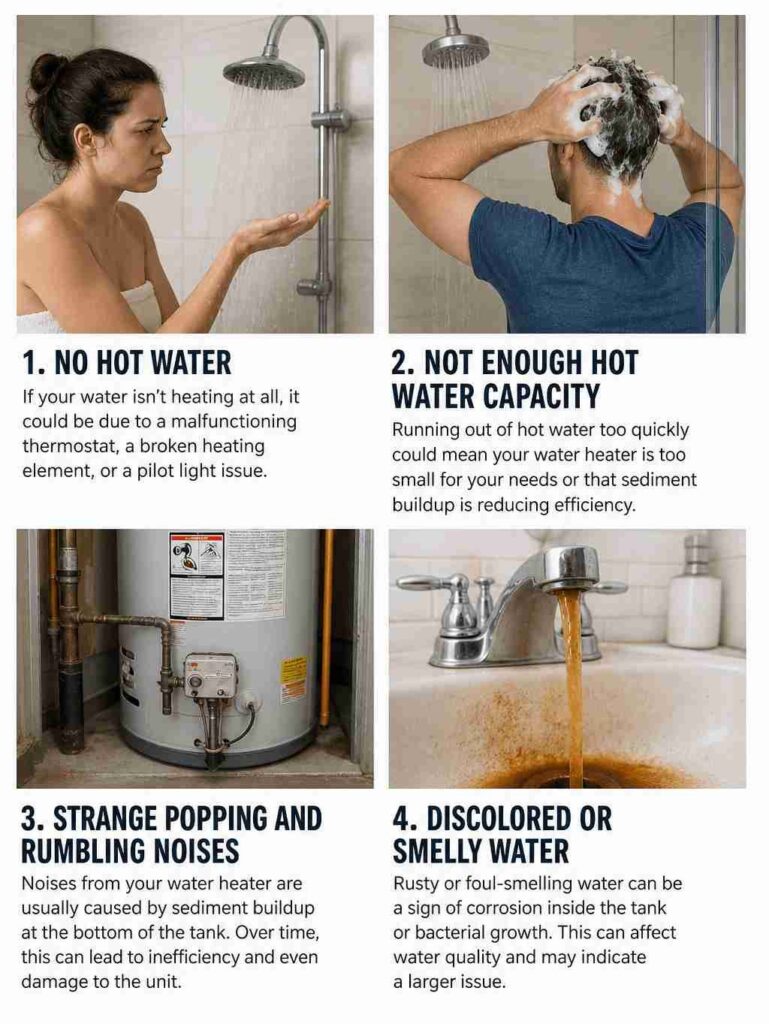
No Hot Water
A complete loss of hot water is one of the clearest signs something is wrong with your system.
Common causes include:
- Failed heating elements
- Faulty thermostats
- Electrical problems
- Gas supply issues
- Pilot light problems on gas-powered units
For example, an electric water heater may stop producing hot water because one of the heating elements has failed. A gas water heater may have issues with the burner assembly or fuel supply.
A proper diagnosis helps determine whether the problem requires a simple repair or whether the unit is approaching the end of its service life.
Not Enough Hot Water
Some homeowners still have hot water but notice that it runs out much faster than it used to.
This problem is often caused by:
- A water heater that is too small for household demand
- Sediment buildup reducing available tank space
- Aging heating components
- Incorrect temperature settings
A common example is a family that adds new household members or begins using more hot water appliances. A system that once worked well may no longer provide enough capacity.
In some cases, maintenance or repairs can solve the issue. In others, upgrading to a properly sized unit may be the better long-term solution.
Strange Noises Coming From the Water Heater
A water heater should operate quietly. Popping, rumbling, or banging sounds often indicate that something inside the system needs attention.
One of the most common causes is sediment buildup.
Minerals naturally found in the water supply can settle at the bottom of the tank over time. When the heating element or burner heats through that buildup, it can create the popping sounds many homeowners notice.
Beyond being annoying, sediment can reduce efficiency and force the system to work harder.
Discolored or Smelly Hot Water
Hot water should be clear and odor-free. Changes in appearance or smell may indicate a developing problem.
Possible causes include:
- Corrosion inside the tank
- A worn-out anode rod
- Bacteria buildup
- Water quality issues
The anode rod is designed to protect the inside of the tank from corrosion. As it wears down, the tank becomes more vulnerable to rust and deterioration.
If you notice rusty water or unusual odors, an inspection can help determine whether a component replacement can solve the problem or whether the system is nearing replacement.
Why Is My Water Heater Leaking?
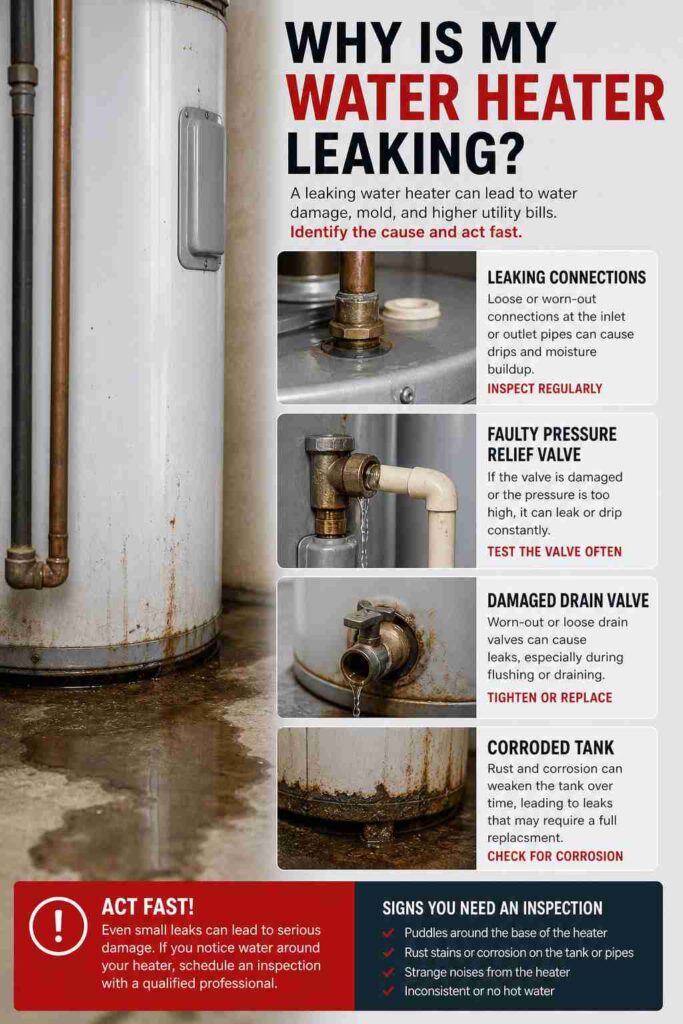
A leaking water heater is a problem that should never be ignored.
Even a small leak can eventually damage flooring, drywall, cabinets, and nearby belongings. The location of the leak often provides important clues about the cause.
Leaking Connections or Pipes
Water around the top of the unit may come from loose fittings, worn connections, or damaged plumbing lines.
These issues are often repairable when addressed early.
Faulty Pressure Relief Valve
The pressure relief valve is an important safety feature that releases excess pressure inside the tank.
If the valve becomes damaged or fails, it may leak continuously. Because this component helps protect the system from dangerous pressure buildup, it should be inspected rather than ignored.
Damaged Drain Valve
The drain valve at the bottom of the tank can wear out over time.
A leaking drain valve may cause dripping around the base of the unit and can often be repaired or replaced.
Corroded Tank
If water is leaking directly from the tank itself, the issue is usually more serious.
Once the storage tank develops internal corrosion, repairs are rarely a reliable solution. Replacement is typically the safest option because the tank cannot be restored once it begins failing.
If you discover water around your water heater, shut off the system if it is safe to do so and schedule an inspection as soon as possible.
How Often Should a Water Heater Be Maintained?
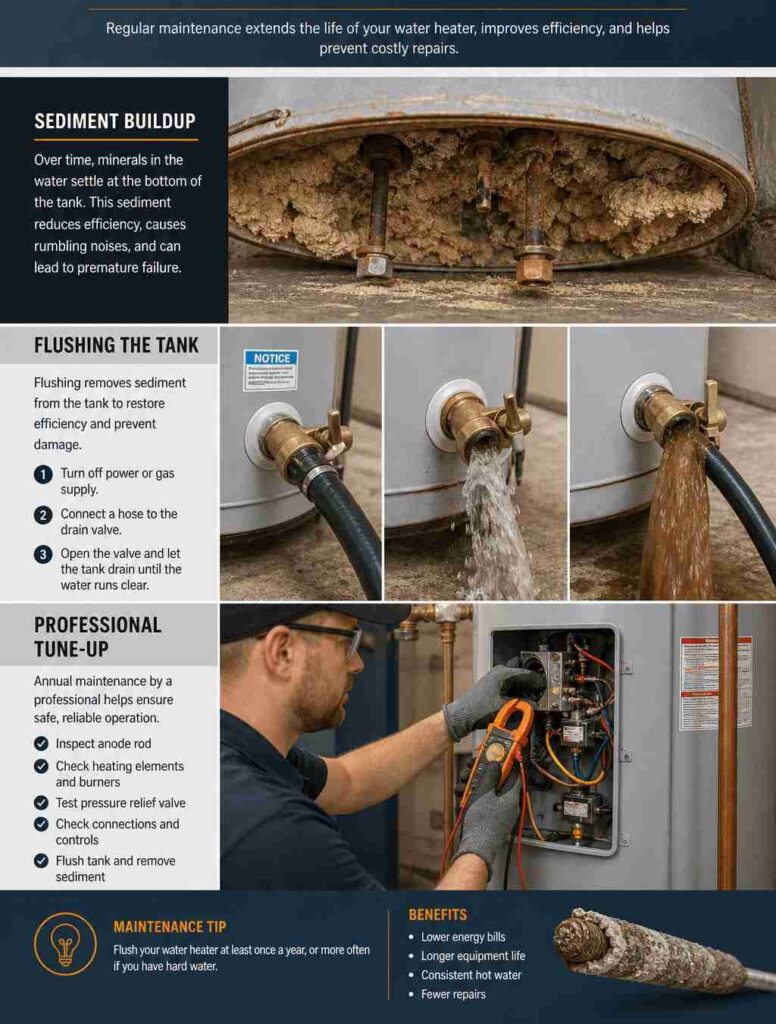
Routine maintenance is one of the best ways to protect your water heater investment.
A properly maintained system can operate more efficiently, experience fewer unexpected failures, and provide more consistent hot water.
During a typical water heater maintenance visit, professionals may check:
- Tank condition
- Plumbing connections
- Safety controls
- Temperature settings
- Sediment buildup
- Anode rod condition
Homes with hard water may require additional attention because minerals can accumulate faster inside the tank.
Regular maintenance is especially valuable because many serious water heater problems begin as small issues that homeowners do not notice.
What Causes Sediment Buildup in a Water Heater?
Sediment buildup occurs when minerals from the water supply settle at the bottom of the tank.
Over time, this buildup can interfere with normal operation and lead to:
- Reduced heating efficiency
- Longer recovery times
- Higher energy use
- Loud operating noises
- Less available hot water
Homeowners in areas with mineral-heavy water supplies may experience these problems more frequently.
Regular flushing and professional maintenance can help remove buildup before it causes major performance issues.
How Long Does a Water Heater Last?
The average lifespan of a water heater depends on several factors, including:
- Equipment type
- Water quality
- Maintenance history
- Installation quality
- Household usage
Traditional tank water heaters can provide many years of service when properly maintained. Tankless systems often have longer service lives because they do not continuously store heated water.
However, age alone does not determine whether a unit should be replaced.
A well-maintained older water heater may continue working reliably, while a neglected newer unit may develop problems sooner.
Signs your water heater may be approaching replacement include:
- Frequent repairs
- Rust or corrosion
- Leaking from the tank
- Reduced hot water performance
- Rising operating costs
Replacing an aging system before a major failure can help prevent emergencies and unexpected water damage.
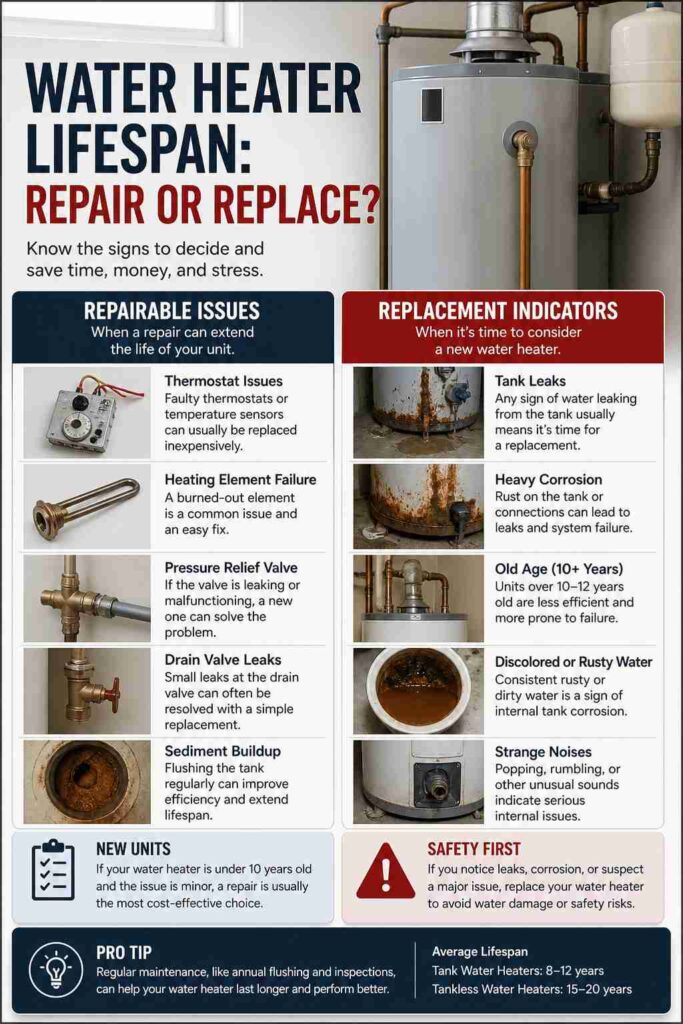
Should I Repair or Replace My Water Heater?
When a water heater develops problems, homeowners often ask whether repairing the unit is worthwhile.
The answer depends on the condition of the system.
Repair may be a good option when:
- The unit is relatively new
- The issue involves a replaceable component
- Repair costs are reasonable
Replacement may be the better choice when:
- The tank is leaking
- The system is older
- Repairs are becoming frequent
- The unit no longer meets household needs
A technician can evaluate the system’s condition and help determine whether repairing the current unit or investing in a replacement makes more sense.
What Size Water Heater Does My Home Need?
Choosing the correct water heater size is important for comfort and efficiency.
A properly sized system depends on:
- Number of people in the household
- Number of bathrooms
- Daily hot water usage
- Appliances that use hot water
An undersized water heater may struggle during busy times, while an oversized system may use more energy than necessary.
A professional assessment can help determine the right capacity for your household.
Are Tankless Water Heaters Better Than Traditional Water Heaters?
There is no single water heater option that works best for every home.
The right choice depends on your household’s needs, budget, and long-term goals.
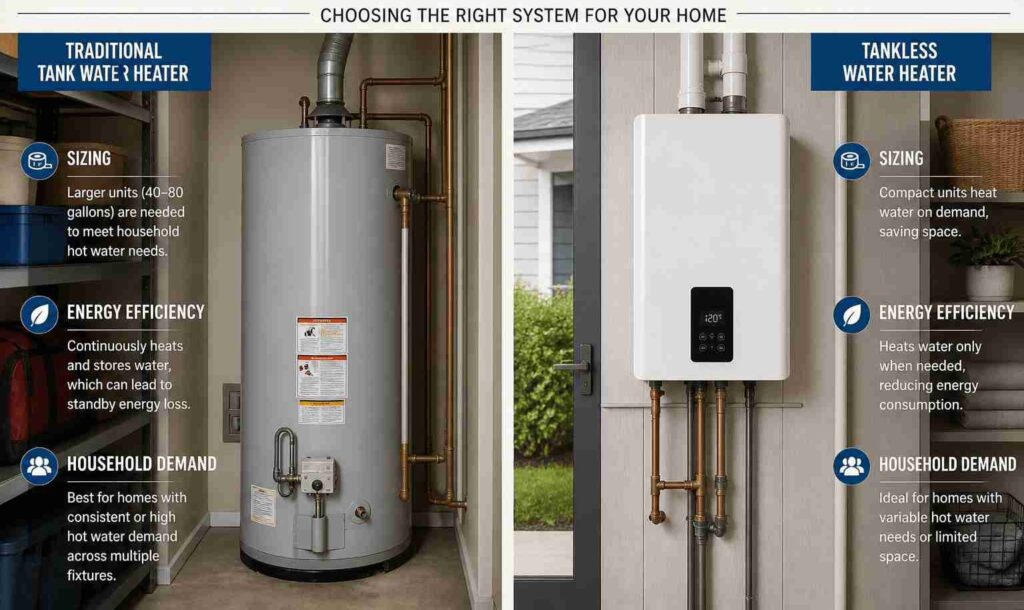
Traditional Tank Water Heaters
Benefits include:
- Lower upfront cost
- Simple operation
- Reliable hot water storage
- Familiar technology
Tankless Water Heaters
Benefits include:
- On-demand heating
- Reduced standby energy loss
- Space savings
- Longer potential lifespan
Tankless systems can be an excellent choice for homeowners looking for efficiency and flexibility, but installation requirements should be evaluated before making a decision.
Real Examples of Water Heater Problems
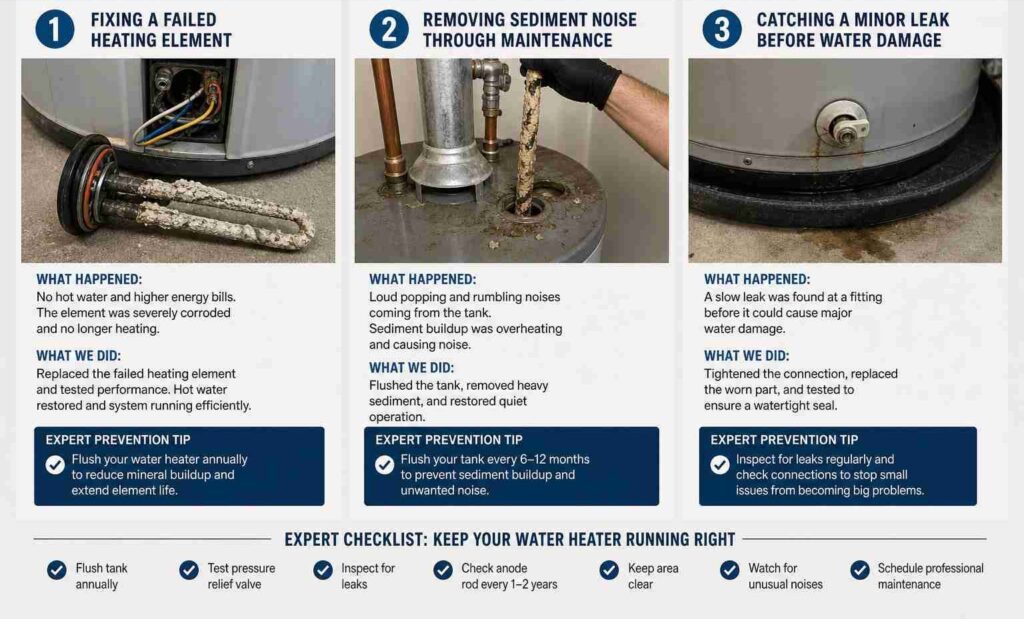
Example 1: A Family Suddenly Loses Hot Water
A homeowner notices that showers become cold after only a few minutes.
During inspection, the issue is traced to a failing heating component. Because the tank itself is still in good condition, replacing the damaged part restores normal operation.
Example 2: Loud Noises Are Ignored
A homeowner hears popping sounds from the water heater but assumes they are normal.
Over time, sediment buildup reduces efficiency and places additional stress on the system. Maintenance helps remove the buildup and improves performance.
Example 3: A Small Leak Becomes Water Damage
A homeowner notices a small puddle near the water heater but delays service.
Eventually, the leak worsens and damages nearby flooring. Addressing the issue early could have prevented a much larger repair.
Expert Tips for Preventing Water Heater Problems
Homeowners can extend the life of their water heater by following a few simple practices:
- Schedule regular professional inspections.
- Pay attention to unusual noises or changes in performance.
- Address leaks immediately.
- Keep the temperature set appropriately.
- Flush sediment buildup when needed.
- Know the age and condition of your system.
- Consider replacement before repeated failures occur.
The goal is not simply to avoid repairs, it is to keep your home’s hot water system safe, efficient, and dependable.
Conclusion
Your water heater plays an important role in your home’s comfort, but it is easy to overlook until something goes wrong. A sudden loss of hot water, a leaking tank, or unusual noises can quickly disrupt your daily routine and may lead to larger problems if left unaddressed.
The good news is that many water heater issues can be prevented or resolved when warning signs are caught early. Regular maintenance, timely repairs, and professional inspections can help improve efficiency, extend equipment life, and protect your home from unexpected water damage.
At Chaffee HVAC, Plumbing, Electrical, we understand how important reliable hot water is for your household. Our experienced technicians provide professional water heater services, including inspections, repairs, maintenance, and replacement, to help homeowners keep their systems operating safely and efficiently.
Whether you are dealing with inconsistent hot water, strange sounds, leaks, or an aging unit that needs evaluation, our team can help you understand the problem and determine the best solution for your home.
Contact Chaffee HVAC, Plumbing, Electrical today to schedule your water heater service and get dependable hot water back in your home.
For expert help you can trust, contact Chaffee HVAC, Plumbing, & Electrical in Knoxville today to schedule your no-obligation electrical safety inspection.
Frequently Asked Questions
How do I know if my water heater is failing?
Common signs include no hot water, inconsistent temperatures, unusual noises, leaks, rusty water, and rising energy costs. Catching these warning signs early can help prevent a complete system failure.
How long does a water heater usually last?
A water heater’s lifespan depends on the type of unit, maintenance schedule, water quality, and household usage. Regular maintenance can help extend how long the system operates efficiently.
Why does my water heater make popping sounds?
Popping sounds are usually caused by sediment buildup inside the tank. As minerals collect at the bottom, the system must work harder to heat the water, creating noise during operation.
Can a leaking water heater be repaired?
Some leaks caused by loose connections, faulty valves, or damaged fittings may be repaired. However, a leaking storage tank usually means the unit has reached the end of its usable life.
How often should I flush my water heater?
The recommended schedule depends on water quality and system usage. Homes with hard water may need more frequent flushing to reduce mineral buildup.
Why does my hot water run out quickly?
This may happen because of sediment buildup, increased household demand, an undersized unit, or failing components. A professional inspection can determine the exact cause.
Is a tankless water heater more efficient?
Tankless water heaters can improve efficiency because they heat water only when needed. However, the best choice depends on your household’s hot water usage and installation requirements.
What are signs that I need a new water heater?
Frequent repairs, tank leaks, corrosion, inconsistent performance, and increasing energy costs may indicate replacement is needed. A professional evaluation can help confirm whether replacement is the right option.
What should I do if my water heater suddenly starts leaking?
Turn off the water supply if it is safe to do so and shut off power or gas if you can safely access the controls. Contact a professional quickly to prevent further damage.
Is it worth repairing an older water heater?
It depends on the unit’s condition, age, and repair cost. If the tank is still in good shape and the issue is minor, repair may make sense, but frequent failures often indicate replacement is the better long-term choice.

Contact Us
Chaffee HVAC, Plumbing, & Electrical
5725 Ball Camp Pike
Knoxville, TN 37921
865-247-8888 – Cooling/Heating
865-602-3552 – Plumbing
office@coolingheatingplumbing.com
About Us
Your local HVAC company, Chaffee, bring decades of experience to our work. What this means to you as a customer is that you can expect to receive the highest-quality professional service, regardless of your needs.