(865)-247-8888
Fall in Knoxville: When to Switch From AC to Heat (and How to Get Your System Ready)
Keypoints
- There’s no calendar date for switching from AC to heat in Knoxville. Watch your overnight lows instead.
- A quick checklist covering your filter, thermostat, outdoor unit, and detectors heads off most early fall service calls.
- A little dusty smell or a short delay the first time your heat runs is normal. A smell that lingers or a system that won’t start isn’t.
- Heat pumps and mini-split systems don’t switch fuel the way a furnace does, and it’s worth knowing the difference before the first cold night.
Introduction
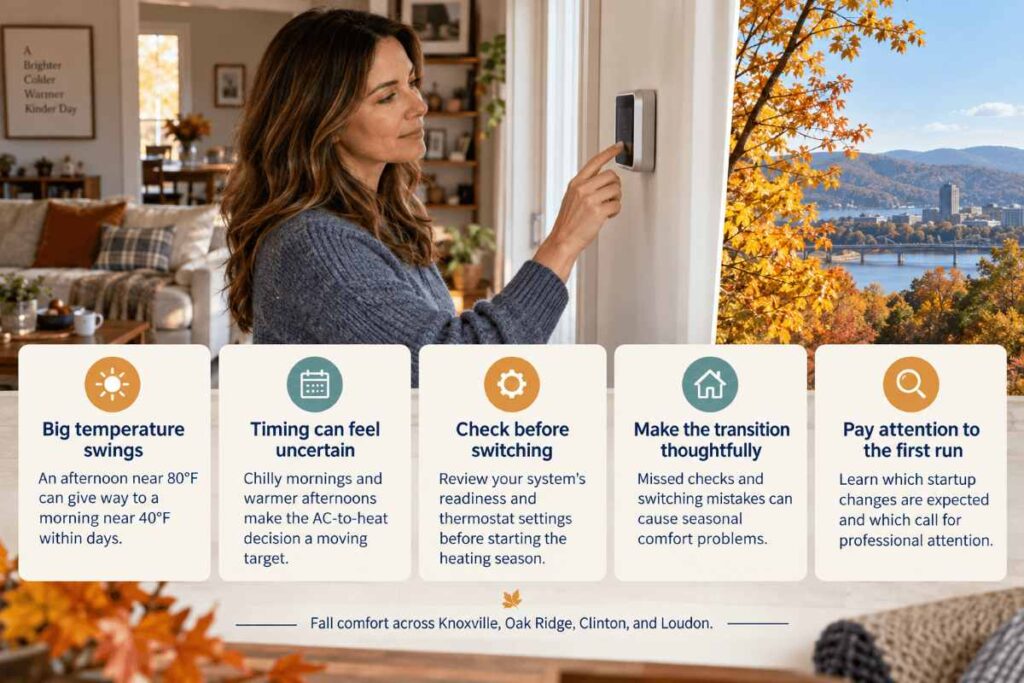
It happens every fall, right around the third chilly morning in a row: you wake up, the house feels off, and you’re standing at the thermostat wondering if this is finally the week. Fair question. East Tennessee doesn’t do seasons cleanly. One afternoon you’re pushing 80 degrees, and a few days later you’re waking up to 40, so the choice between AC and heat gets made on the fly.
After enough fall service calls across Knoxville, Oak Ridge, Clinton, and Loudon, one pattern shows up every single year, and it’s rarely a broken system. It’s someone switching from AC to heat the wrong way, or skipping a check they didn’t know mattered.
Here’s how to know it’s actually time, what to look at before you touch the thermostat, how to make the switch without a headache, and which quirks are nothing to worry about the first time your system runs.
How Do You Know It’s Time to Switch From AC to Heat in Knoxville?
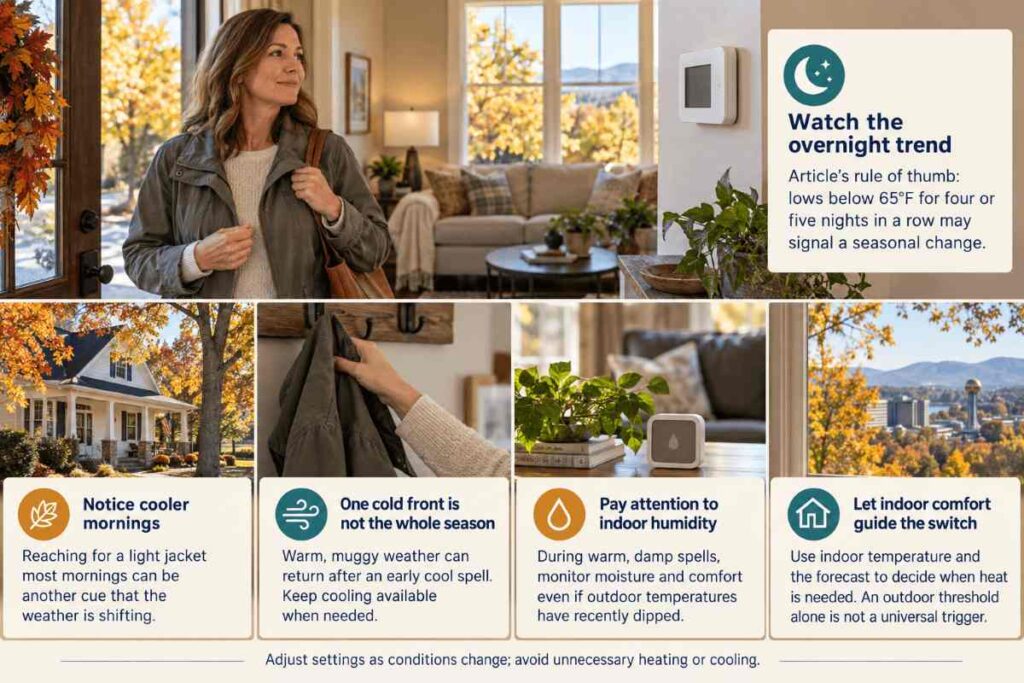
The short version: once your overnight lows are consistently sitting under 65 degrees for four or five nights in a row, it’s safe to switch from AC to heat. You don’t need the calendar for this one. If you’re reaching for a light jacket on your way to the car most mornings that week, that’s usually the same signal showing up in plain terms.
Jump the gun, and you’ll usually regret it. Shut the AC off after the first cold front, and when warm, muggy weather rolls back through a few days later, you’re left with a house that isn’t being conditioned either way. That’s exactly the setup for musty smells and mold creeping into bathrooms and closets. Wait too long, on the other hand, and you’ll end up running cooling and heating back-to-back in the same week, which just burns money.
What Should You Check Before Turning the Heat On for the First Time?
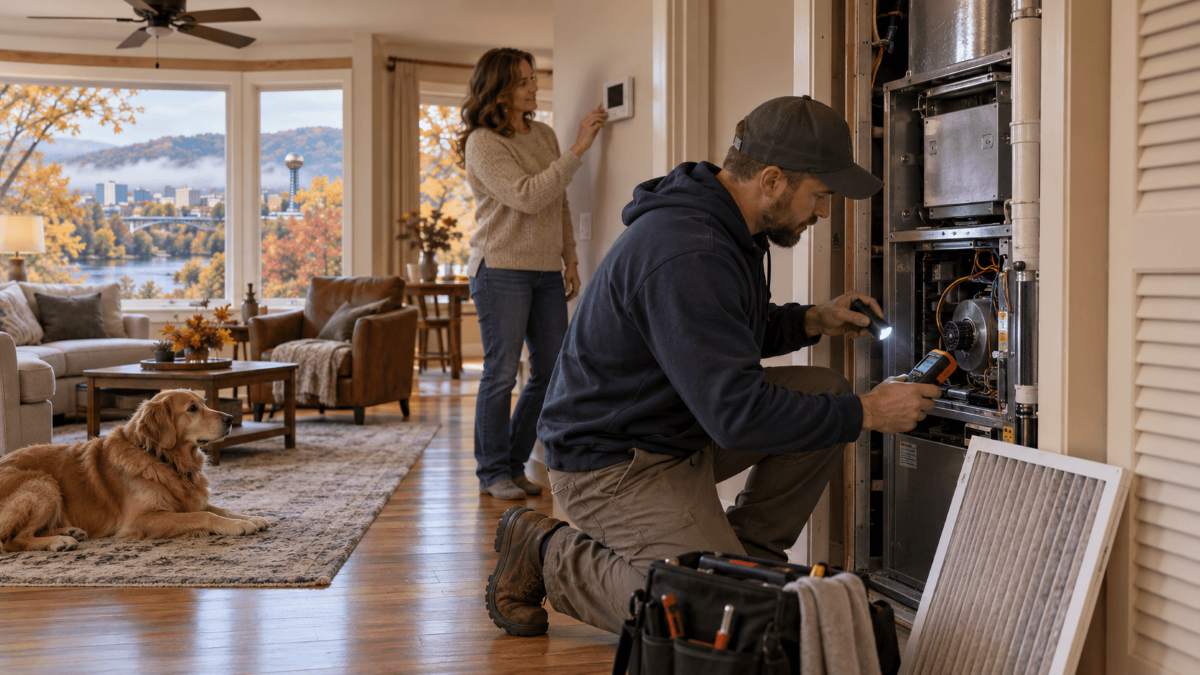
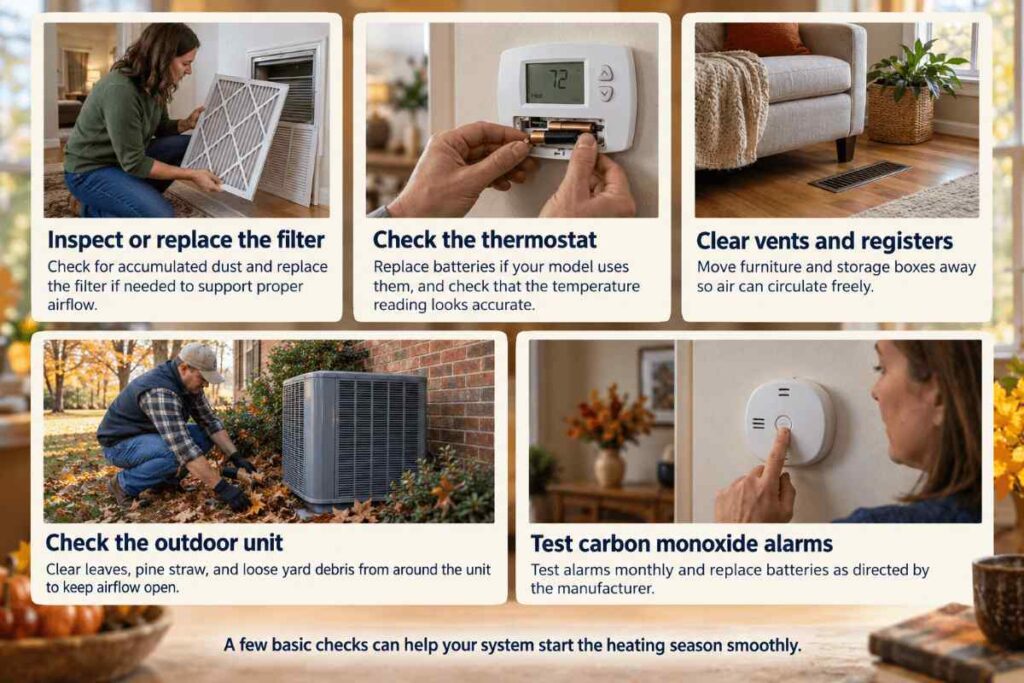
Once you’ve made the call, run through this fall HVAC checklist before touching the thermostat. It takes five minutes and usually prevents a same-week service call.
- Swap or inspect the filter. One that’s been sitting since spring is, hands down, the most common reason a system underperforms on its first run.
- Check the thermostat. Fresh batteries if it’s not hardwired, and a glance to confirm it’s actually reading the temperature correctly.
- Clear the vents and registers. Furniture and storage boxes have a way of migrating onto them over the summer.
- Walk around the outdoor unit. Leaves, pine straw, and yard debris pile up all season and can restrict airflow once the system kicks back on.
- Test the carbon monoxide detectors. Fresh batteries now beat finding out they’re dead in December. The CDC recommends testing CO alarms monthly, no matter the season (cdc.gov).
How Do You Actually Switch Your Thermostat and System From Cooling to Heating?
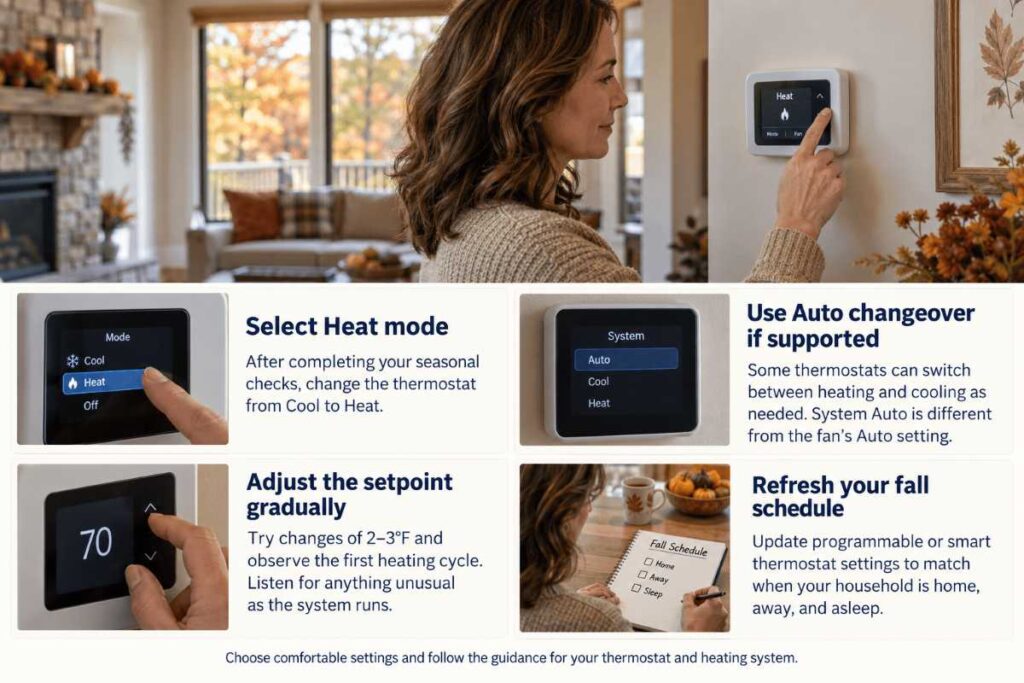
Once that list is done, the actual switch takes less time than the checklist did. For most homes, it’s as simple as flipping the thermostat from Cool to Heat, or to Auto if you’d rather let the system decide day to day, which tends to work well during Knoxville’s unpredictable shoulder season weather.
One trick worth using: move the setpoint up in small steps, two or three degrees at a time, instead of jumping straight to 68 in one go. It eases the system into that first run, and it also gives you a chance to catch anything that sounds off before you’ve committed to a bigger swing. Energy Star notes that adjusting your thermostat back several degrees for part of the day can save as much as 10 percent a year on heating and cooling costs (energystar.gov).
If you’re on a programmable or smart thermostat, this is also a good moment to update the fall schedule. The setback times that made sense for summer cooling, home in the evening and away during the day, rarely line up with how a household actually uses heat.
What’s Normal (and What’s Not) the First Time You Turn the Heat On?
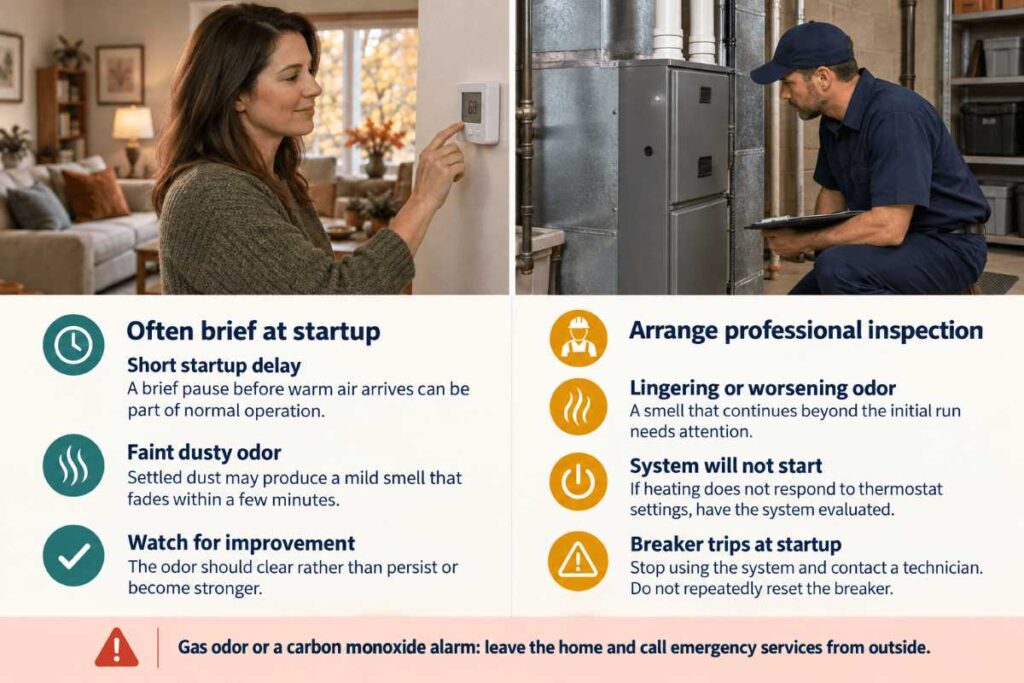
Don’t panic if there’s a short delay or a faint dusty smell the first few minutes it runs. That’s just dust that settled on the heat exchanger or coils over the summer, and it burns off as the system heats up for the first time, clearing on its own within a few minutes, every time.
What’s worth paying attention to is different. A smell that lingers well past that first run, a system that won’t start no matter what the thermostat says, or a breaker that trips the moment it kicks on usually means an electrical connection or safety switch is catching a real problem. That’s a job for a technician, not a wait-and-see approach. We’ll cover the full troubleshooting checklist, including furnace-specific warning signs, in next month’s guide.
Does the Transition Look Different for a Heat Pump or a Mini Split System Than a Furnace?
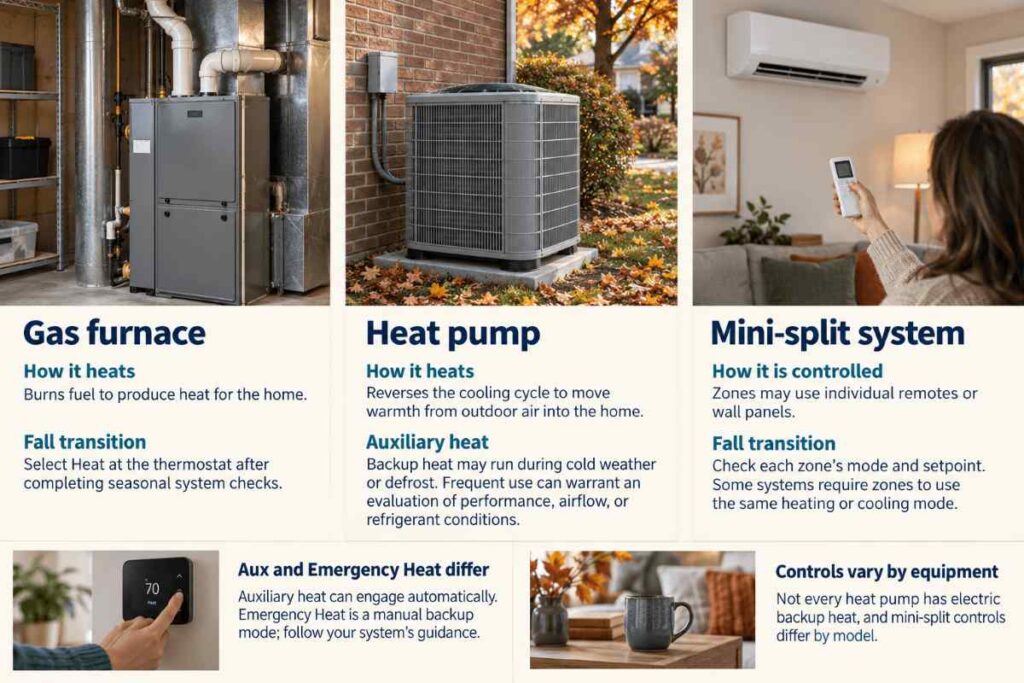
It does, and this is where more homeowners get tripped up than almost anywhere else in the fall switch. A gas furnace burns fuel to make heat. A heat pump doesn’t. It reverses the same refrigerant cycle that cools your home all summer, pulling warmth out of the outside air and moving it in. That’s the whole reason a heat pump thermostat has an Emergency Heat or Aux Heat setting that most furnace owners have never seen in their lives.
Auxiliary heat is a backup electric resistance source that kicks in during very cold snaps or defrost cycles, and seeing it run occasionally is completely normal. What’s not normal is a system that seems to lean on aux heat constantly. That usually means the heat pump itself isn’t keeping up the way it should, often because of a refrigerant or airflow issue that’s worth having checked before it turns into a bigger repair.
Mini-split systems switch over differently again. Each zone runs off its own remote or wall panel, so a home with more than one zone may need every single zone switched by hand rather than one central thermostat doing the job for the whole house.
From the Field: Real Knoxville Examples
These aren’t hypothetical scenarios. They’re the kinds of calls that come in every fall across our service area.
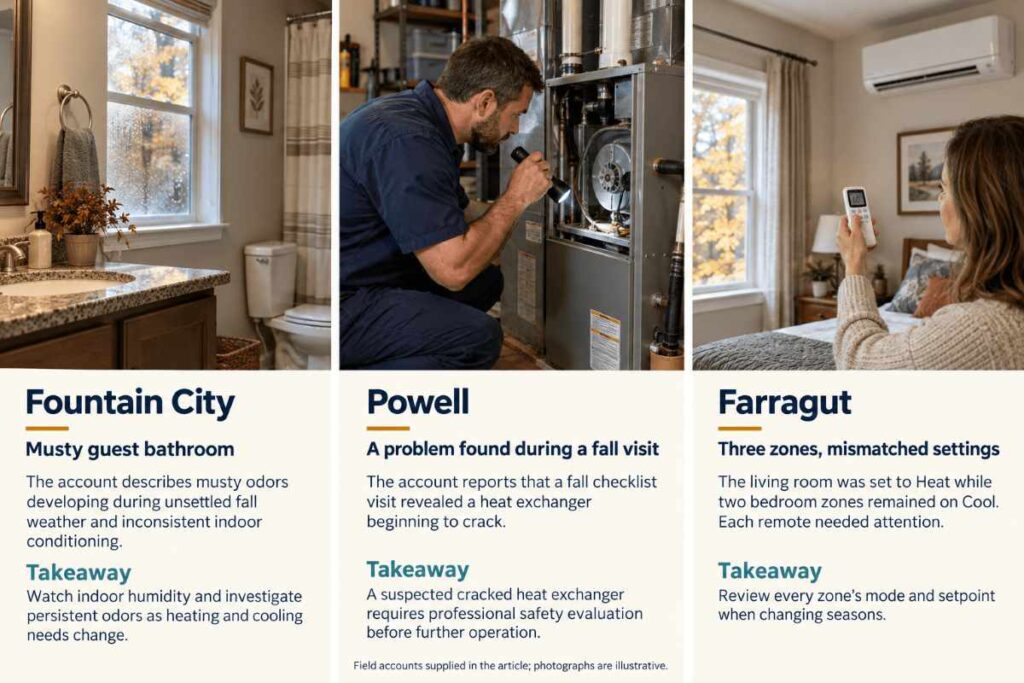
A homeowner near Fountain City kept running the AC well into October, waiting for real cold weather. Warm, humid days rolled back through in the meantime, and by the time the heat went on, a musty smell had settled into the guest bathroom from a house that wasn’t being conditioned either way.
A routine filter swap during a fall checklist visit in Powell turned up a heat exchanger starting to crack. It was a quick fix caught early, and a much bigger one if it had been found in the middle of winter instead.
A family in Farragut with a three-zone mini-split system switched their living room to heat but left two bedroom zones set to cooling, not realizing each zone needed to be changed separately. It took five minutes once someone walked them through switching each remote by hand.
Expert Tips From Our Technicians
Our licensed technicians run this exact seasonal check across Knoxville every year, and a few habits come up again and again.
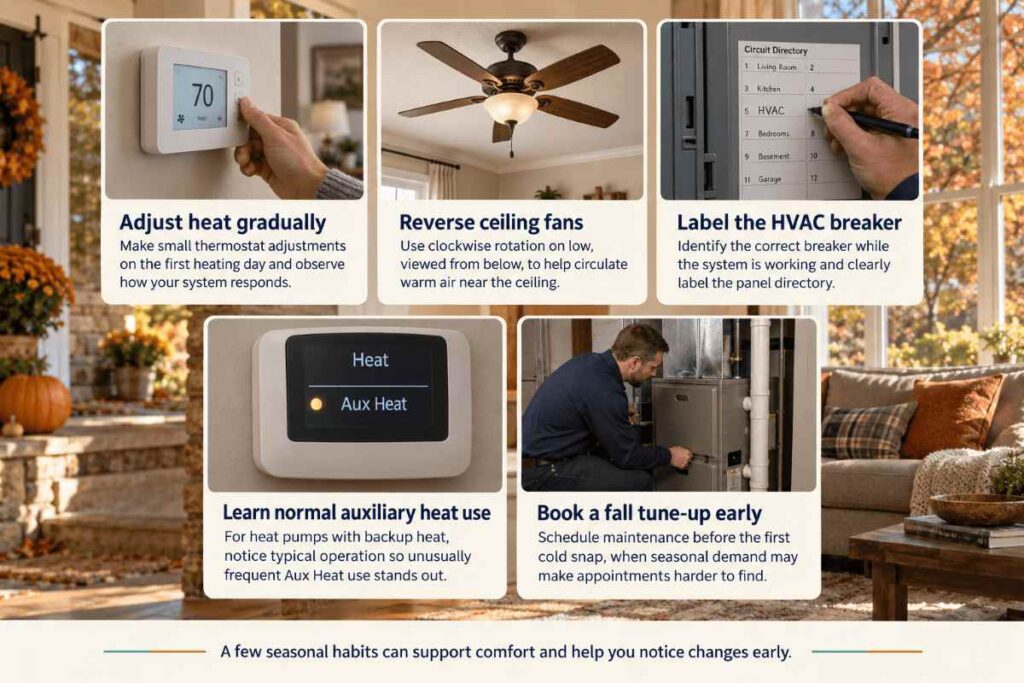
- Bump the thermostat up in small steps the first day you’re back in heating mode, rather than jumping several degrees at once.
- Reverse your ceiling fans so they spin clockwise on low. It pushes the warm air pooling near the ceiling back down where you can actually feel it.
- Label your HVAC breaker now, while everything’s working fine, so you’re not hunting for it later.
- If you’ve got a heat pump, get a feel for what normal aux heat use looks like before the first real cold snap. That way you’ll notice if it starts running more than it should.
- Book your fall tune-up before the cold snap hits, not during it. Availability is a lot easier to come by in September than in the middle of a January freeze, and our NATE-certified technicians tend to fill up fast once the first cold nights arrive.
Conclusion
Switching from AC to heat in Knoxville was never really about a date on the calendar. It’s about watching the overnight lows, running through a short checklist, and knowing which quirks are nothing to worry about and which ones are worth a call. Get those three things right, and the actual switch takes less time than it took to read this article.
If you’d rather hand the whole thing off, that’s exactly what a seasonal tune-up is for. Chaffee HVAC, Plumbing and Electrical technicians catch most of these issues, from a worn filter to a cracked heat exchanger to unusual aux heat behavior, before they ever turn into a mid-winter repair. If your system isn’t starting up the way it should this week, schedule a heating check with Chaffee at coolingheatingplumbing.com before the first real cold snap gets here.
For expert help you can trust, contact Chaffee HVAC, Plumbing, & Electrical in Knoxville today to schedule your no-obligation electrical safety inspection.
Frequently Asked Questions
Should I turn off my AC breaker for the winter?
Not for most systems, and on some heat pumps that same circuit doubles as the auxiliary heat supply, so switching it off can cause more confusion than it solves. If you’re not sure whether your setup shares components across seasons, it’s worth asking a technician rather than guessing.
What temperature should I set my thermostat to in fall?
The Department of Energy recommends around 68 degrees while you’re home and awake as a starting point for efficiency (energy.gov). From there, adjust based on comfort. The goal is a consistent setpoint, not large swings throughout the day.
Is it bad to run the heat and AC on the same day?
Not for the equipment itself, but if you’re doing it often, you’re probably fighting the weather instead of your thermostat schedule. Set it to Auto and let the system handle these swing days on its own.
How often should I change my air filter during heating season?
Most standard filters need changing every 60 to 90 days, though homes with pets or allergy concerns often do better every 30 to 45 days. A dirty filter is the single most common cause of reduced heating performance.
Do I need to cover my outdoor AC condenser for winter?
Generally, no. Modern condensers are built to handle winter weather uncovered, and a full cover can actually trap moisture and invite pests. Clearing debris away from the unit matters far more than covering it.
What's the difference between heat and emergency heat on a heat pump thermostat?
Heat mode runs the heat pump normally, using auxiliary heat automatically only when needed. Emergency heat manually forces the system onto backup heat alone, and should only be used if the heat pump itself has stopped working, as a temporary measure rather than a regular setting.
Can I switch to heat myself, or should a technician do it?
Flipping the thermostat mode is something any homeowner can do without help. It’s worth involving a technician if it’s been more than a year since your last heating inspection, or if anything felt off with the system last winter.
Why does my house feel colder even with the heat running?
This is often a leftover from summer, like ceiling fans still spinning counterclockwise or drafts around windows and doors that weren’t noticeable when the AC was running. Reversing the fan direction and checking for drafts usually resolves it.
Is a burning smell from my furnace dangerous?
A faint dusty smell in the first few minutes of the season’s first run is normal and clears on its own. A smell that lingers, gets stronger, or smells like something other than dust, such as plastic or gas, means you should turn the system off and call a technician.
How long does a typical fall heating tune-up take?
Most seasonal tune-ups take under an hour for a standard residential system, covering the filter, thermostat calibration, and a check of the components most likely to cause an early-season issue.

Contact Us
Chaffee HVAC, Plumbing, & Electrical
5725 Ball Camp Pike
Knoxville, TN 37921
865-247-8888 – Cooling/Heating
865-602-3552 – Plumbing
office@coolingheatingplumbing.com
About Us
Your local HVAC company, Chaffee, bring decades of experience to our work. What this means to you as a customer is that you can expect to receive the highest-quality professional service, regardless of your needs.