(865)-247-8888
Dirty Air and Allergies: How HVAC Systems Affect Indoor Air Quality in East Tennessee Homes
Keypoints
- Indoor air quality problems can come from pollen, dust, humidity, poor airflow, and HVAC system issues.
- East Tennessee’s seasonal pollen levels can make indoor air concerns more noticeable throughout the year.
- A home can remain dusty even with regular cleaning if airborne particles are not being properly filtered.
- HVAC maintenance, proper filtration, and humidity control work together to improve indoor comfort.
- Professional HVAC evaluations help homeowners identify the actual cause of indoor air quality problems instead of guessing at solutions.
Introduction
You clean your home, replace decorations, vacuum the floors, and wipe down surfaces but a few days later, dust is already coming back.
For many East Tennessee homeowners, this is a familiar frustration. The problem is not always a lack of cleaning. In many cases, airborne particles are continuing to move through the home, settling on surfaces and affecting indoor comfort.
Seasonal pollen is one of the biggest challenges homeowners face in this region. During spring, summer, and fall, trees, grasses, and weeds release pollen that can easily enter homes through doors, windows, clothing, pets, and HVAC systems. Once inside, those particles can circulate through the home along with everyday dust, pet dander, and other indoor pollutants.
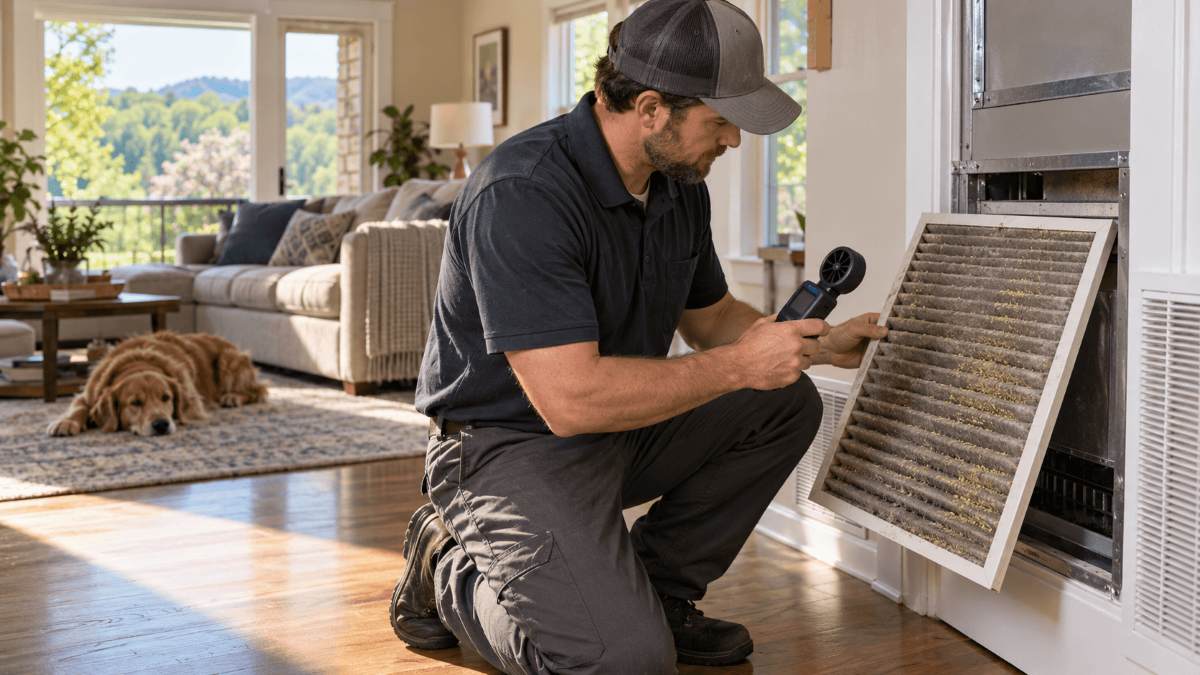
Your HVAC system plays a major role in managing these particles. While heating and cooling equipment is designed to control temperature, it also affects airflow, filtration, and the overall quality of the air moving throughout your home.
Understanding what causes indoor air quality problems and knowing when your HVAC system may be involved can help homeowners make smarter decisions about maintenance, filtration, and air quality improvements.
What Causes Poor Indoor Air Quality in East Tennessee Homes?
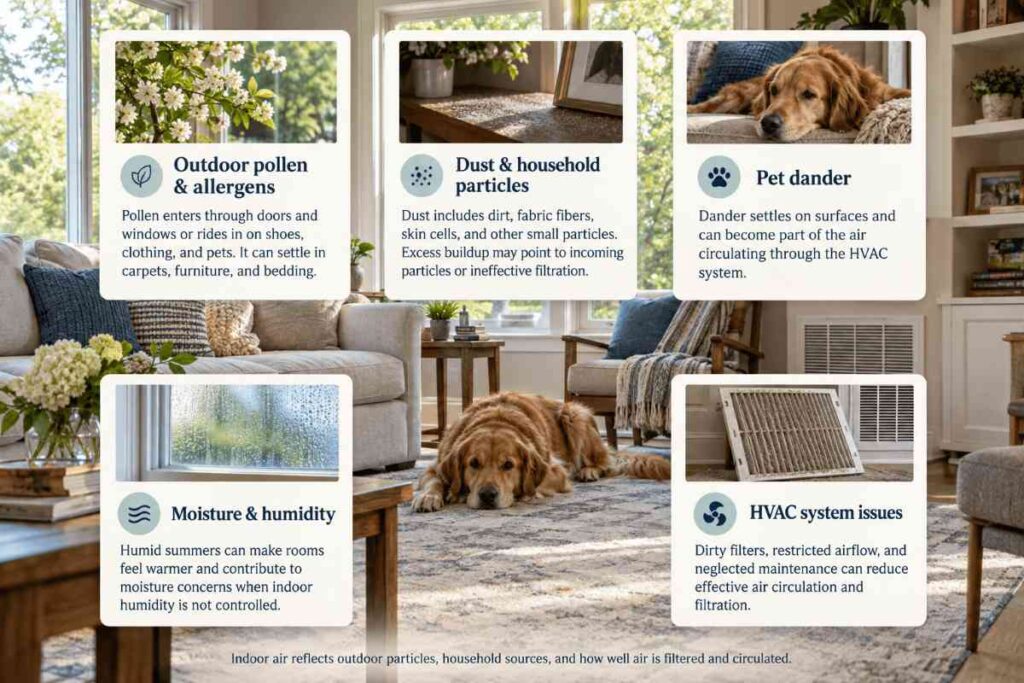
Indoor air quality problems usually develop from a combination of factors. A home’s air is affected by what enters from outdoors, what is produced inside the home, and how effectively the HVAC system filters and circulates that air.
East Tennessee homes experience several conditions that can contribute to indoor air concerns, including seasonal pollen, changing temperatures, humidity, and frequent HVAC use.
Common causes of poor indoor air quality include:
Outdoor Pollen and Allergens
Pollen is one of the most common outdoor particles that makes its way indoors. During heavy allergy seasons, pollen can enter through open doors, windows, shoes, clothing, and pets.
Once inside, these particles can settle into carpets, furniture, bedding, and other areas throughout the home.
Dust and Household Particles
Household dust is made up of many different materials, including dirt, fabric fibers, skin cells, and other small particles.
While some dust buildup is normal, excessive dust may indicate that particles are entering the home faster than they are being removed or that the HVAC system is not filtering effectively.
Pet Dander
Pets are an important part of many families, but they can also contribute to airborne particles. Pet dander can settle on surfaces and become part of the air circulating through the HVAC system.
Moisture and Humidity
Humidity levels can have a major impact on indoor comfort. East Tennessee’s humid summers can make homes feel warmer and may contribute to moisture-related concerns when humidity is not properly controlled.
HVAC System Issues
Your HVAC system is responsible for moving air throughout your home. Problems such as dirty filters, restricted airflow, or neglected maintenance can reduce the system’s ability to properly circulate and filter air.
How Does East Tennessee Pollen Affect Indoor Air Quality and Allergies?
East Tennessee’s natural beauty comes with a seasonal challenge: pollen.
During peak pollen periods, outdoor particles can quickly find their way indoors. Even homeowners who keep their homes clean may notice increased dust, more frequent filter changes, or discomfort during certain times of the year.
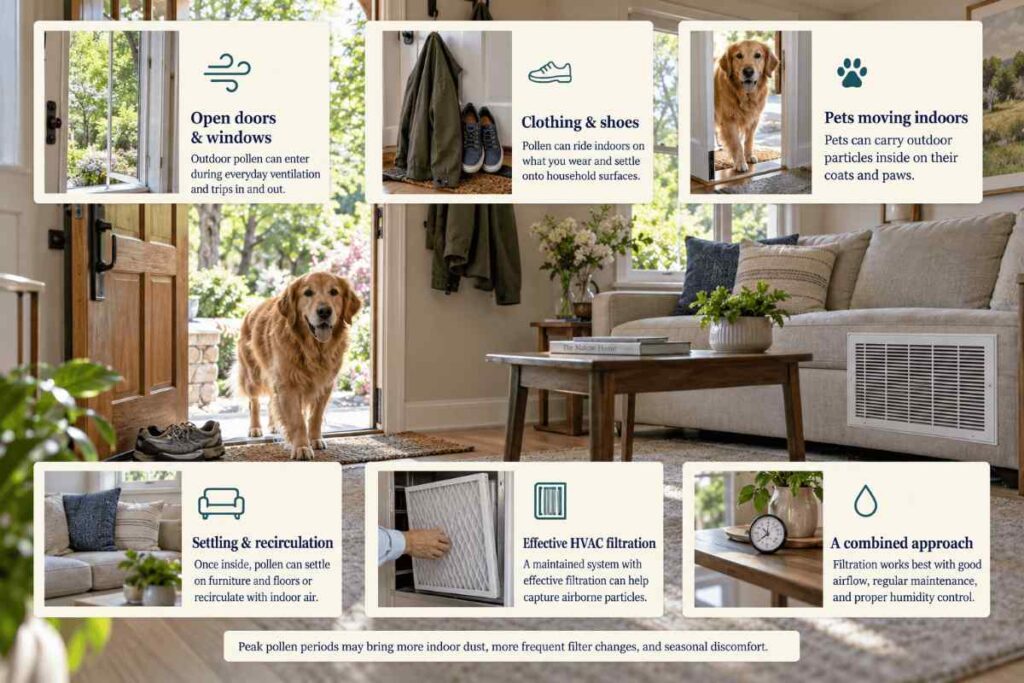
Pollen can enter your home through everyday activities such as:
- Opening doors and windows
- Bringing pollen inside on clothing or shoes
- Allowing pets to move between indoor and outdoor spaces
- Running HVAC systems that circulate indoor air
Once pollen enters the home, it does not simply disappear. These particles can settle in areas throughout the house and become part of the indoor environment.
A properly maintained HVAC system with effective filtration can help capture airborne particles before they continue circulating throughout the home. However, filtration works best when combined with good airflow, regular maintenance, and proper humidity control.
Why Does My House Get Dusty So Quickly?
One of the most common indoor air quality complaints homeowners have is constant dust buildup.
If you find yourself cleaning repeatedly but noticing dust returns quickly, the issue may involve more than surface cleaning. The source may be related to airflow, filtration, or the amount of airborne particles entering your home.
Several factors can contribute to excessive dust.
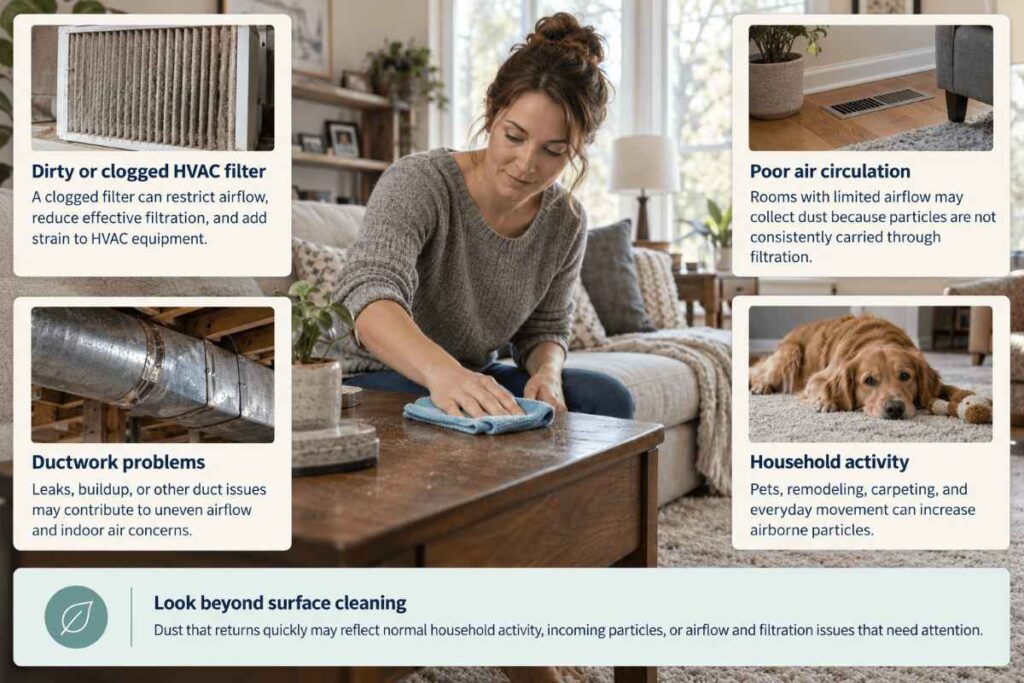
A Dirty or Clogged HVAC Filter
Your HVAC filter is designed to capture airborne particles before they travel through your system.
When a filter becomes clogged, it can restrict airflow and reduce how effectively your system filters the air. A dirty filter can also place additional strain on HVAC equipment.
Poor Air Circulation
Air needs to move properly throughout the home for your HVAC system to work effectively.
Rooms with limited airflow may collect more dust because particles are not being consistently moved through the filtration process.
Ductwork Problems
Your duct system delivers conditioned air throughout your home. If ducts have leaks, excessive buildup, or other issues, they may contribute to uneven airflow and indoor air concerns.
Household Activity
Pets, remodeling projects, carpeting, and everyday activity can naturally increase airborne particles.
The key is determining whether dust is simply part of normal home activity or whether your HVAC system needs attention.
Can Dirty Air Ducts Affect Indoor Air Quality?
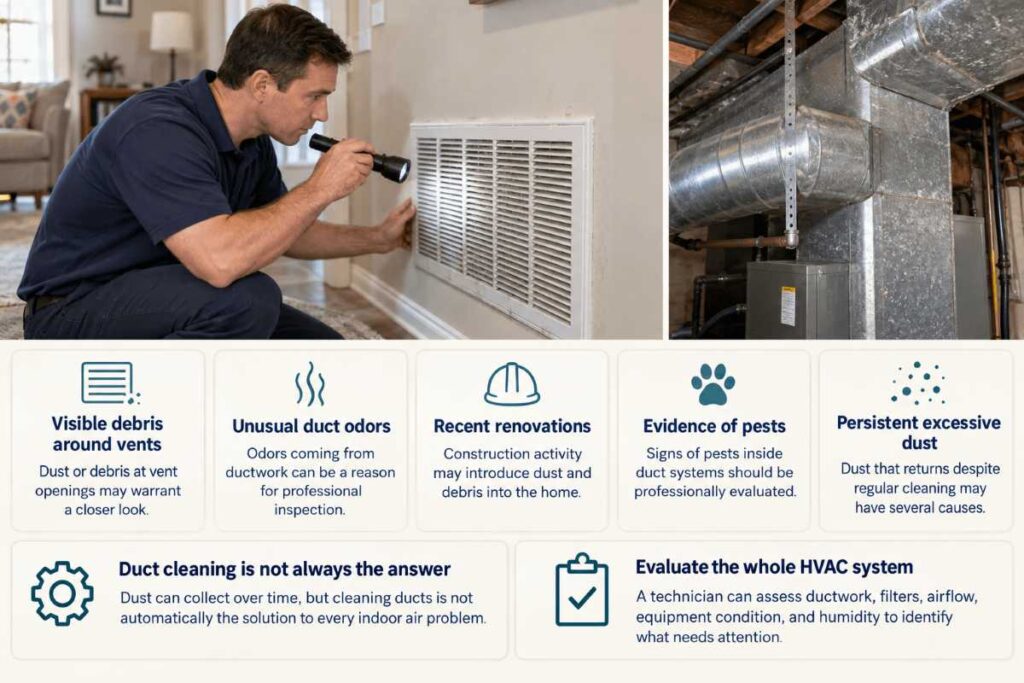
Your ductwork acts as the pathway that carries heated and cooled air throughout your home. Because air moves through these channels every day, dust and debris can collect over time.
However, duct cleaning is not automatically the solution for every indoor air problem.
A professional inspection may be recommended if you notice:
- Visible debris around vents
- Unusual odors coming from ductwork
- Recent home renovations
- Evidence of pests inside duct systems
- Excessive dust despite regular cleaning
It is important to look at the entire HVAC system. Ductwork is only one part of indoor air quality. Filters, airflow, equipment condition, and humidity levels all work together.
A professional HVAC technician can help determine whether ductwork, filtration, maintenance, or another issue is affecting your home.
What Are the Signs My HVAC System Is Affecting My Indoor Air Quality?
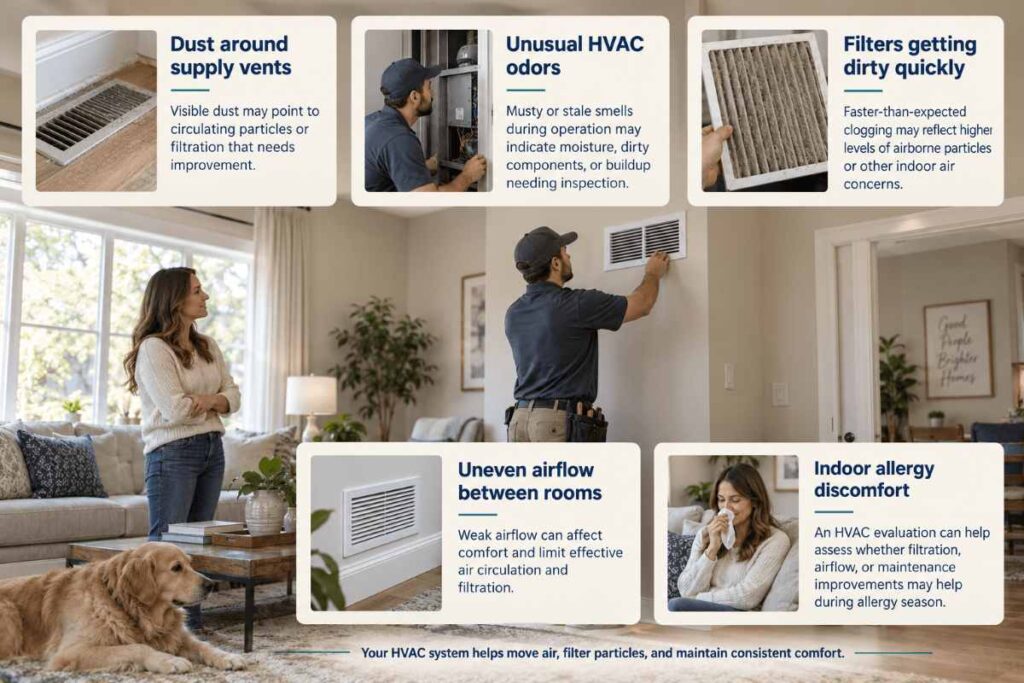
Your HVAC system does more than heat and cool your home. It controls how air moves, how particles are filtered, and how consistently your home maintains comfort.
Some signs your HVAC system may need attention include:
Dust Around Supply Vents
Dust collecting around vents may indicate that airborne particles are circulating through the home or that filtration needs improvement.
Unusual HVAC Odors
Musty or stale smells when your system runs may point to moisture concerns, dirty components, or buildup that requires inspection.
Filters Becoming Dirty Quickly
A filter that becomes clogged faster than expected may indicate higher levels of airborne particles or other indoor air concerns.
Uneven Airflow Between Rooms
Weak airflow in certain areas can affect comfort and may prevent your system from properly circulating and filtering air.
Indoor Allergy Symptoms
If your home feels uncomfortable during allergy season, an HVAC evaluation can help identify whether filtration, airflow, or maintenance improvements may help.
What HVAC Solutions Improve Indoor Air Quality in Homes?
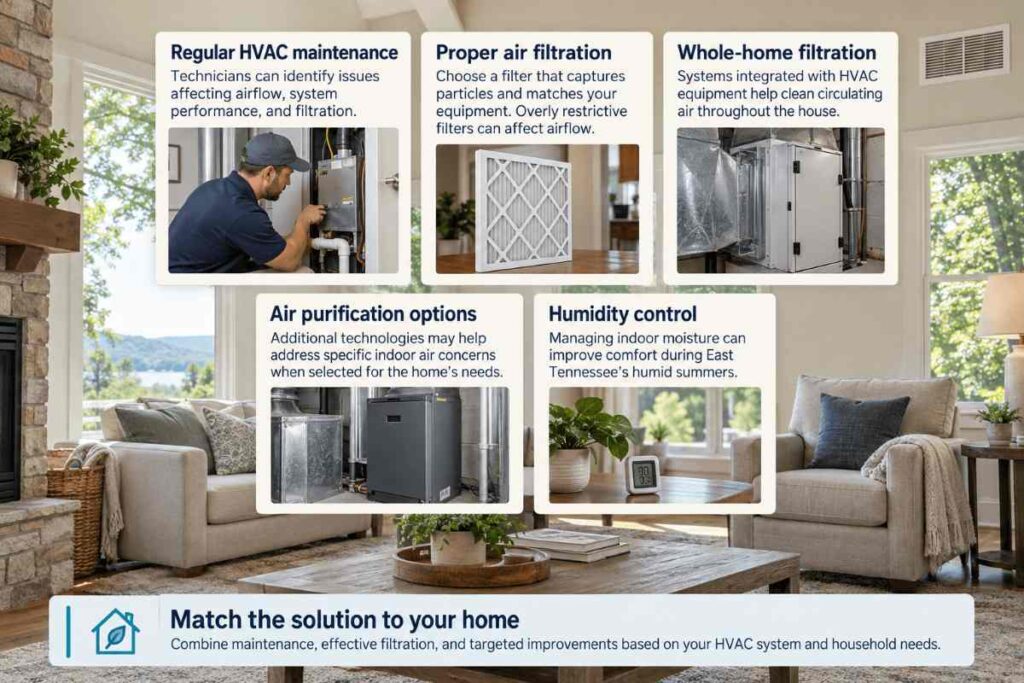
There is no single solution that works for every home. Improving indoor air quality requires understanding what is causing the problem and choosing improvements that match your HVAC system and household needs.
Regular HVAC Maintenance
Routine maintenance helps keep HVAC components operating properly. During maintenance visits, technicians can identify issues affecting airflow, system performance, and filtration.
Proper Air Filtration
The right filter helps capture airborne particles while allowing your HVAC system to maintain proper airflow.
A filter that is too restrictive can affect system performance, so homeowners should choose filtration options that match their equipment.
Whole-Home Air Filtration Systems
Whole-home filtration systems work with your HVAC equipment to improve air cleaning throughout the house rather than only treating one room.
Air Purification Solutions
Some homeowners may benefit from additional air purification technologies designed to address specific indoor air concerns.
Humidity Control
Managing indoor humidity levels can improve comfort, especially during East Tennessee’s humid summer months.
The best approach is usually a combination of proper maintenance, effective filtration, and solutions designed around the specific needs of the home.
Examples: How Indoor Air Quality Problems Affect Homeowners
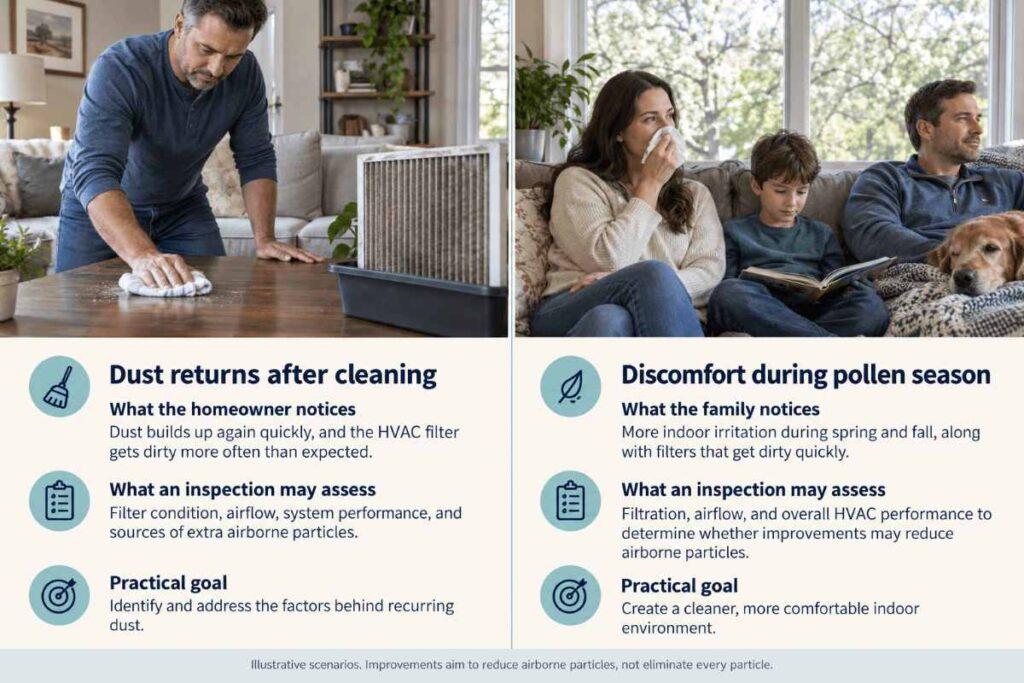
Example 1: A Home With Constant Dust Problems
A homeowner in East Tennessee notices that dust returns shortly after cleaning. Their HVAC filter also appears dirty more often than expected.
During an HVAC inspection, several factors may be considered, including filter condition, airflow, system performance, and possible sources of additional airborne particles.
Instead of continuing to clean without solving the cause, the homeowner can address the factors contributing to the dust problem.
Example 2: Allergy Concerns During Pollen Season
A family notices their home feels less comfortable during spring and fall. They experience more indoor irritation and notice that filters become dirty quickly.
An HVAC professional may evaluate filtration, airflow, and overall system performance to determine whether improvements could help reduce airborne particles inside the home.
The goal is not to eliminate every particle but to create a cleaner, more comfortable indoor environment.
Expert Tips: How to Maintain Better Indoor Air Quality
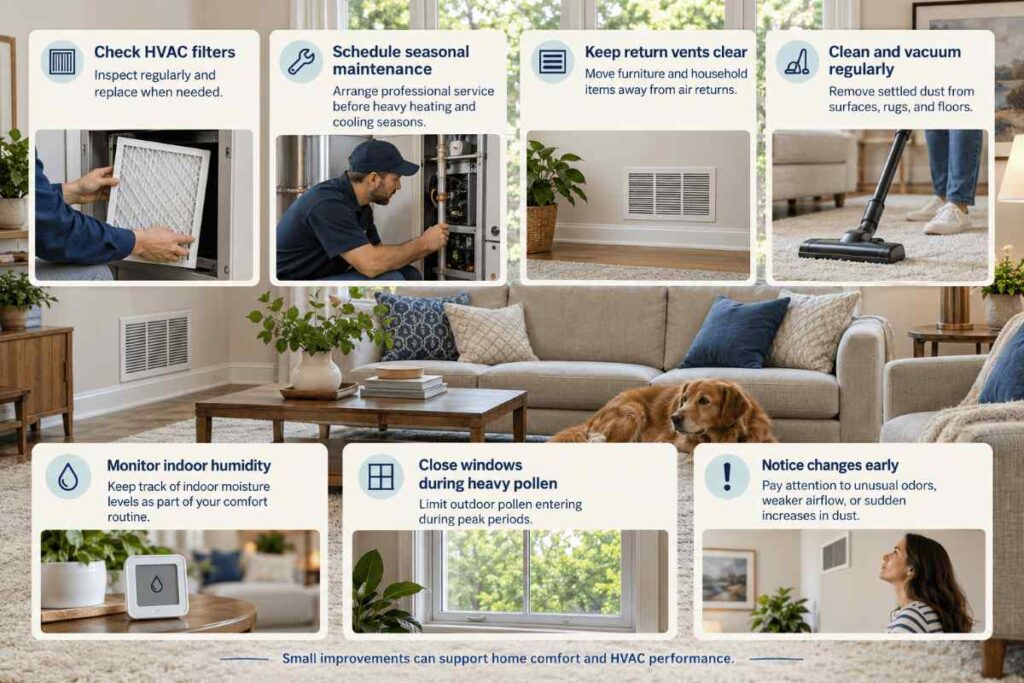
Homeowners can support cleaner indoor air by following a few practical maintenance steps:
- Check HVAC filters regularly and replace them when needed.
- Schedule professional HVAC maintenance before heavy heating and cooling seasons.
- Keep return vents clear of furniture and household items.
- Clean surfaces and vacuum regularly to reduce settled dust.
- Monitor indoor humidity levels.
- Keep windows closed during heavy pollen periods.
- Pay attention to unusual odors, airflow changes, or sudden increases in dust.
Small improvements can make a noticeable difference in home comfort and HVAC performance.
Conclusion
Indoor air quality affects more than how clean your home appears. The air moving through your HVAC system plays an important role in comfort, freshness, and the overall feel of your living space.
For East Tennessee homeowners, seasonal pollen, humidity, dust buildup, and HVAC issues can all contribute to indoor air concerns. The first step toward improvement is understanding what is causing the problem.
At Chaffee HVAC, Plumbing & Electrical, our team helps homeowners evaluate HVAC performance, identify indoor air quality concerns, and recommend solutions based on their home’s needs.
Whether you are dealing with excessive dust, allergy concerns, poor airflow, or questions about filtration, our experienced team is ready to help.
Contact Chaffee HVAC, Plumbing & Electrical today to improve your indoor comfort and create a cleaner, healthier home environment.
For expert help you can trust, contact Chaffee HVAC, Plumbing, & Electrical in Knoxville today to schedule your no-obligation electrical safety inspection.
Frequently Asked Questions
Can poor indoor air quality make allergies worse?
Poor indoor air quality can increase exposure to airborne particles such as pollen, dust, and pet dander. While allergy triggers vary from person to person, reducing indoor pollutants may help create a more comfortable home environment.
How often should I change my HVAC air filter?
Filter replacement depends on the type of filter, household conditions, pets, and indoor air concerns. Many homeowners should check filters regularly and replace them when they become dirty or restrict airflow.
Why is my HVAC filter getting dirty so quickly?
A filter may become dirty quickly because of increased dust, pets, pollen, home renovations, or higher levels of airborne particles. An HVAC inspection can help determine whether the cause is environmental or related to system performance.
Does air duct cleaning improve indoor air quality?
Air duct cleaning may help in certain situations, such as when ducts contain visible debris or excessive buildup. A professional evaluation can determine whether duct cleaning is appropriate for your home.
Can my HVAC system remove pollen from my home?
A properly maintained HVAC system with effective filtration can capture some airborne particles, including pollen. The results depend on your equipment, filter type, and overall system condition.
Does HVAC maintenance improve indoor air quality?
Yes. Routine HVAC maintenance helps keep system components working properly, supports better airflow, and allows technicians to identify issues that may affect filtration and comfort.
What is the best air filter for allergies?
The best filter depends on your HVAC system and household needs. A professional can help determine which filtration option provides effective particle capture without restricting airflow.
How does humidity affect indoor air quality?
High humidity can make a home feel uncomfortable and may contribute to moisture-related concerns. Proper humidity control can improve comfort and help maintain better indoor conditions.
Should I have my HVAC system inspected if my home feels dusty?
Yes. Excessive dust can be caused by several issues, including clogged filters, airflow problems, ductwork concerns, or normal household activity. An inspection helps identify the actual cause.
How can I improve indoor air quality in my East Tennessee home?
Improving indoor air quality usually requires a combination of proper filtration, HVAC maintenance, humidity control, and reducing indoor pollutants. A professional HVAC evaluation can help determine the best solution for your home.

Contact Us
Chaffee HVAC, Plumbing, & Electrical
5725 Ball Camp Pike
Knoxville, TN 37921
865-247-8888 – Cooling/Heating
865-602-3552 – Plumbing
office@coolingheatingplumbing.com
About Us
Your local HVAC company, Chaffee, bring decades of experience to our work. What this means to you as a customer is that you can expect to receive the highest-quality professional service, regardless of your needs.