Preserving Historic Comfort: Lessons from the Tennessee Theatre for Knoxville Homes

Standing proudly on Gay Street in the heart of downtown Knoxville, the Tennessee Theatre is widely recognized as the Official State Theatre of Tennessee. Originally opening its doors in 1928 as a 1920s movie palace, this architectural masterpiece features Spanish Moorish design, grand crystal chandeliers, plush velvet seating, and the famous Mighty Wurlitzer organ.
A comprehensive multi-million-dollar restoration carefully preserved the theatre’s historic beauty while seamlessly integrating state-of-the-art climate control, acoustics, and electrical infrastructure. For homeowners living in Knoxville’s surrounding historic neighborhoods – such as Fourth & Gill, Parkridge, Old City, and Sequoyah Hills – the Tennessee Theatre offers a perfect example of how classic architecture and modern mechanical efficiency can coexist seamlessly.
The Timeless Appeal of Knoxville’s Historic Homes
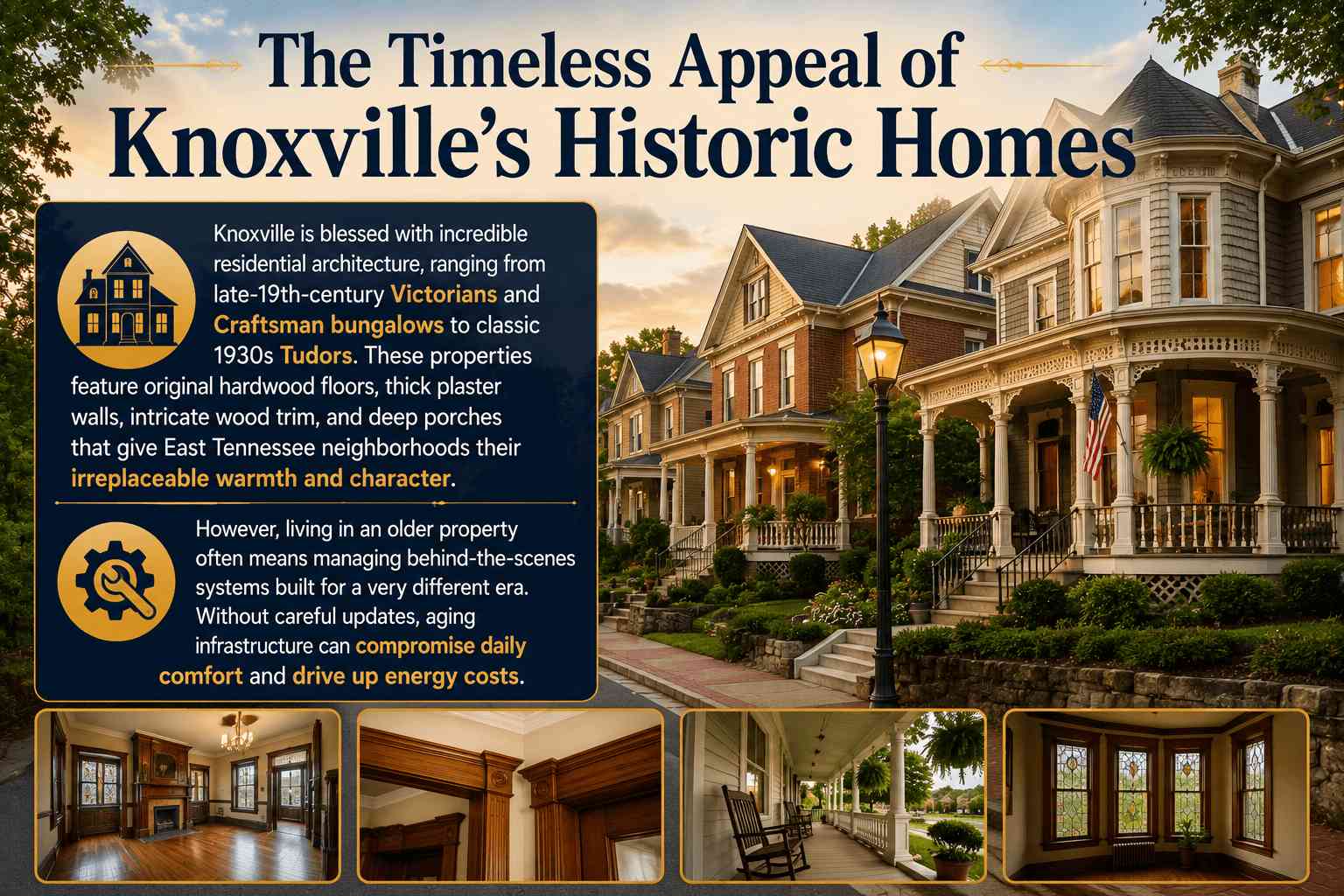
Knoxville is blessed with incredible residential architecture, ranging from late-19th-century Victorians and Craftsman bungalows to classic 1930s Tudors. These properties feature original hardwood floors, thick plaster walls, intricate wood trim, and deep porches that give East Tennessee neighborhoods their irreplaceable warmth and character.
However, living in an older property often means managing behind-the-scenes systems built for a very different era. Without careful updates, aging infrastructure can compromise daily comfort and drive up energy costs.
Overcoming Common Pain Points in Older Properties
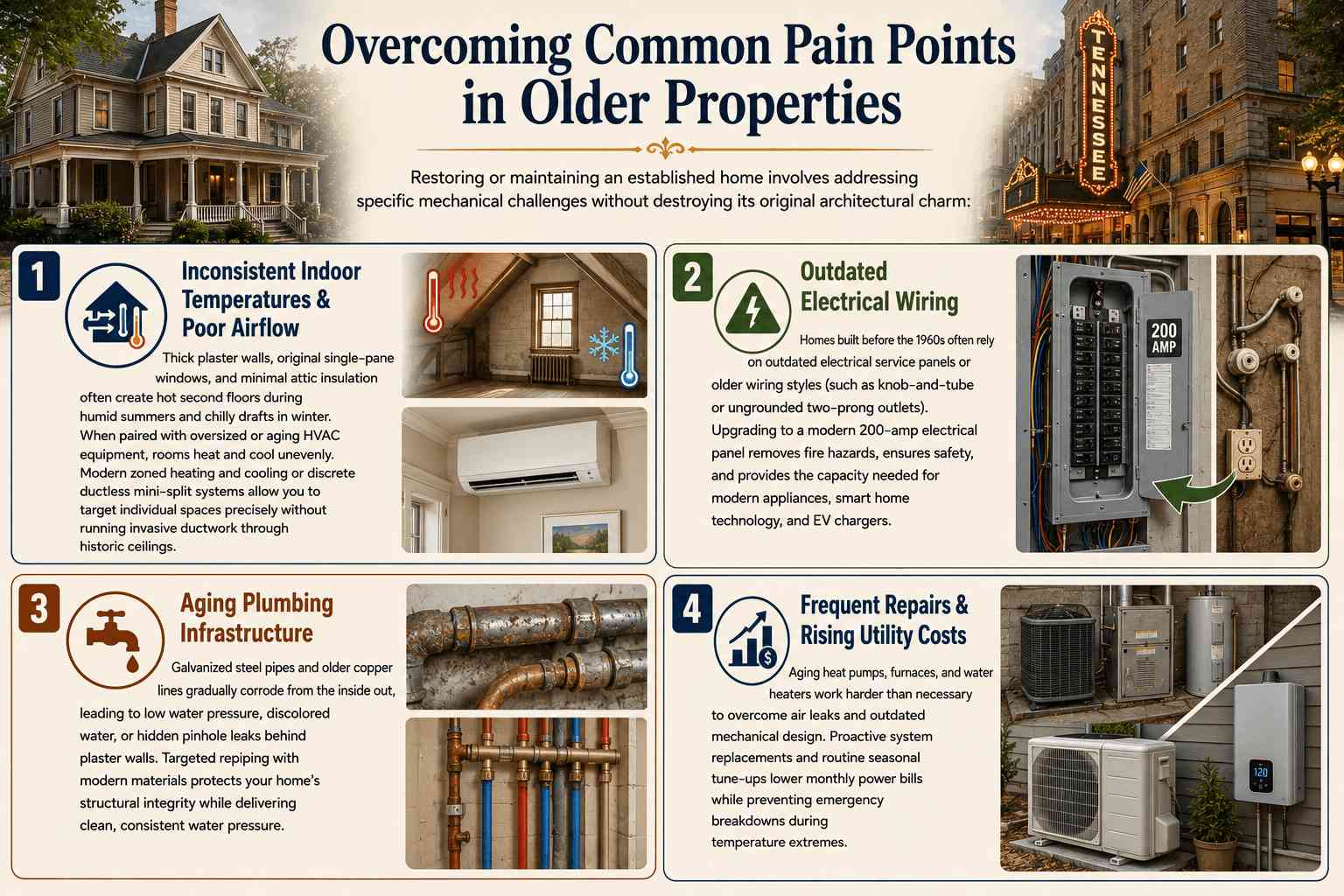
Restoring or maintaining an established home involves addressing specific mechanical challenges without destroying its original architectural charm:
1. Inconsistent Indoor Temperatures & Poor Airflow
Thick plaster walls, original single-pane windows, and minimal attic insulation often create hot second floors during humid summers and chilly drafts in winter. When paired with oversized or aging HVAC equipment, rooms heat and cool unevenly. Modern zoned heating and cooling or discrete ductless mini-split systems allow you to target individual spaces precisely without running invasive ductwork through historic ceilings.
2. Outdated Electrical Wiring
Homes built before the 1960s often rely on outdated electrical service panels or older wiring styles (such as knob-and-tube or ungrounded two-prong outlets). Upgrading to a modern 200-amp electrical panel removes fire hazards, ensures safety, and provides the capacity needed for modern appliances, smart home technology, and EV chargers.
3. Aging Plumbing Infrastructure
Galvanized steel pipes and older copper lines gradually corrode from the inside out, leading to low water pressure, discolored water, or hidden pinhole leaks behind plaster walls. Targeted repiping with modern materials protects your home’s structural integrity while delivering clean, consistent water pressure.
4. Frequent Repairs & Rising Utility Costs
Aging heat pumps, furnaces, and water heaters work harder than necessary to overcome air leaks and outdated mechanical design. Proactive system replacements and routine seasonal tune-ups lower monthly power bills while preventing emergency breakdowns during temperature extremes.
Modern Upgrades That Protect Historic Integrity
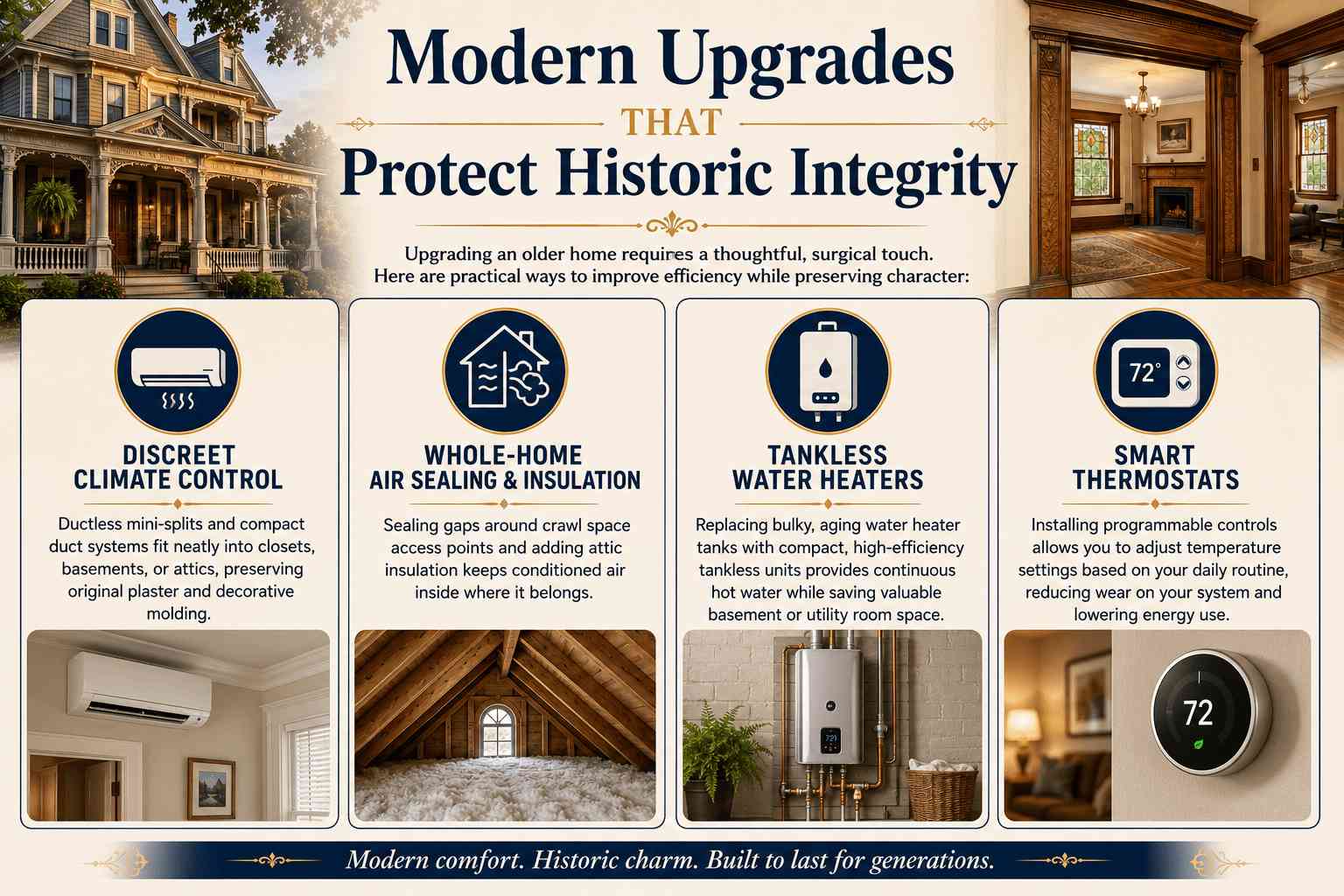
Upgrading an older home requires a thoughtful, surgical touch. Here are practical ways to improve efficiency while preserving character:
- Discreet Climate Control: Ductless mini-splits and compact duct systems fit neatly into closets, basements, or attics, preserving original plaster and decorative molding.
- Whole-Home Air Sealing & Insulation: Sealing gaps around crawl space access points and adding attic insulation keeps conditioned air inside where it belongs.
- Tankless Water Heaters: Replacing bulky, aging water heater tanks with compact, high-efficiency tankless units provides continuous hot water while saving valuable basement or utility room space.
- Smart Thermostats: Installing programmable controls allows you to adjust temperature settings based on your daily routine, reducing wear on your system and lowering energy use.
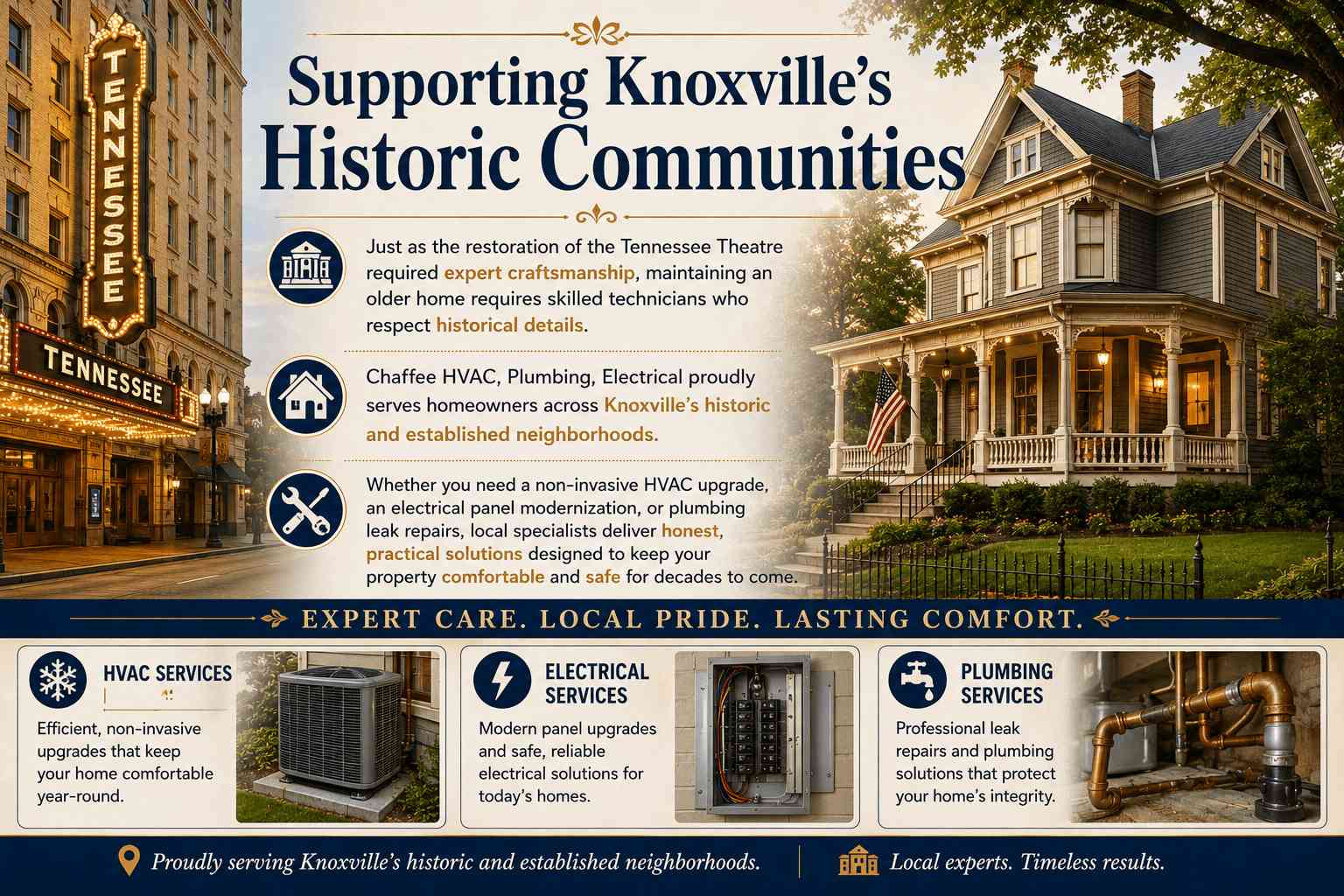
Supporting Knoxville’s Historic Communities
Just as the restoration of the Tennessee Theatre required expert craftsmanship, maintaining an older home requires skilled technicians who respect historical details. Chaffee HVAC, Plumbing, Electrical proudly serves homeowners across Knoxville’s historic and established neighborhoods.
Whether you need a non-invasive HVAC upgrade, an electrical panel modernization, or plumbing leak repairs, local specialists deliver honest, practical solutions designed to keep your property comfortable and safe for decades to come.
Nearby Culture and Local Highlights
Living near downtown Knoxville means world-class entertainment and historic landmarks are right around the corner:
- Gay Street Historic District: Stroll past local art galleries, independent bookshops, cozy coffee spots, and historic architecture.
- The Bijou Theatre: Located just down the street, another historic venue hosting intimate concerts, comedy, and community performances.
- Krutch Park: A quiet urban park featuring walking paths, seasonal sculpture displays, and peaceful water features right off Market Square.

Helpful Tips for Owners of Older Homes
- Schedule Pre-Season Maintenance: Spring and fall tune-ups identify minor mechanical issues before they turn into costly mid-season emergencies.
- Inspect Plumbing in Crawl Spaces: Check exposed pipes under unconditioned crawl spaces for slow drips or white mineral buildup before cold weather arrives.
- Preserve Original Airflow Paths: Ensure furniture or thick rugs aren’t blocking floor grates or return air vents designed to keep air circulating through older layouts.
Conclusion
The Tennessee Theatre proves that with the right care and modern technology, historic structures can remain comfortable, functional, and breathtaking for generations. By taking a proactive approach to your home’s heating, cooling, plumbing, and electrical care, you can enjoy all the character of an older property with all the reliability of modern living.
At Chaffee HVAC, Plumbing, Electrical, we are honored to help our Knoxville neighbors protect and upgrade their homes. If you have questions about improving your home’s comfort or energy efficiency, contact our friendly team today to schedule an appointment or request an estimate!
For expert help you can trust, contact Chaffee HVAC, Plumbing, & Electrical in Knoxville today to schedule your no-obligation electrical safety inspection.
Frequently Asked Questions
Where is the Tennessee Theatre located in Knoxville?
The Tennessee Theatre is located at 604 South Gay Street in the heart of downtown Knoxville’s Gay Street Historic District.
When was the Tennessee Theatre built, and what is its significance?
Opening in 1928 as a 1920s movie palace, the theater features Spanish Moorish architecture and grand crystal chandeliers, and it is designated as the Official State Theatre of Tennessee.
What historic Knoxville neighborhoods feature similar classic architecture?
Surrounding historic neighborhoods with period architecture include Fourth & Gill, Parkridge, Old City, Fort Sanders, and Sequoyah Hills.
How can homeowners update HVAC systems in historic homes without destroying plaster walls or woodwork?
Ductless mini-split systems and compact high-velocity duct systems allow precise room-by-room heating and cooling while preserving original plaster walls, wood trim, and high ceilings.
Why do electrical panels in pre-1960s Knoxville homes often need to be upgraded?
Older homes were built with low electrical capacity or legacy wiring like knob-and-tube. Upgrading to a modern 200-amp electrical panel removes fire hazards and supports current high-demand appliances, smart home technology, and EV chargers.
What plumbing issues commonly affect older Knoxville homes?
Galvanized steel and older copper pipes gradually corrode over time, causing discolored water, reduced water pressure, slow drains, or hidden pinhole leaks behind plaster walls.
How do high ceilings and thick plaster walls affect indoor room temperatures?
Heat naturally rises to high ceilings, leaving top floors hot in the summer, while uninsulated thick walls can trap humidity or let in winter drafts. Reversible ceiling fans, zoned mini-splits, and proper air sealing help solve these temperature imbalances.
What are the benefits of installing a tankless water heater in an older home?
Tankless water heaters provide continuous hot water on demand while saving significant space compared to bulky traditional tank heaters, making them ideal for historic basements or compact utility closets.
Who provides HVAC, plumbing, and electrical services for historic Knoxville homes?
Chaffee HVAC, Plumbing & Electrical specializes in servicing older properties across Knoxville, delivering custom heating, cooling, electrical, and plumbing updates that protect historic architectural integrity.