(865)-247-8888
Electrical Problems Homeowners Should Never Ignore: Warning Signs Your Home Needs an Electrician
Introduction
Most homeowners do not think about their electrical system until something stops working. The lights flicker during dinner, a breaker shuts off while appliances are running, or an outlet suddenly feels warmer than normal.
These moments are easy to dismiss, especially when power comes back after resetting a breaker or replacing a device. However, electrical problems homeowners should never ignore often begin with small warning signs that gradually become more serious.
Over time, homes experience increased electrical demand from HVAC systems, kitchen appliances, entertainment devices, smart technology, and other equipment. If an electrical system is outdated, damaged, or overloaded, it may struggle to keep up safely.
At Chaffee HVAC, Plumbing & Electrical, we regularly help homeowners identify electrical concerns before they turn into major disruptions. Understanding the warning signs can help you protect your home, your equipment, and your family.
Keypoints
- Small electrical issues can be early warning signs of larger problems.
- Flickering lights, burning smells, and frequent breaker trips should be inspected instead of ignored.
- Older homes may need electrical updates to safely handle modern appliances and technology.
- Professional electrical inspections help identify hidden problems before they become costly repairs.
- A licensed electrician can safely diagnose electrical issues and recommend the right solution.
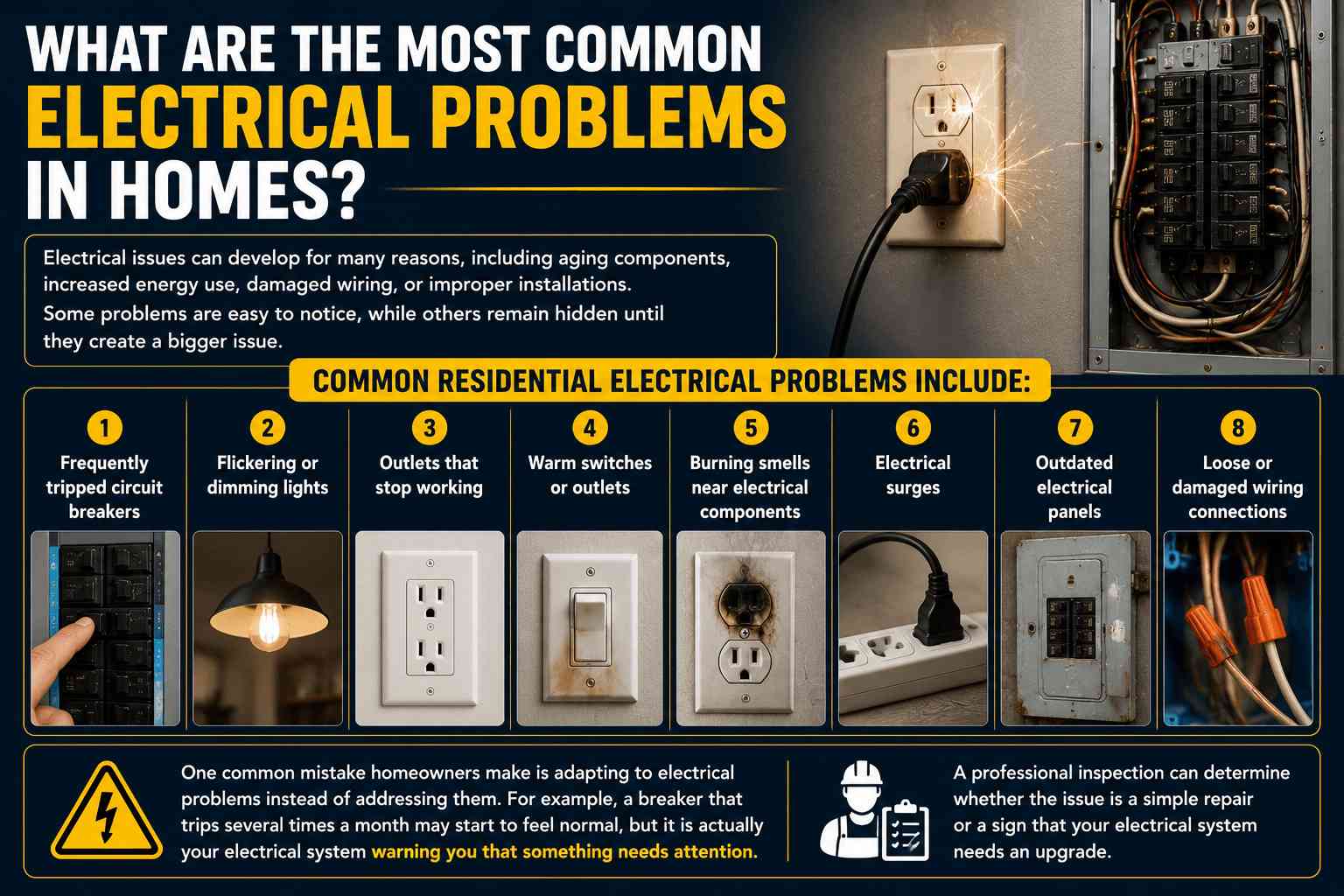
What Are the Most Common Electrical Problems in Homes?
Electrical issues can develop for many reasons, including aging components, increased energy use, damaged wiring, or improper installations. Some problems are easy to notice, while others remain hidden until they create a bigger issue.
Common residential electrical problems include:
- Frequently tripped circuit breakers
- Flickering or dimming lights
- Outlets that stop working
- Warm switches or outlets
- Burning smells near electrical components
- Electrical surges
- Outdated electrical panels
- Loose or damaged wiring connections
One common mistake homeowners make is adapting to electrical problems instead of addressing them. For example, a breaker that trips several times a month may start to feel normal, but it is actually your electrical system warning you that something needs attention.
A professional inspection can determine whether the issue is a simple repair or a sign that your electrical system needs an upgrade.
Why Are My Lights Flickering or Dimming?
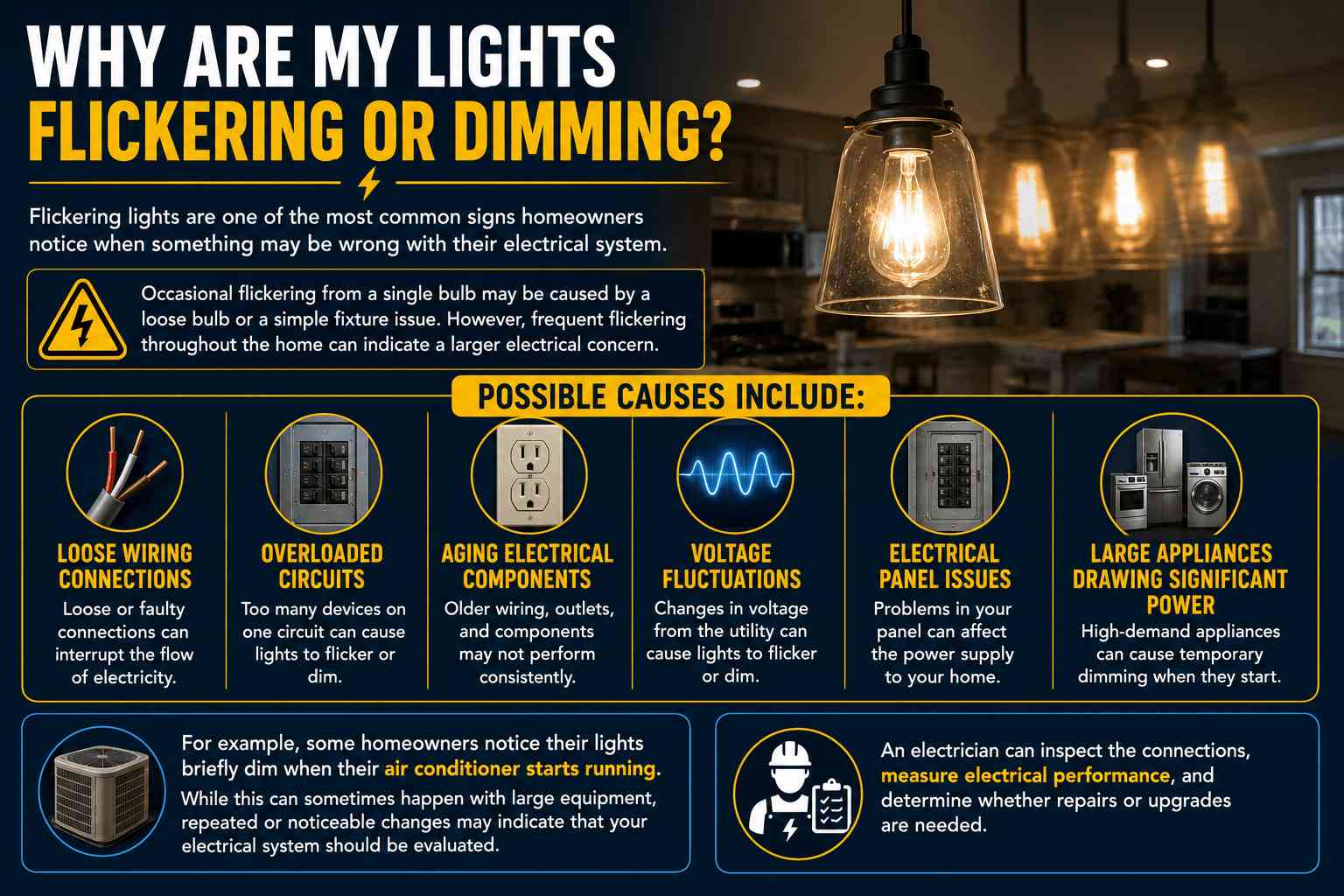
Flickering lights are one of the most common signs homeowners notice when something may be wrong with their electrical system.
Occasional flickering from a single bulb may be caused by a loose bulb or a simple fixture issue. However, frequent flickering throughout the home can indicate a larger electrical concern.
Possible causes include:
- Loose wiring connections
- Overloaded circuits
- Aging electrical components
- Voltage fluctuations
- Electrical panel issues
- Large appliances drawing significant power
For example, some homeowners notice their lights briefly dim when their air conditioner starts running. While this can sometimes happen with large equipment, repeated or noticeable changes may indicate that your electrical system should be evaluated.
An electrician can inspect the connections, measure electrical performance, and determine whether repairs or upgrades are needed.
Why Does My Circuit Breaker Keep Tripping?
Your circuit breaker is designed to protect your home by shutting off power when it detects unsafe electrical conditions. A breaker that trips occasionally may simply be doing its job.
However, a breaker that repeatedly shuts off is usually a sign that something needs attention.
Common causes include:
- Overloaded circuits
- Faulty appliances
- Short circuits
- Ground faults
- Electrical wiring problems
- Insufficient circuit capacity
Many homeowners reset the breaker and continue using the same equipment. While this restores power temporarily, it does not solve the underlying problem.
Think of your breaker as a warning system. It is responding to a condition that needs to be identified, not ignored.
A professional electrician can determine whether the problem involves the appliance, the circuit, or the overall electrical system.
What Does a Burning Smell From an Outlet or Electrical Panel Mean?
A burning smell near an outlet, switch, or electrical panel is one of the warning signs that should never be ignored.
Electrical components should not produce noticeable heat or odors during normal operation. A burning smell may indicate:
- Overheated wiring
- Damaged insulation
- Loose electrical connections
- Failing electrical components
Loose connections are especially concerning because they can create resistance, generate heat, and damage surrounding materials over time.
If you notice a burning smell, avoid using the affected outlet or equipment. If it is safe to do so, turn off power to the area and contact a qualified electrician for an inspection.
Electrical problems are not always visible from the outside, which is why proper testing and diagnosis are important.
Does My Electrical Panel Need an Upgrade?
The electrical panel is the center of your home’s electrical system. It distributes power to different circuits throughout your house and helps protect your electrical equipment.
As homes add more technology and high-powered appliances, older electrical systems may not have enough capacity to meet modern demands.
Signs your electrical panel may need attention include:
- Frequent breaker trips
- Limited available circuits
- Flickering lights
- Older electrical equipment
- Plans for renovations or major additions
This is especially important for homeowners making upgrades such as:
- Installing an electric vehicle charger
- Adding new kitchen appliances
- Building a home office
- Expanding living spaces
Before adding major electrical loads, an inspection can help determine whether your existing system is prepared to handle the increased demand.
Are Old Wiring and Outlets Dangerous?
Many older homes were built when families used fewer electrical devices. Today’s homes rely on far more electricity for appliances, electronics, heating and cooling equipment, and everyday conveniences.
Older electrical systems are not automatically unsafe, but they may need evaluation to ensure they can handle current needs.
Warning signs of outdated electrical components include:
- Two-prong outlets
- Cracked outlet covers
- Loose plugs
- Frequently warm outlets
- Old wiring systems
- Lack of proper grounding
During an electrical inspection, a technician can look for signs of wear, damaged connections, and other safety concerns that may not be obvious to homeowners.
Updating outdated electrical components can improve reliability and help your home better support modern electrical demands.
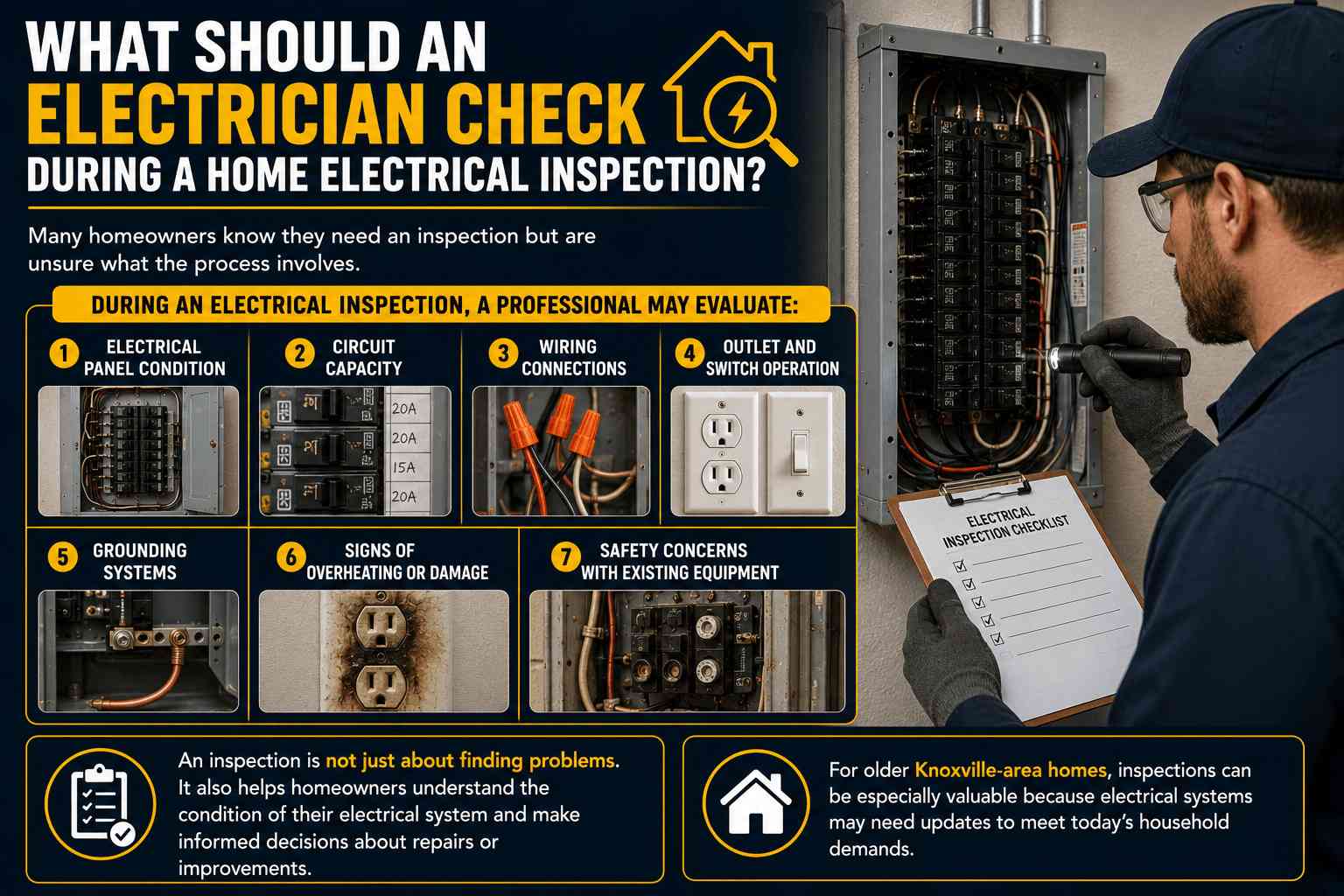
What Should an Electrician Check During a Home Electrical Inspection?
Many homeowners know they need an inspection but are unsure what the process involves.
During an electrical inspection, a professional may evaluate:
- Electrical panel condition
- Circuit capacity
- Wiring connections
- Outlet and switch operation
- Grounding systems
- Signs of overheating or damage
- Safety concerns with existing equipment
An inspection is not just about finding problems. It also helps homeowners understand the condition of their electrical system and make informed decisions about repairs or improvements.
For older Knoxville-area homes, inspections can be especially valuable because electrical systems may need updates to meet today’s household demands.
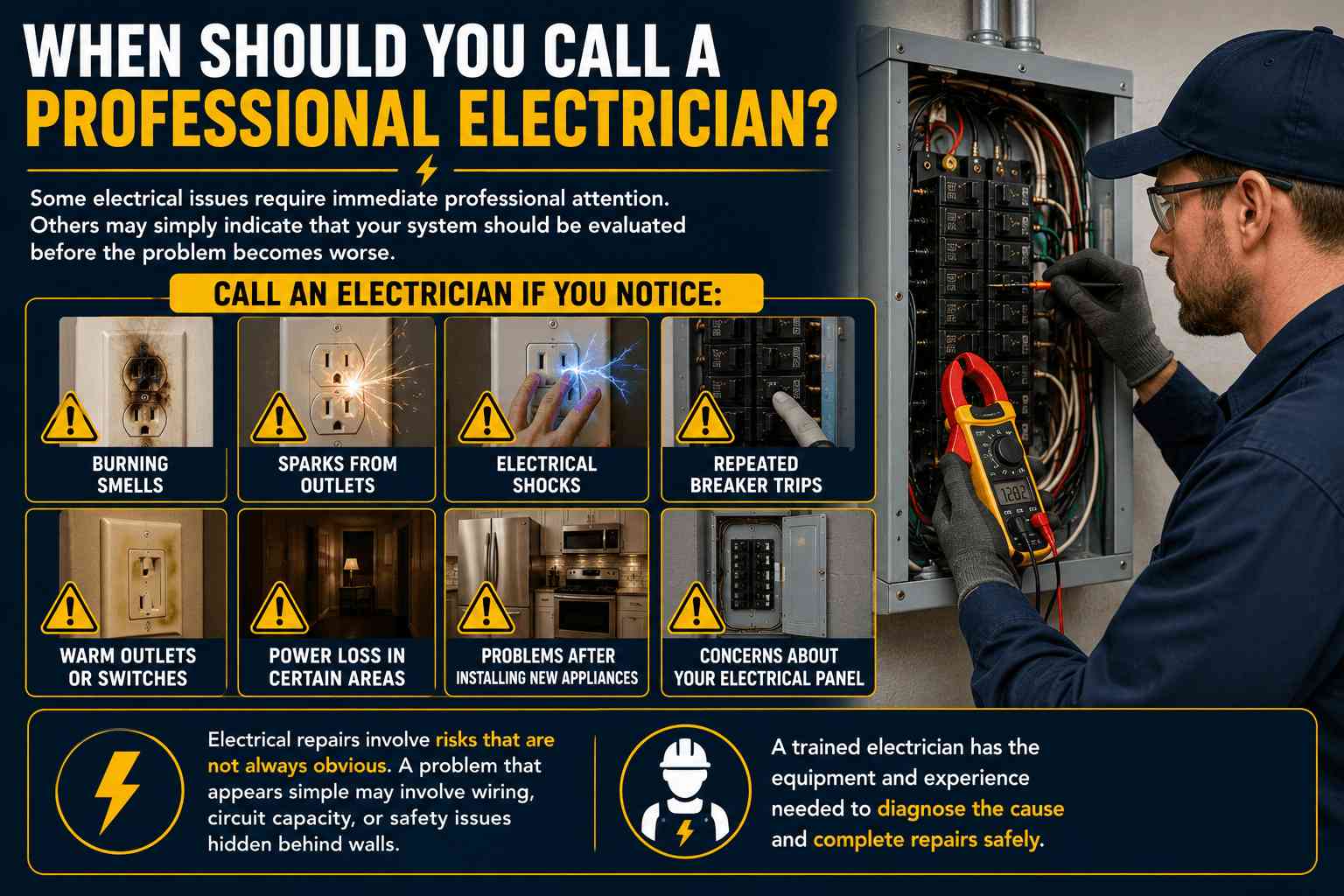
When Should You Call a Professional Electrician?
Some electrical issues require immediate professional attention. Others may simply indicate that your system should be evaluated before the problem becomes worse.
Call an electrician if you notice:
- Burning smells
- Sparks from outlets
- Electrical shocks
- Repeated breaker trips
- Warm outlets or switches
- Power loss in certain areas of your home
- Problems after installing new appliances
- Concerns about your electrical panel
Electrical repairs involve risks that are not always obvious. A problem that appears simple may involve wiring, circuit capacity, or safety issues hidden behind walls.
A trained electrician has the equipment and experience needed to diagnose the cause and complete repairs safely.
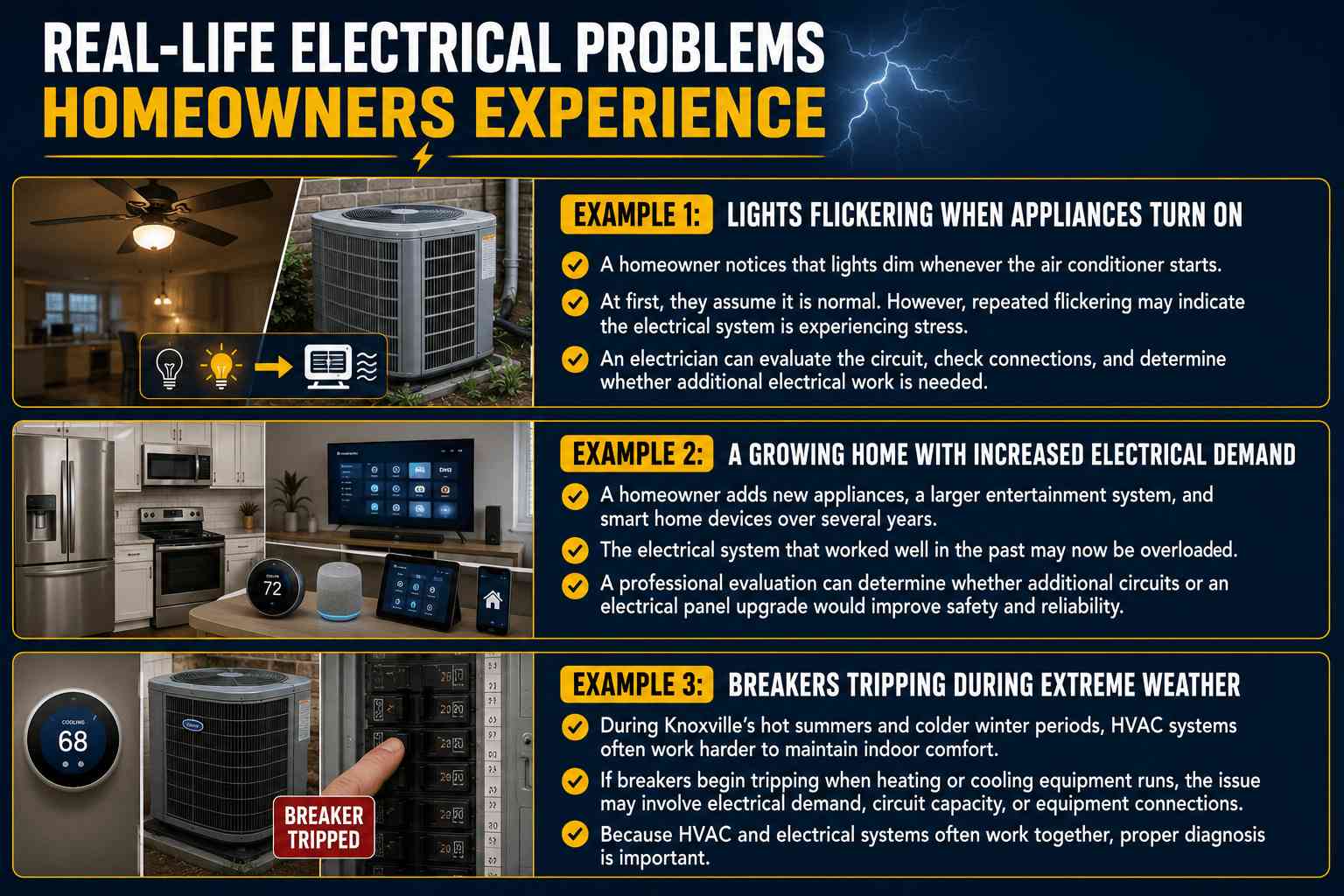
Real-Life Electrical Problems Homeowners Experience
Example 1: Lights Flickering When Appliances Turn On
A homeowner notices that lights dim whenever the air conditioner starts.
At first, they assume it is normal. However, repeated flickering may indicate the electrical system is experiencing stress.
An electrician can evaluate the circuit, check connections, and determine whether additional electrical work is needed.
Example 2: A Growing Home With Increased Electrical Demand
A homeowner adds new appliances, a larger entertainment system, and smart home devices over several years.
The electrical system that worked well in the past may now be overloaded.
A professional evaluation can determine whether additional circuits or an electrical panel upgrade would improve safety and reliability.
Example 3: Breakers Tripping During Extreme Weather
During Knoxville’s hot summers and colder winter periods, HVAC systems often work harder to maintain indoor comfort.
If breakers begin tripping when heating or cooling equipment runs, the issue may involve electrical demand, circuit capacity, or equipment connections.
Because HVAC and electrical systems often work together, proper diagnosis is important.
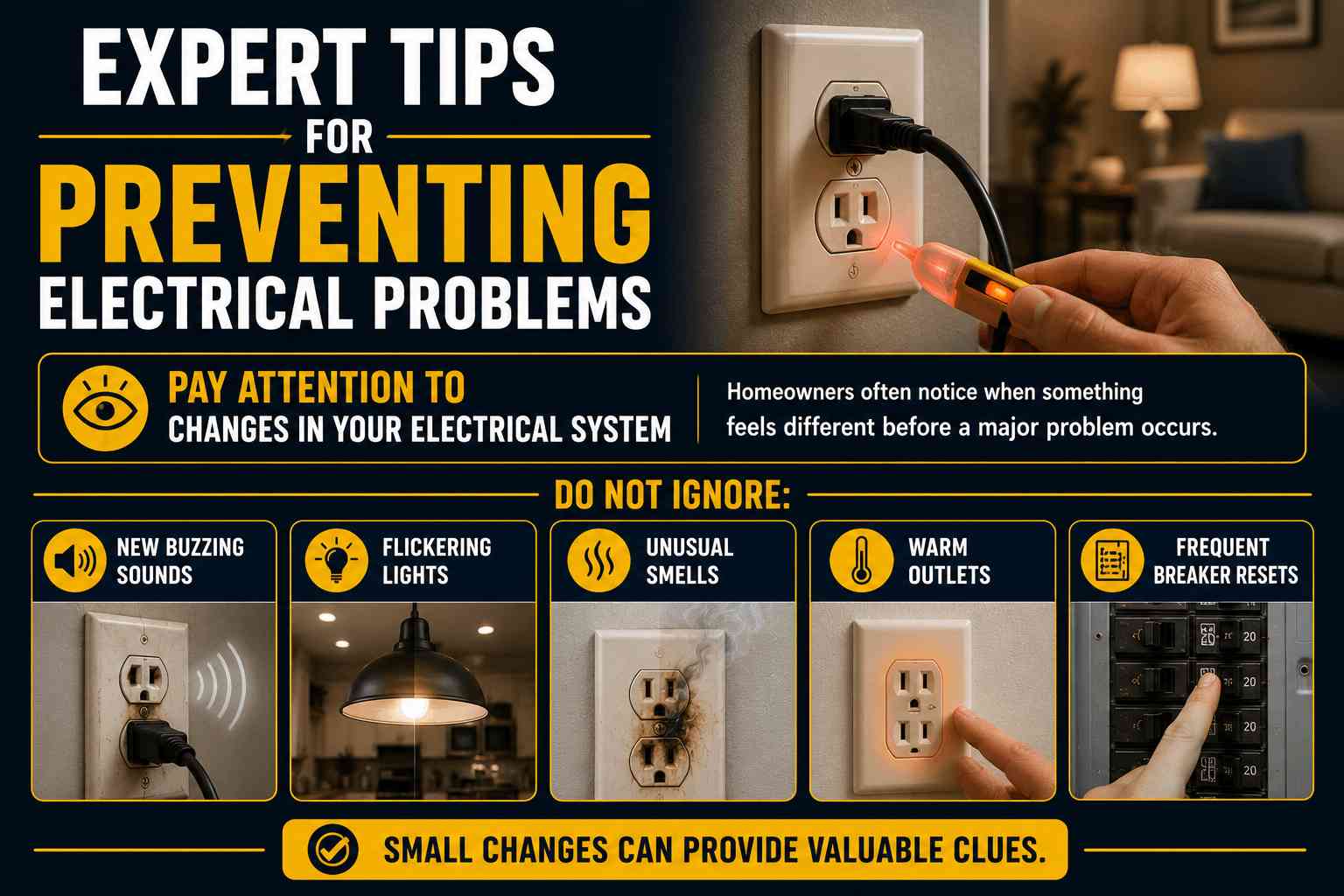
Expert Tips for Preventing Electrical Problems
Pay Attention to Changes in Your Electrical System
Homeowners often notice when something feels different before a major problem occurs.
Do not ignore:
- New buzzing sounds
- Flickering lights
- Unusual smells
- Warm outlets
- Frequent breaker resets
Small changes can provide valuable clues.
Avoid Overloading Electrical Outlets
Plugging too many high-powered devices into one outlet can increase the risk of overheating.
Use properly rated equipment and avoid relying on extension cords as a permanent electrical solution.
Schedule Electrical Inspections Before Major Home Improvements
Before remodeling, adding appliances, or installing new equipment, have your electrical system evaluated.
Planning ahead can prevent unexpected electrical issues during a renovation.
Know Your Electrical Panel Location
Every homeowner should know where the electrical panel is located and keep access clear.
Knowing how to safely shut off power during an emergency can help protect your home while waiting for professional assistance.
Conclusion
Electrical problems rarely appear without warning. Flickering lights, repeated breaker trips, burning smells, and outdated electrical components are all signs that your home’s electrical system may need attention.
The safest approach is to address concerns early rather than waiting until a small issue becomes a major repair.
At Chaffee HVAC, Plumbing & Electrical, our team helps homeowners identify electrical problems and find reliable solutions that fit their homes and needs. Whether you need an inspection, repair, or electrical upgrade, our professionals are here to help.
If something about your electrical system does not seem right, contact Chaffee HVAC, Plumbing & Electrical to schedule a professional evaluation.
For expert help you can trust, contact Chaffee HVAC, Plumbing, & Electrical in Knoxville today to schedule your no-obligation electrical safety inspection.
Frequently Asked Questions
What are the warning signs of electrical problems in a home?
Common warning signs include flickering lights, frequent breaker trips, burning smells, warm outlets, sparks, and outdated electrical components. These issues should be inspected before they create larger safety concerns.
Can I repair electrical problems myself?
Simple tasks like resetting a breaker may be safe, but electrical repairs involving wiring, panels, or damaged components should be handled by a qualified electrician. Improper repairs can create safety hazards.
Why does my circuit breaker keep tripping?
A breaker may trip because of an overloaded circuit, faulty appliance, short circuit, or electrical system problem. Frequent trips usually mean the underlying issue needs professional diagnosis.
Is it normal for lights to flicker sometimes?
A single flickering bulb may have a simple cause, but repeated flickering throughout your home can indicate electrical problems. A professional inspection can determine the reason.
How do I know if my electrical panel needs an upgrade?
Signs include frequent breaker trips, limited circuits, older equipment, and difficulty supporting new appliances. An electrician can evaluate whether your panel can safely handle your home’s electrical needs.
Why are my outlets warm?
Warm outlets may indicate overloaded circuits, loose wiring, or damaged electrical components. Since heat can be a warning sign, warm outlets should be inspected.
How often should I schedule an electrical inspection?
Electrical inspections are especially helpful for older homes, recently purchased properties, and homes undergoing renovations. A professional can recommend inspection timing based on your home’s condition.
What causes a burning smell from an outlet?
A burning smell may come from overheating wiring, damaged insulation, or loose electrical connections. It is important to stop using the outlet and have the issue inspected.
Do older homes need electrical upgrades?
Older homes may need updates to safely support modern electrical demands. An inspection can identify outdated wiring, grounding concerns, or limited electrical capacity.
When should I call an electrician immediately?
Call an electrician if you notice sparks, burning smells, electrical shocks, repeated breaker trips, or signs of overheating. These problems may indicate a serious electrical safety concern that should not be delayed.

Contact Us
Chaffee HVAC, Plumbing, & Electrical
5725 Ball Camp Pike
Knoxville, TN 37921
865-247-8888 – Cooling/Heating
865-602-3552 – Plumbing
office@coolingheatingplumbing.com
About Us
Your local HVAC company, Chaffee, bring decades of experience to our work. What this means to you as a customer is that you can expect to receive the highest-quality professional service, regardless of your needs.