(865)-247-8888
Plumbing Problems Homeowners Should Never Ignore
Introduction
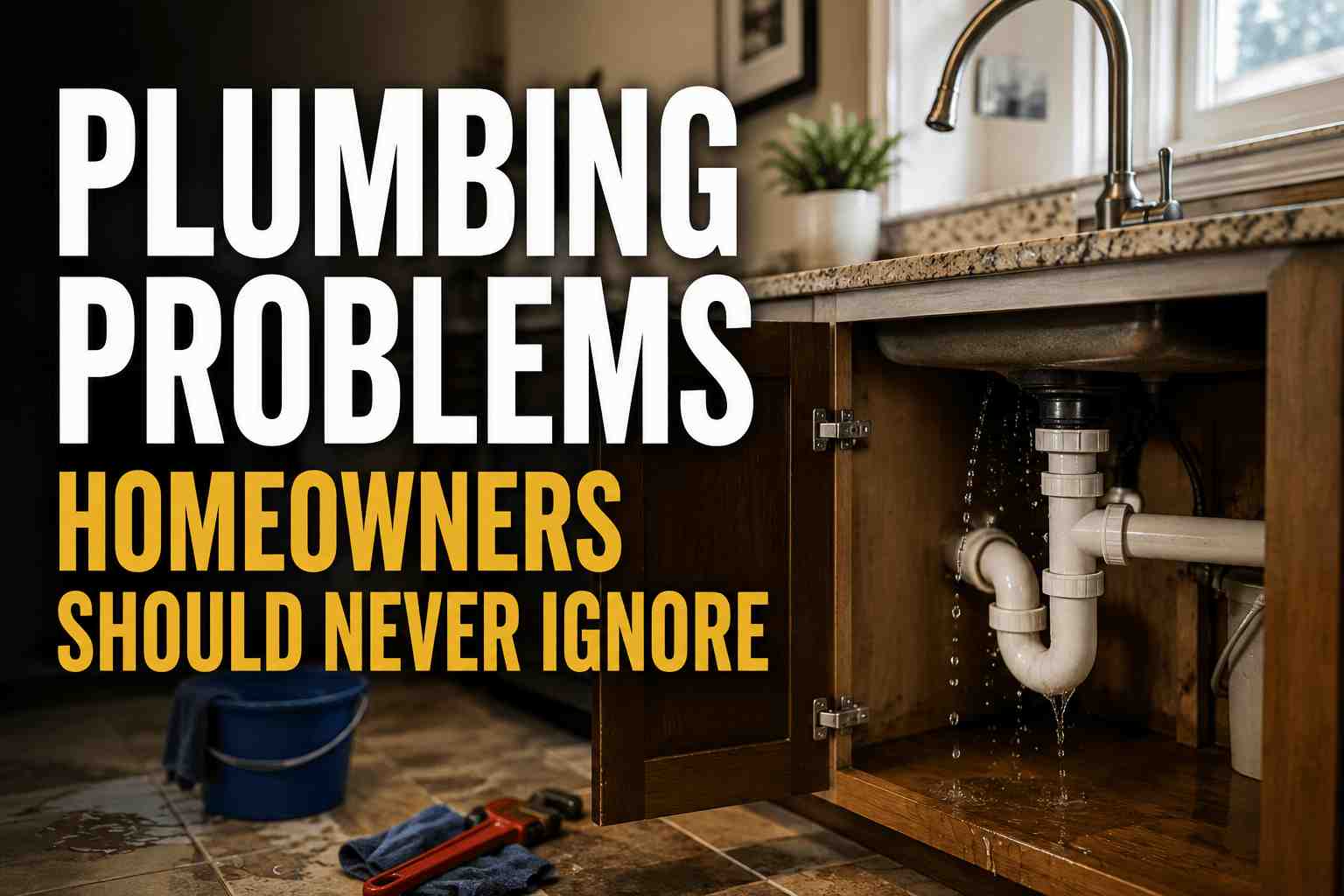
A small drip under the sink. A toilet that occasionally keeps running. A drain that takes a little longer to empty than it used to.
These problems may not seem urgent at first, but many major plumbing repairs begin with exactly these types of warning signs. Homeowners often wait until there is visible water damage or a complete system failure before calling for help, but early attention can make a significant difference.
Your plumbing system works behind the scenes every day, providing clean water, removing wastewater, and supporting everything from cooking and cleaning to bathing and laundry. Because plumbing components are constantly exposed to water pressure, temperature changes, and daily use, wear and tear is unavoidable.
The challenge is knowing which issues are simple maintenance concerns and which ones signal a bigger problem.
Understanding the plumbing problems homeowners should never ignore can help you protect your property, avoid unnecessary damage, and make informed decisions before a small repair becomes a major expense.
Keypoints
- Many plumbing emergencies begin as small warning signs homeowners overlook.
- Early repairs can help prevent water damage, higher utility bills, and expensive restoration work.
- Recurring leaks, clogs, and water pressure issues often point to larger plumbing concerns.
- Professional inspections can identify problems hidden behind walls, under floors, or inside aging pipes.
- Routine plumbing maintenance helps protect your home’s comfort, safety, and long-term value.
What Are the Most Common Plumbing Problems Homeowners Experience?
Every home’s plumbing system is different, but many homeowners encounter similar issues over time. Some problems develop gradually, while others appear suddenly and require immediate attention.
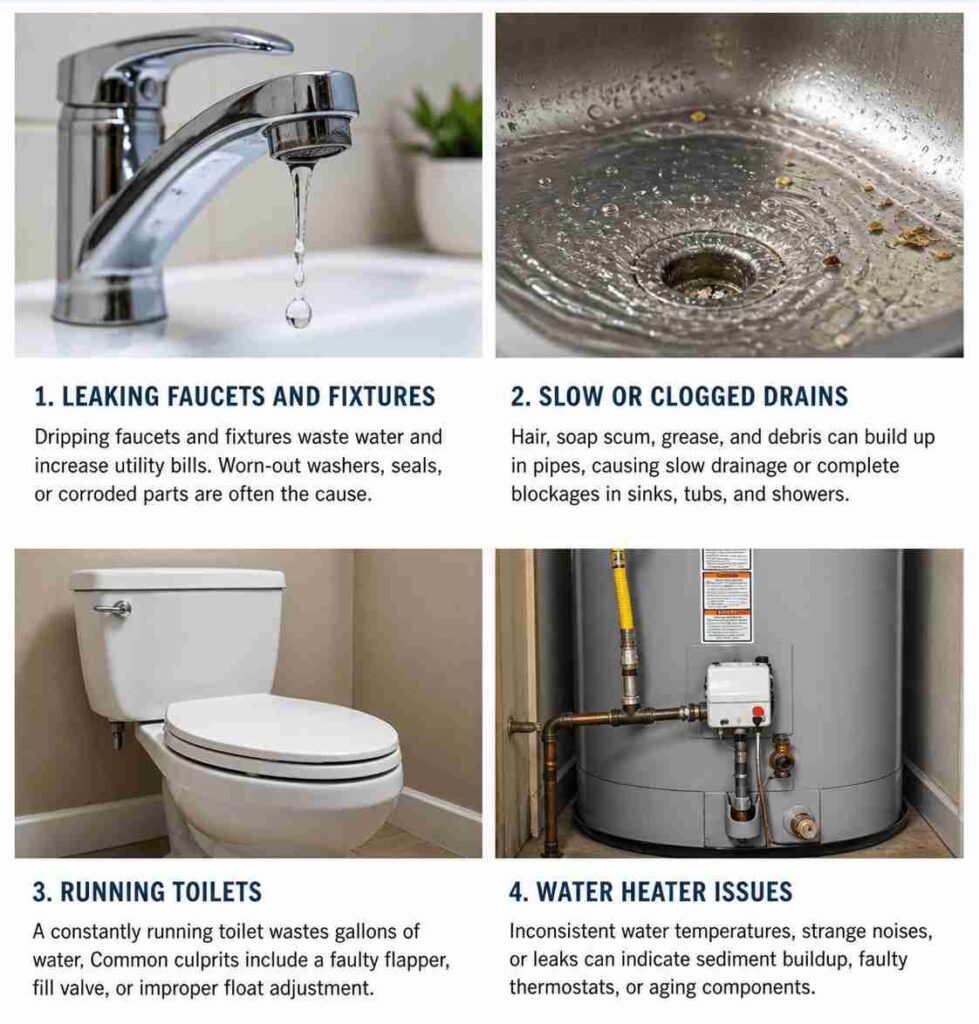
Common residential plumbing problems include:
Leaking Faucets and Fixtures
A dripping faucet may seem like a minor inconvenience, but it can waste water continuously and increase your utility costs. In many cases, a small leak is caused by worn internal components that need repair or replacement.
Ignoring a leaking fixture can also allow moisture to collect around sinks, cabinets, or countertops, creating additional damage over time.
Slow or Clogged Drains
Slow drains are often an early warning sign that something is restricting water flow. Hair, grease, soap residue, food particles, and mineral buildup can gradually collect inside pipes.
While store-bought solutions may temporarily improve drainage, recurring clogs often indicate a deeper issue that needs professional evaluation.
Running Toilets
A toilet that continues running after flushing is more than just an annoying sound. A faulty flapper valve, fill valve, or internal component can waste large amounts of water each day.
Because running toilets are easy to overlook, many homeowners end up paying for unnecessary water usage for months.
Low Water Pressure
Weak water pressure can affect your entire home or only certain fixtures. Common causes include mineral buildup, aging pipes, hidden leaks, or issues with plumbing fixtures.
A sudden change in water pressure should not be ignored because it may indicate a developing plumbing problem.
Water Heater Issues
Water heater problems often start with subtle signs, such as inconsistent hot water or unusual noises. Addressing these issues early can help prevent unexpected failures and water damage.
How Can You Tell If You Have a Hidden Plumbing Leak?
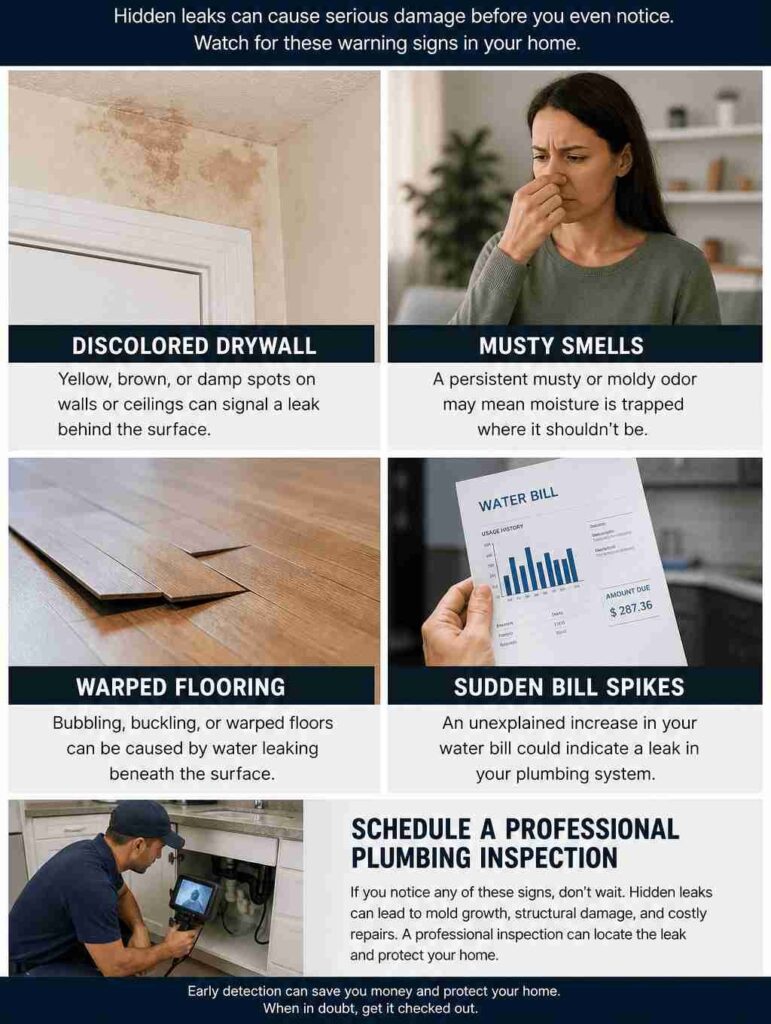
Not all plumbing problems are easy to see. Some of the most damaging leaks occur behind walls, beneath flooring, or underground where they can go unnoticed for weeks or even months.
Common warning signs of a hidden water leak include:
- A sudden increase in your water bill
- Damp or discolored areas on walls or ceilings
- Musty smells throughout the home
- Mold or mildew growth
- Warped flooring or damaged drywall
- The sound of running water when fixtures are turned off
For example, a small pipe leak behind a bathroom wall may appear harmless at first. However, continuous moisture can weaken building materials, damage insulation, and create conditions where mold can grow.
If you notice unexplained moisture or changes in your water usage, it is worth having the plumbing system inspected before the damage spreads.
When Should You Call a Professional Plumber?
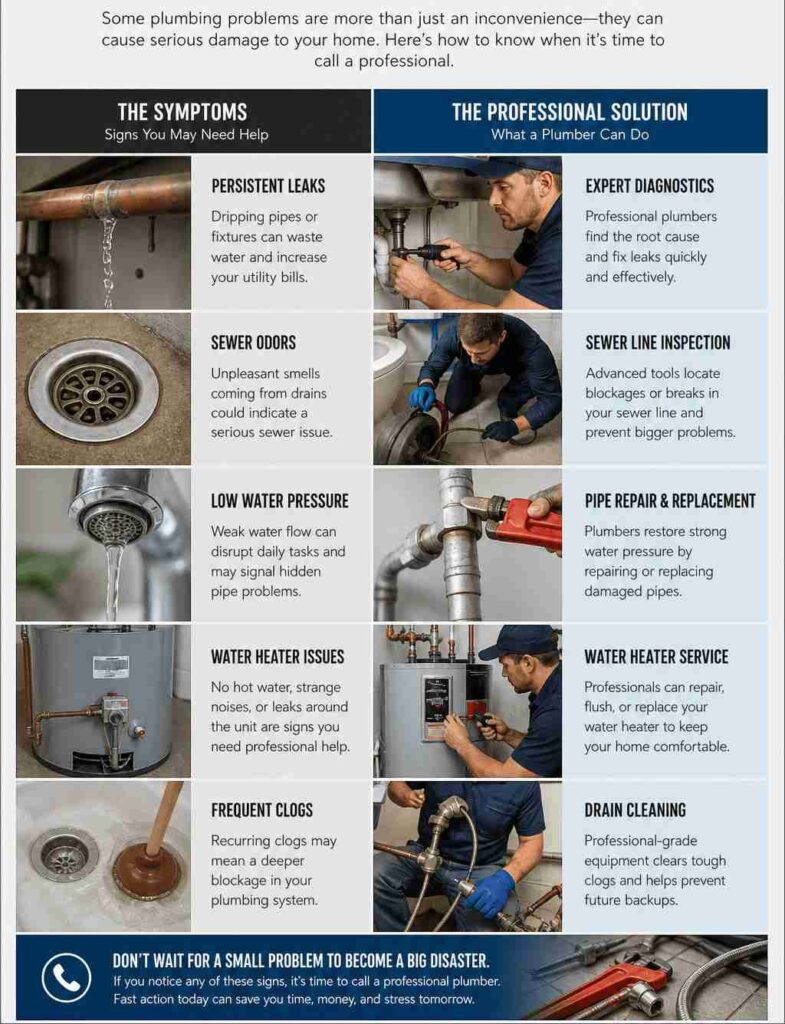
Many homeowners are comfortable handling basic maintenance, such as replacing a faucet aerator or clearing a minor drain blockage. However, plumbing repairs can become complicated quickly, especially when the problem involves pipes, water lines, or hidden components.
A professional plumber should be contacted when you experience:
- Persistent leaks
- Water stains or moisture damage
- Sewer odors or backups
- Burst pipes
- Main water line concerns
- Recurring drain problems
- Low water pressure throughout the home
- Water heater failures
One common mistake homeowners make is repeatedly treating the symptom instead of addressing the cause. For example, using a drain cleaner every few weeks may temporarily clear a clog, but it does not solve the buildup or pipe issue creating the problem.
A professional inspection helps determine whether you need a simple repair, maintenance service, or a larger plumbing solution.
Why Do Drains Keep Getting Clogged Even After Cleaning Them?
A drain that repeatedly becomes clogged usually has an underlying cause.
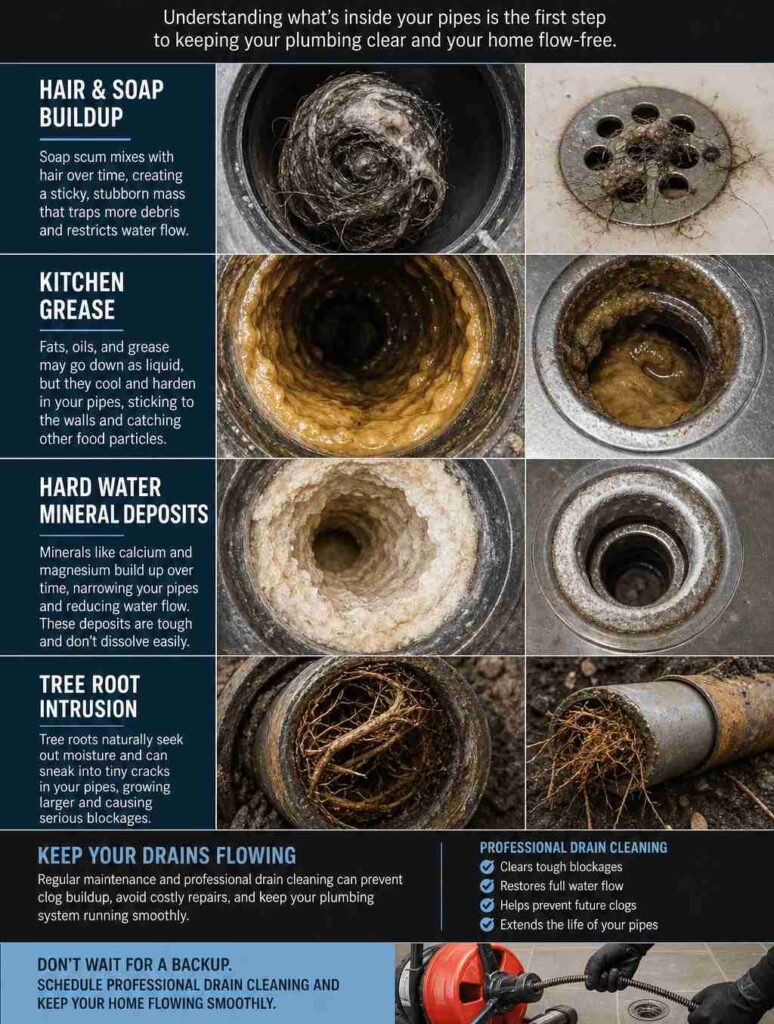
Common reasons drains continue backing up include:
Hair and Soap Buildup
Bathroom drains often collect hair, soap residue, and other debris that slowly restrict water flow.
Grease and Food Waste
Kitchen drains are especially vulnerable to grease and food particles. Even small amounts of grease can stick to pipe walls and create buildup over time.
Mineral Deposits
Hard water can leave behind mineral deposits that narrow the inside of pipes and reduce drainage performance.
Tree Root Intrusion
For some homes, underground pipes can be affected by tree roots growing into damaged sections of plumbing lines.
A recurring clog is a sign that the problem may be deeper than the drain opening. Professional drain cleaning and inspections can help identify the actual cause.
What Causes Low Water Pressure Throughout a Home?
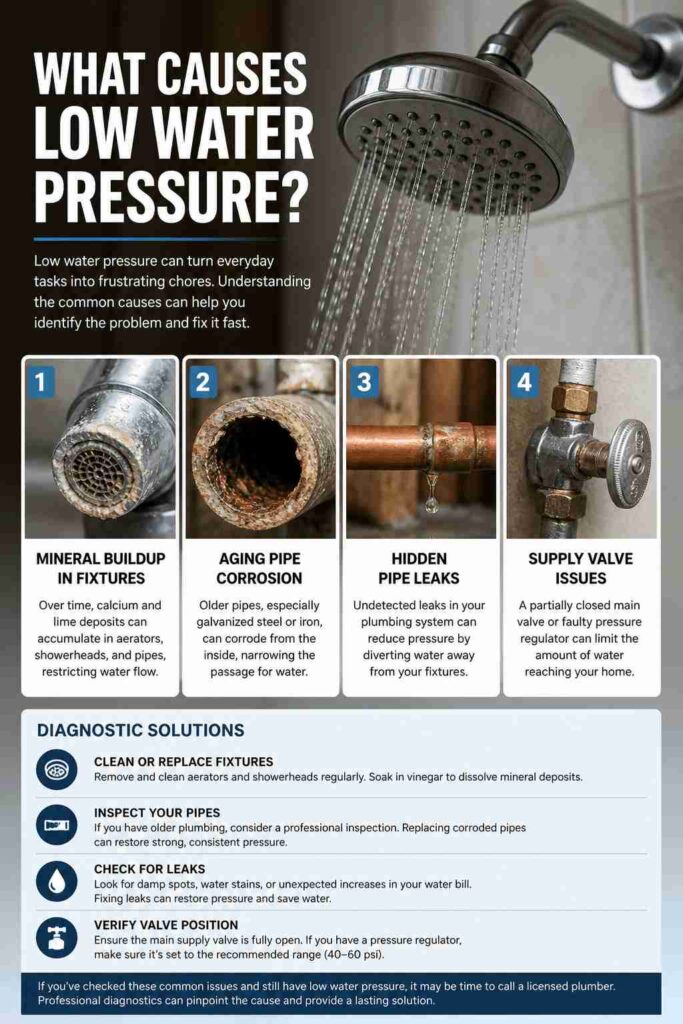
Low water pressure can make everyday tasks frustrating, from taking showers to washing dishes. While homeowners often assume the problem is caused by a fixture, the issue may involve the plumbing system itself.
Possible causes include:
Mineral Buildup
Homes with hard water may experience mineral deposits collecting inside pipes, faucets, and fixtures. Over time, this buildup can restrict water flow.
Aging Pipes
Older plumbing systems may develop corrosion, leaks, or internal restrictions that affect pressure.
Hidden Leaks
A leaking pipe can reduce the amount of water reaching fixtures throughout the home.
Plumbing Supply Issues
Problems with valves, water lines, or other components may also affect pressure.
If multiple areas of your home experience low pressure, a professional plumbing inspection can help identify the source.
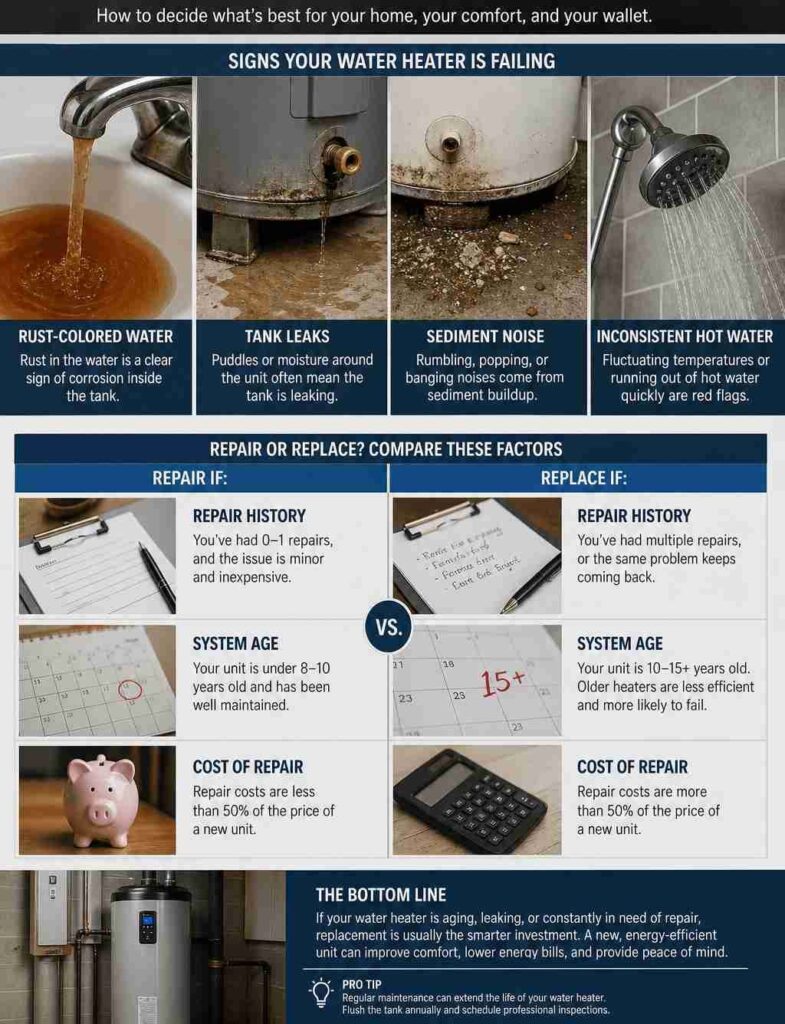
How Do You Know When a Water Heater Needs Repair or Replacement?
Your water heater works every day, but many homeowners do not think about it until they run out of hot water or notice a problem.
Warning signs your water heater may need attention include:
- Water that does not stay hot
- Strange popping or banging sounds
- Rust-colored water
- Leaking around the tank
- Increasing energy costs
- Frequent repairs
For example, unusual noises may be caused by sediment buildup inside the tank. Over time, this can reduce efficiency and force the system to work harder.
When deciding between repair and replacement, homeowners should consider the age of the unit, repair history, energy efficiency, and overall condition.
A professional plumber can help determine the most practical option for your home.
Which Plumbing Problems Require Emergency Service?
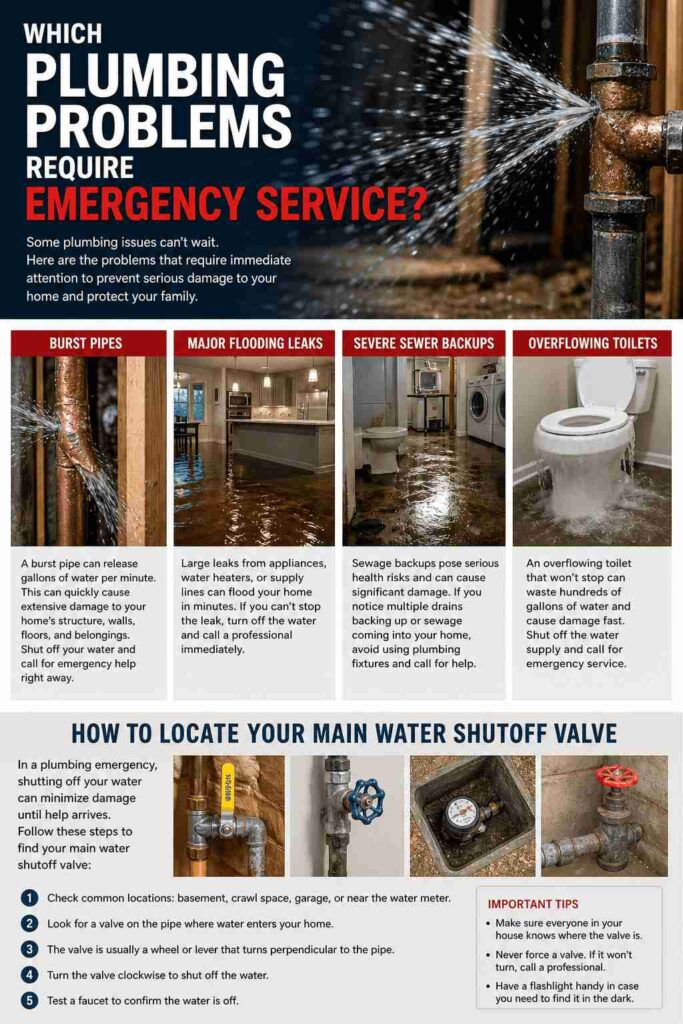
Some plumbing problems should not wait for a convenient appointment. Certain issues can quickly lead to significant water damage if they are not addressed.
Emergency plumbing situations may include:
- Burst pipes
- Major leaks
- Sewer backups
- No water supply
- Overflowing toilets
- Water heater leaks
If a pipe bursts or a major leak occurs, the first step is to shut off the main water supply if it is safe to do so. Reducing water flow quickly can help limit damage while professional repairs are arranged.
Knowing where your shutoff valve is located before an emergency happens can save valuable time.
Can Plumbing Maintenance Help Prevent Major Repairs?
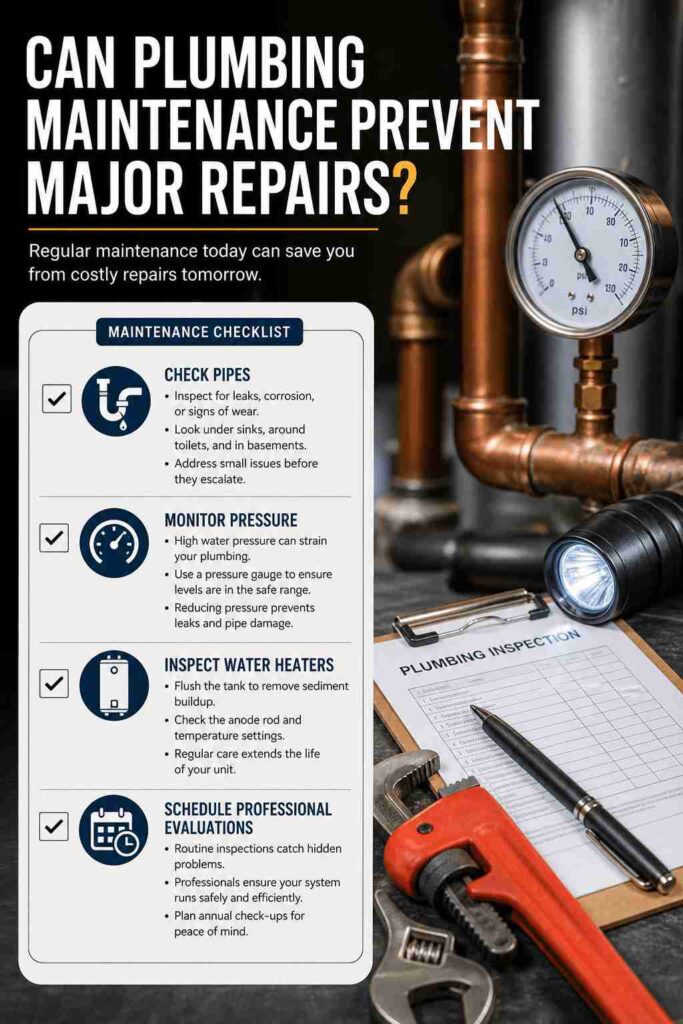
Preventative plumbing maintenance is one of the best ways to catch small problems before they become expensive repairs.
Regular maintenance may include:
- Checking exposed pipes for leaks
- Monitoring changes in water pressure
- Inspecting water heaters
- Addressing slow drains early
- Checking fixtures and valves
- Scheduling professional plumbing inspections
During a plumbing inspection, technicians can often identify early signs of wear, leaks, corrosion, or other concerns before they cause major damage.
Just like maintaining your HVAC system helps improve reliability, regular plumbing care helps extend the life of your home’s water system.
Real Examples of Small Plumbing Problems Becoming Bigger Issues
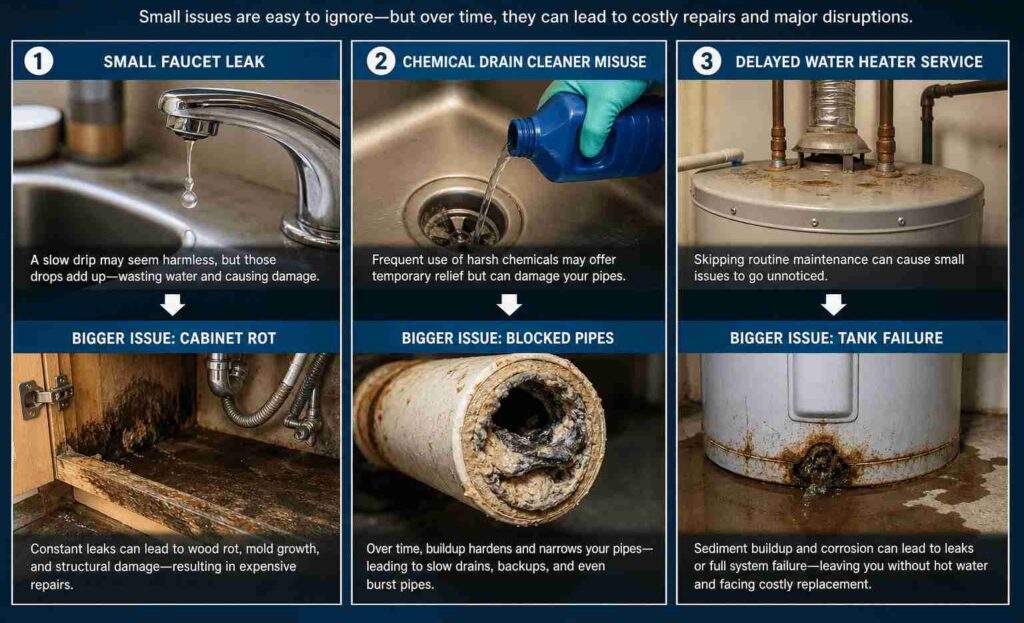
Example 1: A Small Faucet Leak
A homeowner notices a faucet dripping but decides it is not urgent. Over time, the constant leak increases water usage and eventually damages the fixture and surrounding area.
Example 2: A Recurring Drain Clog
A homeowner repeatedly uses chemical cleaners whenever the kitchen sink slows down. The drain improves temporarily, but the underlying buildup continues until a larger blockage develops.
Example 3: An Aging Water Heater
A homeowner notices inconsistent hot water but delays service. Eventually, the aging unit develops a leak that causes water damage that could have been prevented with earlier inspection.
Expert Tips: How Can Homeowners Protect Their Plumbing System?
Professional plumbers recommend several simple habits that can help homeowners avoid unnecessary repairs.
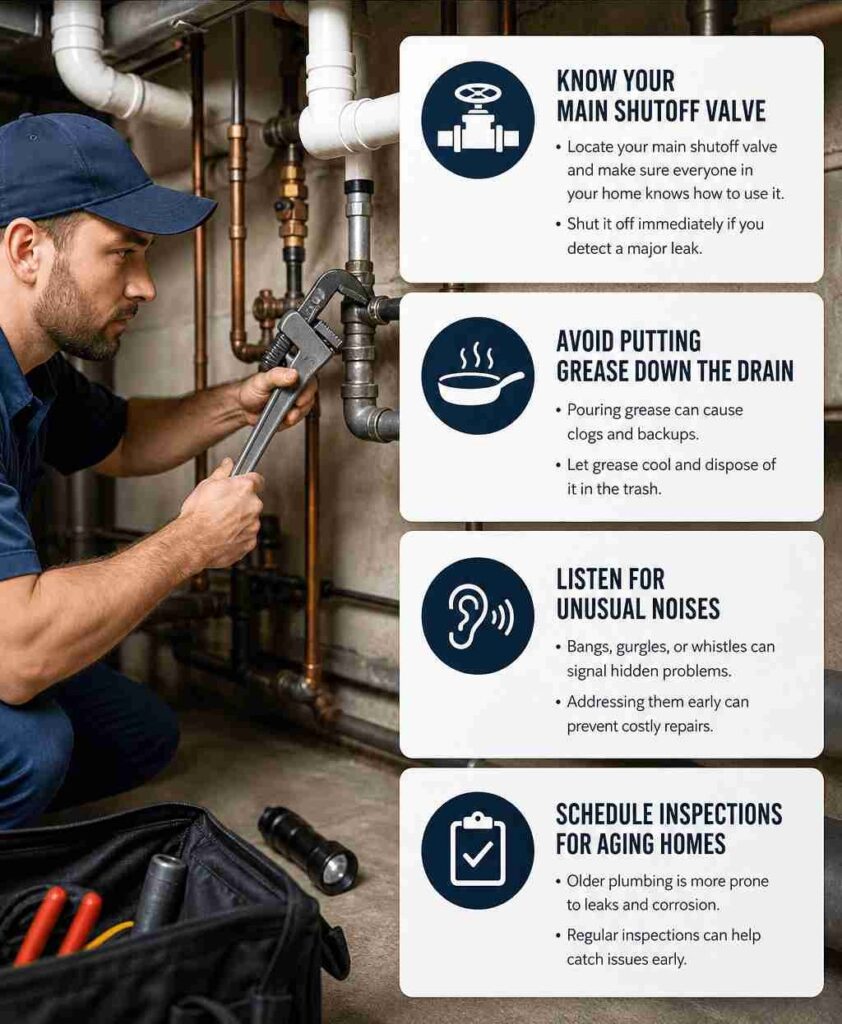
Learn Where Your Main Water Shutoff Valve Is Located
In a plumbing emergency, quickly shutting off the water supply can reduce damage.
Pay Attention to Changes
A new noise, unusual smell, slow drain, or change in water pressure may be your first warning sign.
Avoid Putting Damaging Materials Down Drains
Grease, oils, wipes, and inappropriate materials can create serious blockages.
Do Not Ignore Recurring Problems
A problem that keeps coming back usually has an underlying cause. Repeated temporary fixes can cost more in the long run.
Schedule Inspections for Older Homes
Older plumbing systems may benefit from professional evaluations to identify aging pipes, corrosion, or potential failures.
Conclusion
Your plumbing system plays an important role in keeping your home comfortable, safe, and functional. While some issues may seem small, ignoring warning signs can allow problems to grow into costly repairs.
Leaks, recurring clogs, low water pressure, sewer concerns, and water heater issues are all signs that your plumbing system may need attention.
The best time to address a plumbing problem is before it becomes an emergency.
If you are experiencing plumbing issues or want to make sure your system is working properly, Chaffee HVAC, Plumbing & Electrical is here to help with reliable service and experienced solutions.
Contact Chaffee HVAC, Plumbing & Electrical today to schedule plumbing repairs, inspections, or maintenance and protect your home from unexpected plumbing problems.
For expert help you can trust, contact Chaffee HVAC, Plumbing, & Electrical in Knoxville today to schedule your no-obligation electrical safety inspection.
Frequently Asked Questions
What plumbing problems should homeowners never ignore?
Homeowners should never ignore leaks, sewer backups, burst pipes, water heater issues, or sudden changes in water pressure. These problems can lead to water damage, higher repair costs, and larger system failures.
How do I know if I have a hidden plumbing leak?
Signs of hidden leaks include higher water bills, damp spots, musty odors, mold growth, and unexplained sounds of running water. Professional inspections can help locate leaks that are not visible.
Why does my drain keep clogging?
Recurring clogs are often caused by buildup deeper inside the plumbing system. Hair, grease, mineral deposits, or damaged pipes may be contributing to the problem.
Is a dripping faucet a serious plumbing issue?
A dripping faucet may seem minor, but it wastes water and can increase utility costs. It may also indicate worn internal components that need repair.
What causes low water pressure in a home?
Low water pressure can result from mineral buildup, aging pipes, leaks, damaged fixtures, or plumbing supply issues. A professional inspection can help identify the exact cause.
How often should plumbing systems be inspected?
Inspection needs depend on the age and condition of your plumbing system. Older homes or properties with recurring issues may benefit from more frequent evaluations.
Are chemical drain cleaners safe for pipes?
Chemical drain cleaners may provide temporary relief but can damage certain plumbing materials and often fail to address deeper blockages. Professional drain cleaning is usually a safer long-term approach.
How long does a residential water heater last?
A water heater’s lifespan depends on its type, maintenance, water quality, and usage. Regular service can help identify when repairs or replacement may be needed.
What should I do if a pipe bursts?
Turn off the main water supply if possible and contact a plumbing professional immediately. Quick action can reduce water damage and prevent additional problems.
Can plumbing problems increase my water bill?
Yes. Running toilets, leaking fixtures, and hidden pipe leaks can waste significant amounts of water. Repairing these problems can help improve efficiency and reduce unnecessary costs.

Contact Us
Chaffee HVAC, Plumbing, & Electrical
5725 Ball Camp Pike
Knoxville, TN 37921
865-247-8888 – Cooling/Heating
865-602-3552 – Plumbing
office@coolingheatingplumbing.com
About Us
Your local HVAC company, Chaffee, bring decades of experience to our work. What this means to you as a customer is that you can expect to receive the highest-quality professional service, regardless of your needs.