(865)-247-8888
Frozen Pipes During Cold Snaps: What Homeowners Need to Know Before Temperatures Drop
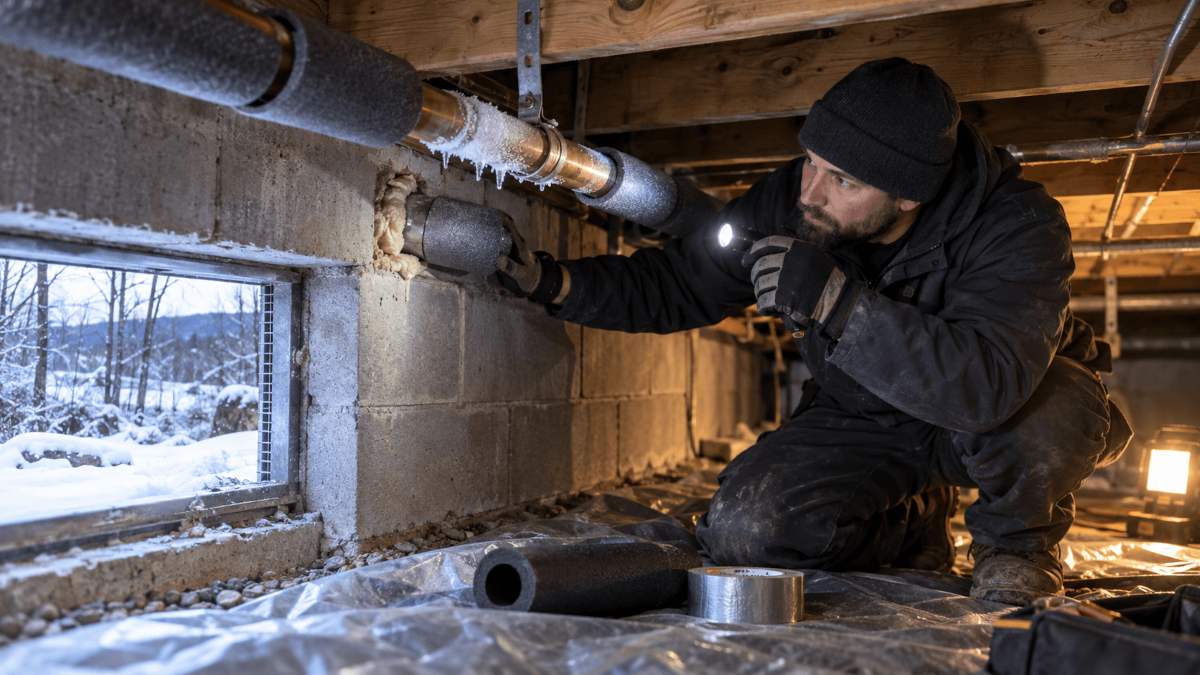
Keypoints
- Frozen pipes can happen during unexpected cold snaps, even in areas where freezing temperatures are uncommon.
- Pipes in crawl spaces, exterior walls, garages, and outdoor plumbing connections are among the most vulnerable.
- Water expands when it freezes, creating pressure that can crack pipes and lead to major water damage after thawing.
- Simple steps like insulating pipes, sealing drafts, and preparing outdoor faucets can reduce the risk of frozen plumbing.
- Acting quickly when a pipe freezes or bursts can help limit repairs and prevent additional damage.
Introduction
A sudden cold snap can catch homeowners off guard. One day, your plumbing system is working normally. The next morning, a faucet may have little or no water flow or worse, a hidden pipe may have cracked and started leaking.
Many homeowners associate frozen pipes with areas that experience long, severe winters. However, even homes in regions with generally mild winters can experience plumbing emergencies when temperatures unexpectedly drop below freezing.
The reason is simple: water expands when it freezes. As ice forms inside a pipe, it creates pressure that can damage the plumbing line. In many cases, the pipe does not immediately leak. The crack may remain hidden until temperatures rise, the ice melts, and water pressure returns.
At Chaffee HVAC, Plumbing, & Electrical, we understand that winter plumbing problems often happen at the worst possible time. Knowing where your pipes are most vulnerable and preparing before freezing weather arrives can help protect your home from costly repairs.
Why Do Pipes Freeze During Cold Snaps?
Pipes freeze when the water inside the plumbing system reaches freezing temperatures and turns into ice. Because ice takes up more space than liquid water, it expands and creates pressure inside the pipe.
The damage often occurs because the expanding ice blocks normal water movement. Pressure continues building between the frozen section and the closed faucet or water source, eventually causing the pipe to crack.
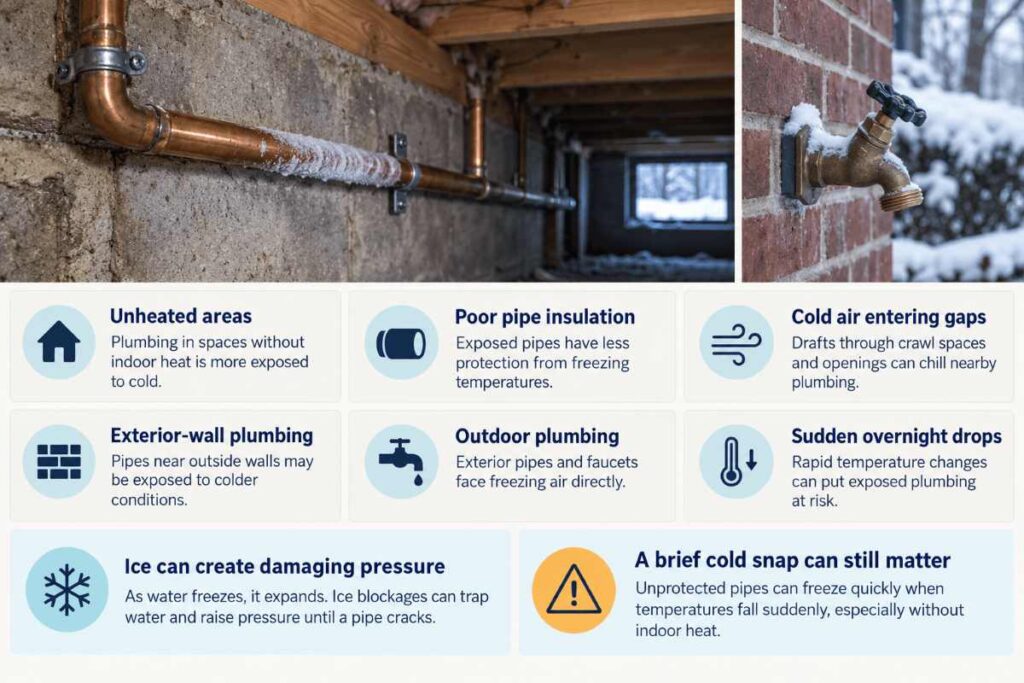
Some of the most common reasons pipes freeze include:
- Plumbing located in unheated areas
- Poor insulation around exposed pipes
- Cold air entering through crawl spaces or gaps
- Pipes installed near exterior walls
- Outdoor plumbing exposed directly to freezing temperatures
- Sudden overnight temperature drops
A common mistake homeowners make is assuming a short freeze is not enough time to cause damage. In reality, exposed pipes can freeze quickly when temperatures drop suddenly, especially in areas that are not protected by indoor heat.
Which Areas of Your Home Are Most at Risk for Frozen Pipes?
Some plumbing lines are naturally better protected than others. Pipes located inside heated interior walls are usually safer, while plumbing in exposed areas requires additional attention.
Knowing where these vulnerable areas are can help homeowners focus their winter preparation efforts.
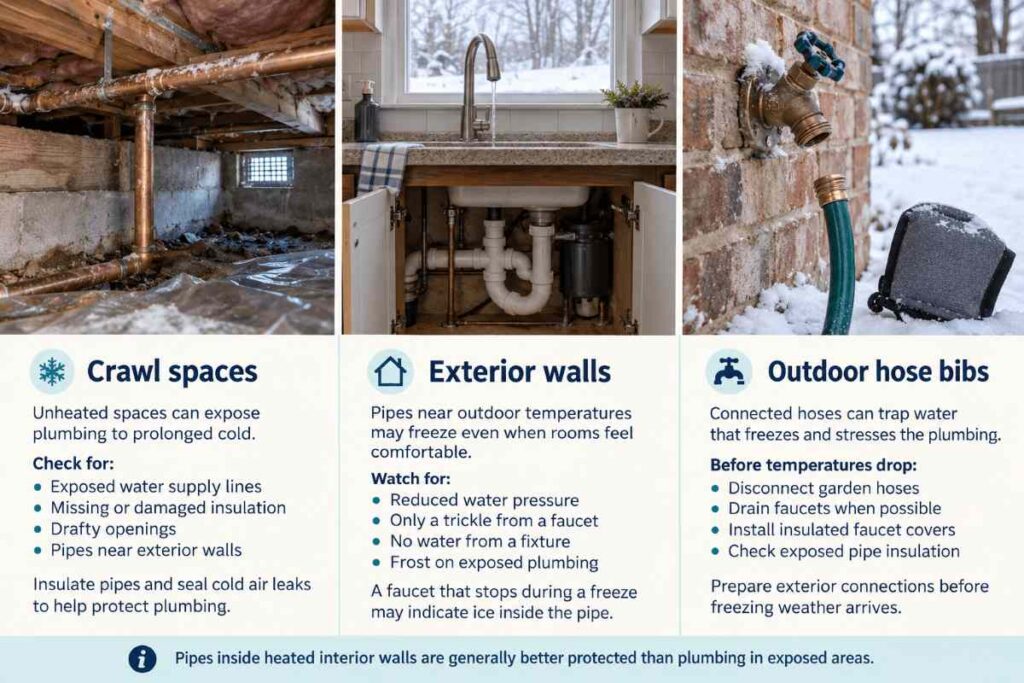
Crawl Spaces: A Common Location for Frozen Pipes
Crawl spaces are one of the most frequent areas where freezing problems develop.
Because crawl spaces often have limited insulation and airflow, temperatures inside can drop much faster than the rest of the home. Plumbing lines running through these areas may be exposed to cold air for extended periods.
Homeowners should inspect crawl spaces for:
- Exposed water supply lines
- Damaged or missing insulation
- Drafty openings
- Pipes located near exterior walls
Adding insulation and sealing cold air leaks can help maintain safer temperatures around plumbing.
Exterior Walls: Hidden Plumbing Risks
Pipes located inside exterior walls can be difficult to protect because they are close to outdoor temperatures.
Unlike plumbing inside interior walls, these pipes have less protection from the cold. If insulation is inadequate, freezing temperatures can affect the pipe even when the home itself feels comfortable.
Warning signs may include:
- Reduced water pressure
- A faucet producing only a small amount of water
- No water coming from a fixture
- Frost forming on exposed plumbing sections
If a faucet suddenly stops working during a freeze, it may be a sign that ice has formed inside the pipe.
Outdoor Hose Bibs: Protecting Exterior Plumbing Connections
Outdoor faucets, also called hose bibs, are especially vulnerable because they are directly exposed to winter weather.
One of the most common causes of outdoor pipe damage is leaving a garden hose connected during freezing temperatures. Water trapped inside the hose or faucet connection can freeze, expand, and put pressure on the plumbing line.
Before temperatures drop:
- Disconnect garden hoses
- Drain outdoor faucets when possible
- Install insulated faucet covers
- Check exposed outdoor pipes for insulation
A small amount of preparation can prevent a much larger repair later.
What Are the Warning Signs of a Frozen Pipe?
A frozen pipe does not always result in an immediate burst. In many cases, homeowners notice warning signs before serious damage occurs.
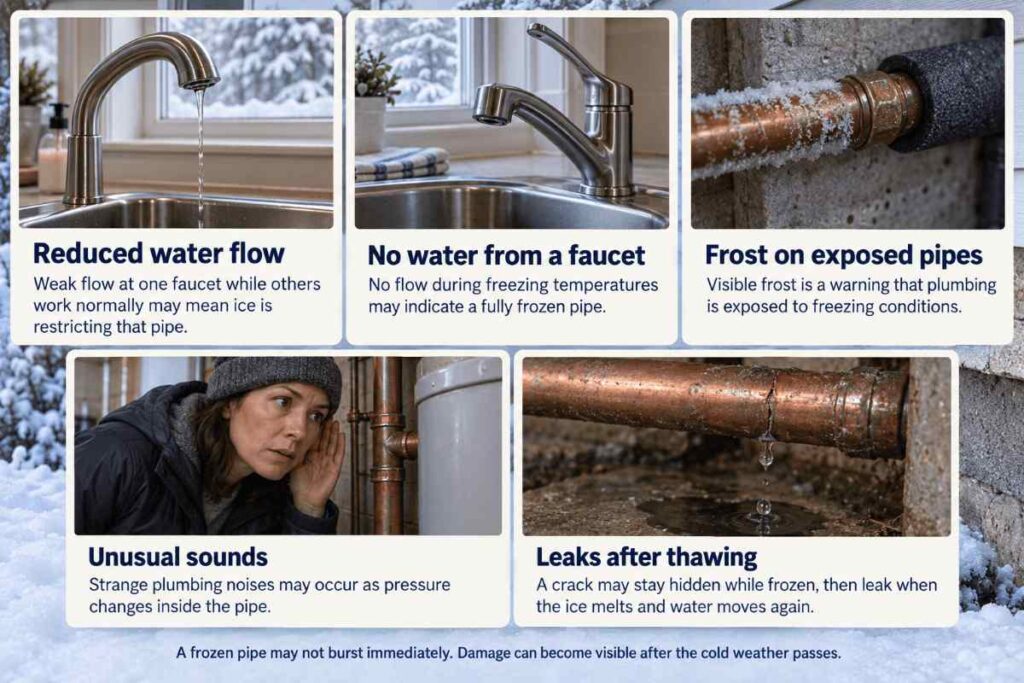
Pay attention to these common indicators:
Reduced Water Flow
If one faucet has weak pressure while other fixtures work normally, ice may be restricting water movement inside the pipe.
No Water From a Faucet
A faucet with no water flow during freezing temperatures may indicate that the pipe has frozen completely.
Frost on Exposed Pipes
Visible frost is a clear warning sign that a pipe is reaching freezing temperatures.
Unusual Sounds
Frozen plumbing can create strange noises as pressure changes inside the pipe.
Leaks After Thawing
A damaged pipe may not leak while frozen. Once the ice melts and water begins moving again, cracks can allow water to escape.
This is why homeowners sometimes discover plumbing damage after the cold weather has already passed.
How Can You Prevent Frozen Pipes During Cold Snaps?
The best way to handle frozen pipes is to prevent them before freezing temperatures arrive.
A few simple preparations can greatly reduce the chance of emergency plumbing repairs.
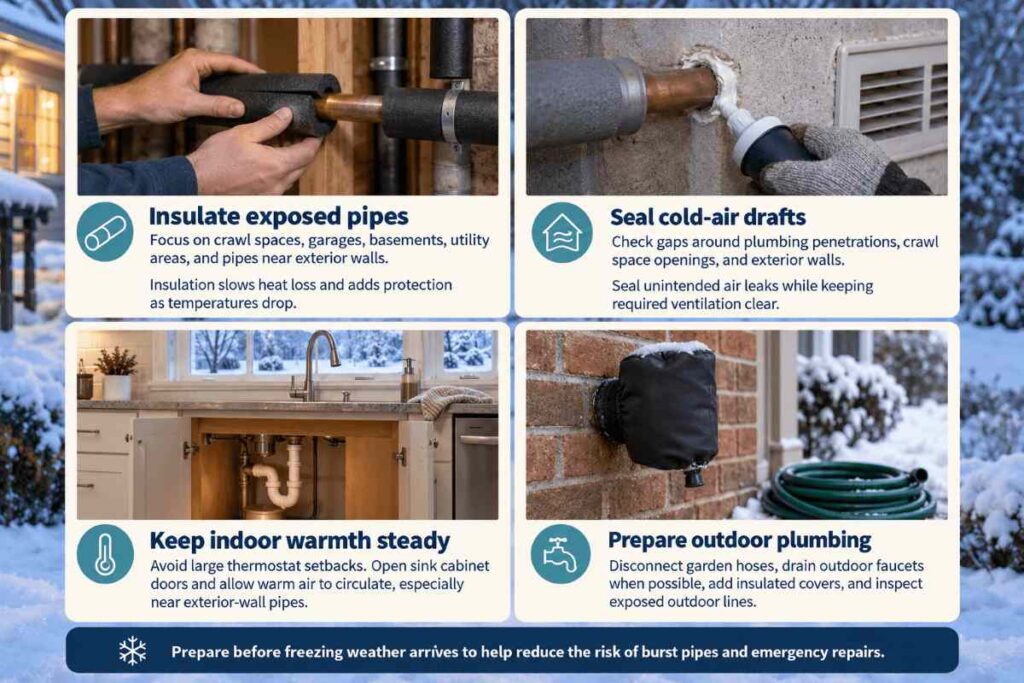
Insulate Exposed Pipes
Pipe insulation is one of the most effective ways to protect vulnerable plumbing lines.
Focus on areas such as:
- Crawl spaces
- Garages
- Basements
- Utility areas
- Exterior walls
Insulation helps slow heat loss and gives pipes additional protection when temperatures drop.
Seal Drafts Around Plumbing Areas
Cold air entering your home can quickly lower temperatures around nearby pipes.
Inspect areas where cold air may enter, including:
- Crawl space openings
- Gaps around plumbing penetrations
- Exterior wall openings
- Unsealed vents
Reducing drafts can help keep vulnerable plumbing areas warmer.
Keep Indoor Temperatures Consistent
Maintaining steady indoor temperatures helps protect your plumbing system during freezing weather.
During a cold snap:
- Avoid lowering your thermostat too much
- Open cabinet doors beneath sinks
- Allow warm air to circulate through the home
These steps are especially helpful for pipes located along exterior walls.
Prepare Outdoor Plumbing Before Freezing Weather
Outdoor plumbing should be addressed before temperatures fall.
Before a cold snap:
- Remove connected hoses
- Drain outdoor faucets
- Add faucet covers
- Inspect exposed outdoor lines
Preventive maintenance is often much less expensive than repairing a burst pipe.
What Should You Do If You Think a Pipe Is Frozen?
If you suspect a frozen pipe, quick action may help prevent a larger problem.
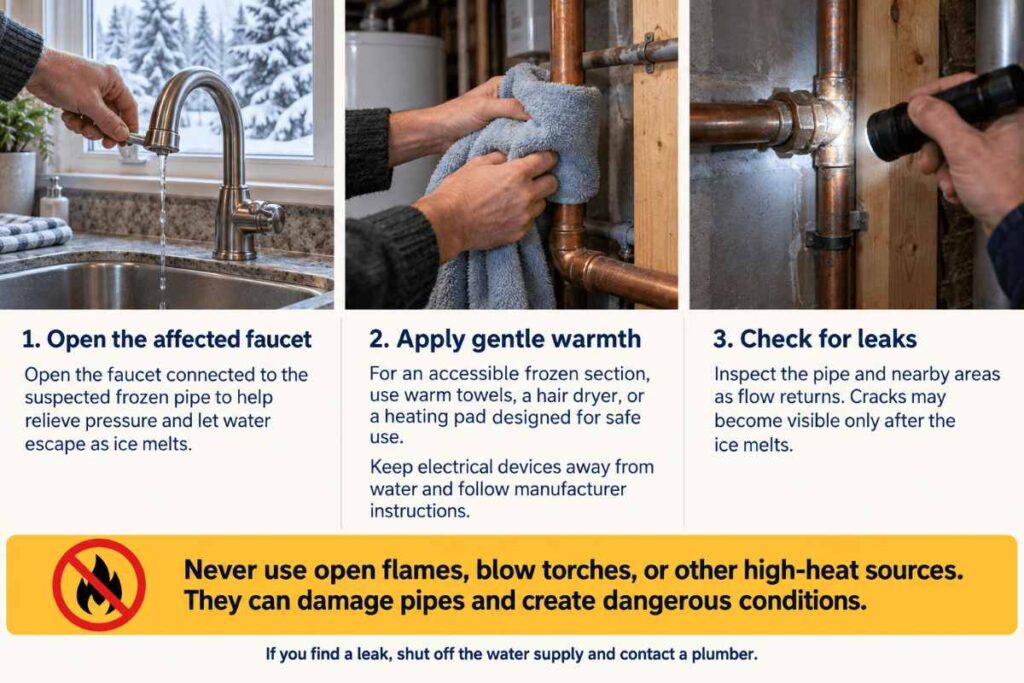
Turn On the Faucet
Open the faucet connected to the frozen pipe. This helps relieve pressure and allows water to escape as the ice begins melting.
Warm the Pipe Safely
If the frozen section is accessible, use safe methods such as:
- Warm towels
- A hair dryer
- A heating pad designed for safe use
Avoid using open flames, blow torches, or other high-heat sources. These methods can damage pipes and create dangerous conditions.
Check for Damage
Once the pipe begins thawing, inspect nearby areas for leaks.
A pipe that froze may already have a crack that becomes visible only after water starts flowing again.
What Should You Do If a Frozen Pipe Bursts?
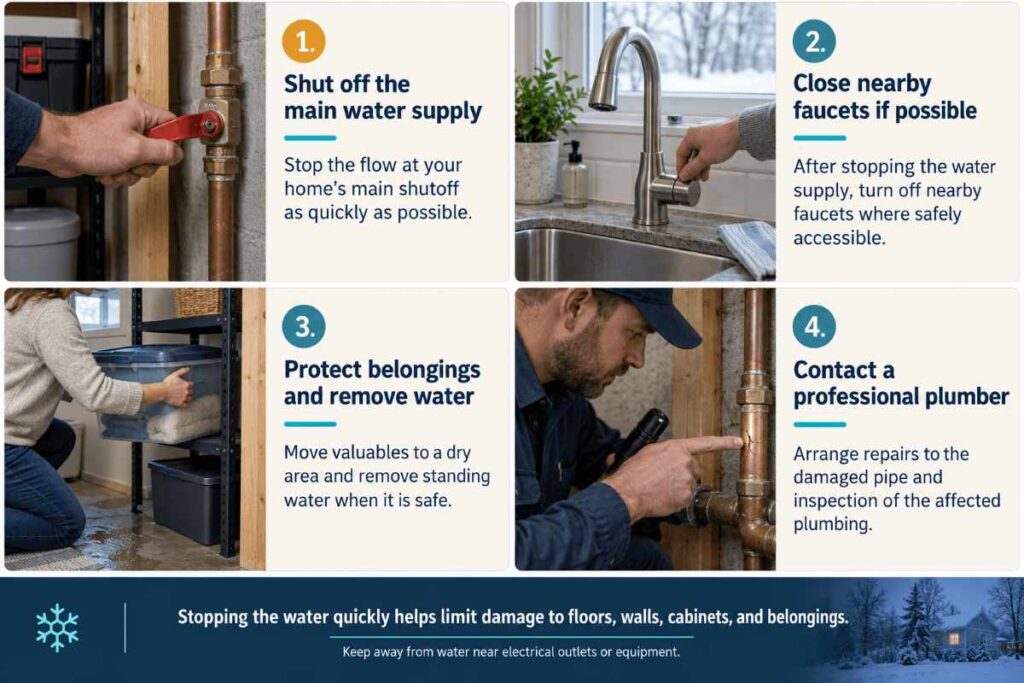
A burst pipe can quickly release gallons of water into your home. Depending on where the damage occurs, water can affect flooring, drywall, insulation, cabinets, and personal belongings.
If a pipe bursts:
- Shut off your home’s main water supply.
- Turn off nearby faucets if possible.
- Remove standing water and protect valuables.
- Contact a professional plumber for repairs.
The faster the water supply is stopped, the better the chance of reducing damage and preventing secondary issues such as mold growth.
Real-World Examples of Frozen Pipe Problems
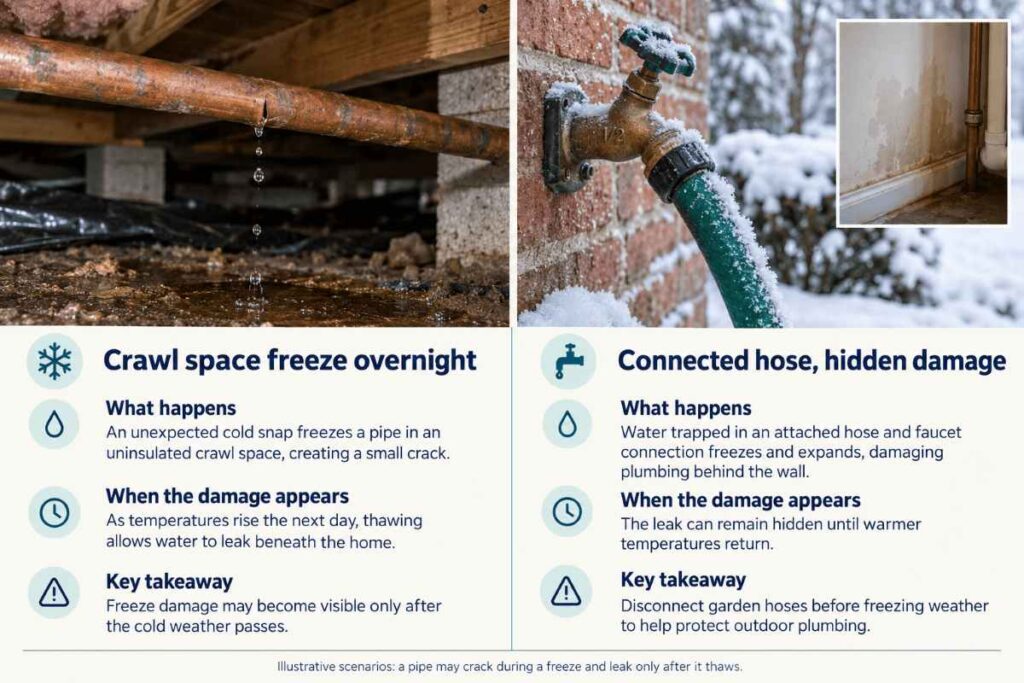
Example 1: A Crawl Space Pipe Freezes Overnight
A homeowner experiences an unexpected freeze after several weeks of mild weather. A plumbing line in an uninsulated crawl space freezes overnight and develops a small crack.
The homeowner does not notice a problem until temperatures rise the next day and water begins leaking beneath the home.
This is a common situation because the damage often appears after the freezing event has already passed.
Example 2: A Connected Garden Hose Causes Hidden Damage
A homeowner leaves a garden hose attached during a cold snap. Water trapped in the hose and faucet connection freezes and expands.
The plumbing line cracks behind the wall, but the leak remains hidden until warmer temperatures return.
Disconnecting hoses before freezing weather is one of the easiest ways to protect outdoor plumbing.
Expert Tips for Protecting Your Plumbing During Cold Weather
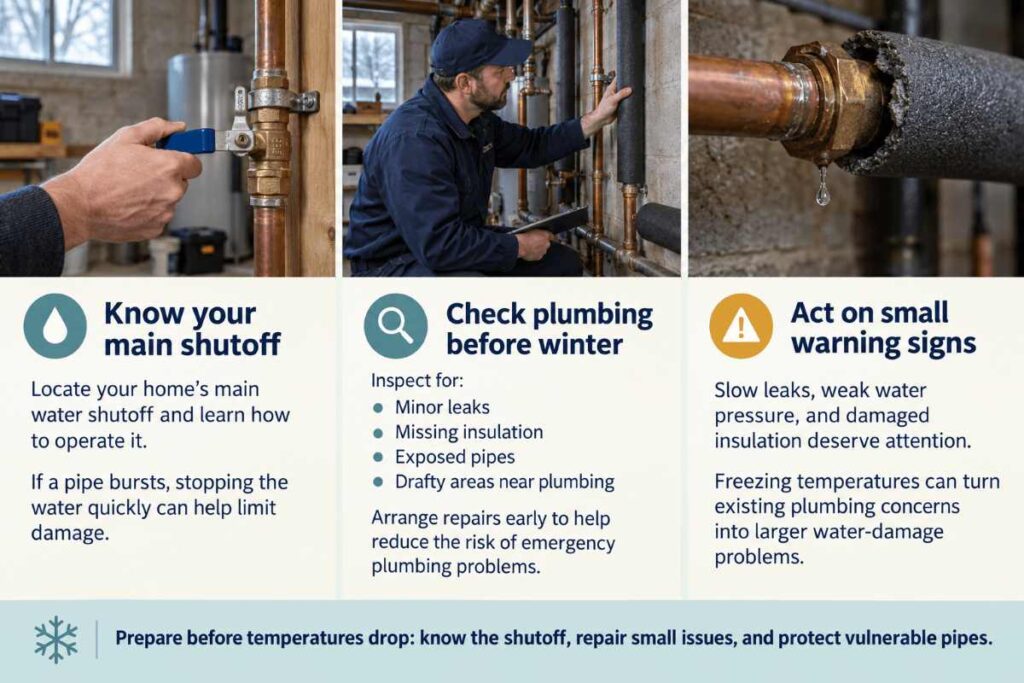
Know Where Your Main Water Shutoff Valve Is Located
Every homeowner should know how to quickly shut off the home’s main water supply.
If a pipe bursts, turning off the water immediately can significantly reduce the amount of damage.
Schedule Repairs Before Winter Problems Begin
Small plumbing issues can become much bigger problems during freezing weather.
Before winter arrives, inspect your plumbing for:
- Minor leaks
- Missing insulation
- Exposed pipes
- Drafty areas near plumbing lines
Taking care of these issues early can help prevent emergency repairs later.
Do Not Ignore Small Warning Signs
A slow leak, weak water pressure, or damaged insulation may not seem urgent during normal conditions.
However, freezing temperatures can quickly turn minor plumbing concerns into major water damage situations.
Conclusion
Frozen pipes are not only a problem for homeowners living through extreme winters. A sudden cold snap can create serious plumbing issues when exposed pipes are not properly protected.
The best defense is preparation. Insulating vulnerable plumbing, protecting outdoor faucets, sealing drafts, and recognizing early warning signs can help prevent frozen pipes and costly repairs.
If you experience frozen pipes, burst pipe damage, or other winter plumbing problems, Chaffee HVAC, Plumbing, & Electrical is here to help. Our experienced team can inspect your plumbing, repair damaged pipes, and provide solutions that help protect your home during cold weather.
For expert help you can trust, contact Chaffee HVAC, Plumbing, & Electrical in Knoxville today to schedule your no-obligation electrical safety inspection.
Frequently Asked Questions
Can pipes freeze even if my home has heat?
Yes. Pipes can still freeze if they are located in areas without enough warm airflow. Crawl spaces, garages, exterior walls, and outdoor plumbing are especially vulnerable.
At what temperature do pipes start freezing?
Pipes are at higher risk when temperatures fall below 32°F, but exposed plumbing can freeze faster depending on insulation, location, and wind exposure.
How long does it take for pipes to freeze?
There is no exact timeline because freezing depends on temperature, pipe location, insulation, and exposure. Pipes in unprotected areas may freeze within only a few hours during a cold snap.
Should I leave my faucet dripping during freezing weather?
A small drip can help keep water moving and reduce freezing risk in certain situations. However, dripping faucets should be combined with insulation and other prevention methods.
Which pipes should I protect during a cold snap?
Focus on pipes located in crawl spaces, garages, exterior walls, basements, and outdoor areas. Any plumbing exposed to freezing temperatures should be inspected and protected.
Can a frozen pipe thaw without bursting?
Yes. Some frozen pipes thaw without damage, but freezing can create cracks that become leaks after the ice melts and water pressure returns.
What should I do if no water comes out of my faucet during freezing weather?
A lack of water may mean the pipe has frozen. Turn on the faucet, safely warm the accessible pipe section, and watch for leaks as it thaws.
Does pipe insulation prevent freezing completely?
Pipe insulation greatly reduces the risk but cannot guarantee pipes will never freeze. Extremely cold temperatures and prolonged exposure can still cause freezing problems.
Why do outdoor faucets freeze more easily?
Outdoor faucets are exposed directly to cold temperatures and often contain trapped water. A connected hose can prevent proper drainage and increase the chance of damage.
When should I call a plumber for frozen pipes?
Call a professional if you cannot safely thaw the pipe, notice leaks, experience a burst pipe, or suspect hidden plumbing damage. Quick assistance can help reduce water damage and restore your plumbing system.

Contact Us
Chaffee HVAC, Plumbing, & Electrical
5725 Ball Camp Pike
Knoxville, TN 37921
865-247-8888 – Cooling/Heating
865-602-3552 – Plumbing
office@coolingheatingplumbing.com
About Us
Your local HVAC company, Chaffee, bring decades of experience to our work. What this means to you as a customer is that you can expect to receive the highest-quality professional service, regardless of your needs.