(865)-247-8888
Dealing with East Tennessee Humidity: Can You Add a Dehumidifier to an Existing AC System?
Key Points
- Retrofitting is Entirely Possible: You can seamlessly add a whole-home dehumidifier to your existing Knoxville HVAC system without replacing your current air conditioner.
- Beat East Tennessee Humidity: Standard AC units cool the air but aren’t built to handle Knoxville’s extreme seasonal moisture; a dedicated dehumidifier bridges the gap.
- Lower Energy Bills: Lowering indoor humidity makes the air feel cooler naturally, allowing you to comfortably raise your thermostat and save on utility costs.
- Protect Your Property: Keeping indoor relative humidity between the EPA-recommended 30% and 50% protects your home from mold, dust mites, and wood warping.
- Professional Setup Matters: Correct integration into your ductwork by licensed experts prevents technical risks like altered static pressure or frozen evaporator coils.
If you have ever stepped outside during a Knoxville July, you know that East Tennessee humidity doesn’t just hit you it wraps around you like a warm, wet blanket. But when that heavy, sticky feeling follows you inside your home, it becomes a major comfort issue.
Many homeowners find themselves cranking down their thermostats to shivering temperatures just to get rid of the indoor moisture. If your home feels like a swamp even when the air conditioner is running, you might be wondering: Can you add a dehumidifier to an existing AC system?
The short answer is a resounding yes. You do not need to buy a brand-new heating and cooling system to get relief from excess moisture. At Chaffee HVAC, Plumbing, & Electrical, we help Knoxville families integrate whole-home dehumidifiers into their current HVAC setups every day, transforming muggy houses into cool, crisp sanctuaries.
Section 1: The Unique Challenges of Knoxville Home Comfort
Our beautiful Great Smoky Mountain backdrop comes with a trade-off: high relative humidity. In Knoxville, summer humidity levels frequently climb well above 70%, which directly impacts how our indoor spaces feel.
To make matters more complex, the local housing stock varies wildly. Here is how Tennessee’s climate and diverse home styles interact with your indoor air:
- The Seasonal Swing: Knoxville experiences intense seasonal shifts. We go from freezing winter snaps to blistering, humid summers. This means your HVAC system has to be incredibly versatile.
- The Cool, Damp Spring/Fall: During the shoulder seasons, outdoor temperatures might sit at a comfortable 70°F, but the humidity remains high. Because your AC isn’t cycling on to cool the house, moisture builds up indoors unchecked.
- Older Home Construction: From historic properties in Fourth & Gill to older ranch homes in West Knoxville, older properties often lack modern vapor barriers and airtight sealing. This allows outdoor moisture to migrate indoors through crawlspaces and walls.
Callout: The Knoxville Climate Reality – Relative humidity levels in Knoxville during summer mornings routinely average between 80% and 90%. Even when it drops later in the day, the overall moisture load remains heavily saturated, keeping your air conditioner under constant stress.
Section 2: How a Whole-Home Dehumidifier Integrates with Your AC
To understand how a dehumidifier attaches to your existing system, it helps to understand what your air conditioner already does. Your AC naturally removes some moisture from the air as an inherent part of the cooling process. As warm indoor air passes over the cold evaporator coil, water vapor condenses into liquid and drains away.
However, standard air conditioners are designed to regulate temperature, not humidity. When the air is exceptionally muggy, an AC system simply cannot keep up with the moisture load without overcooling your home.
How Retrofitting Works
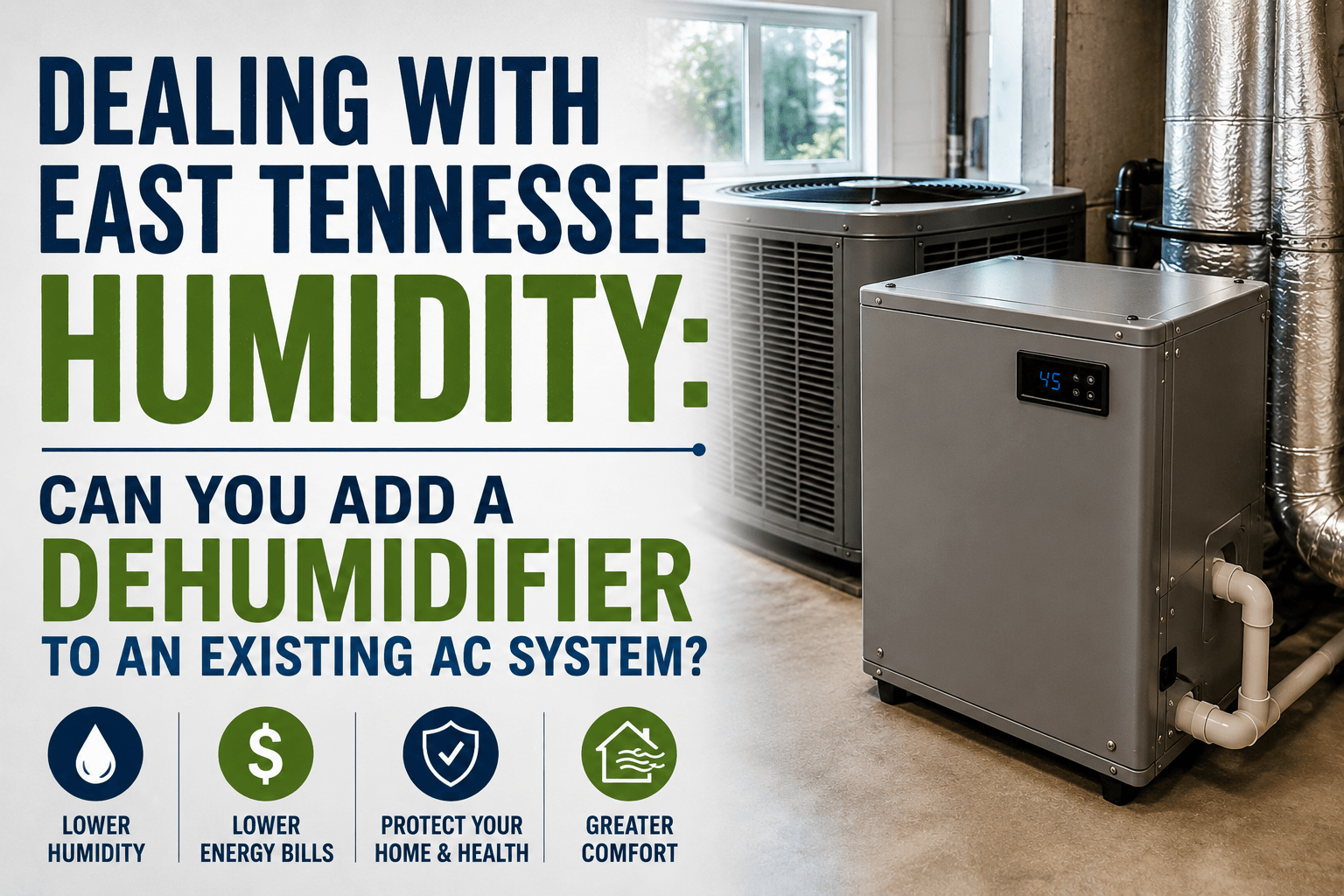
When our technicians install a whole-house dehumidifier, we integrate it directly into your existing HVAC ductwork, usually on the return air side. The dehumidifier pulls damp air out of your living spaces before it reaches the AC, extracts the excess water via its own dedicated refrigeration cycle, drains the water away into your plumbing system, and delivers dry air back into the stream.
Is Your Home Too Muggy?
Tip: Look for these common warning signs that your indoor air quality is suffering:
- Your skin feels sticky or clammy indoors, even when the AC is running.
- Windows have a persistent film of condensation or fog.
- Musty, damp odors linger in the basement, crawlspace, or closets.
- Your AC has to run constantly to keep you comfortable.
Section 3: Why This Is a Smart Investment for Your Tennessee Home
Adding a dehumidifier to your existing system solves several interconnected problems that local homeowners face regarding energy bills, comfort, and home health.
Lower Energy Costs
Human comfort is dictated heavily by humidity; lower humidity makes air feel cooler than it actually is because it allows for more efficient sweat evaporation from human skin. In alignment with thermodynamic principles backed by energy.gov, controlling indoor humidity allows you to set your thermostat to a higher, energy-saving temperature while maintaining the exact same level of comfort.
While a standard industry rule of thumb shows homeowners can comfortably raise settings from 71°F to 75°F in dry air, the Department of Energy notes you can save up to 10% a year on cooling by optimizing these setbacks. This reduces the workload on your primary cooling system, saving you money on utility bills and preventing premature breakdowns that require timely air conditioning repair in Knoxville.
Protecting Your Property
Excess moisture is destructive. It can warp hardwood flooring, ruin drywall, and cause paint to peel. Furthermore, high humidity creates a breeding ground for dust mites and biological growth.
Callout: What the Experts Recommend – The U.S. Environmental Protection Agency explicitly states that indoor relative humidity should be kept between 30% and 50%. Biological growth, mold spores, and dust mite populations proliferate rapidly once your home consistently crosses the 60% humidity threshold.
Section 4: DIY vs. Professional HVAC Installation
While you can purchase small, portable dehumidifiers at local hardware stores, they are loud, require manual emptying, and only treat a single room. A whole-home system treats every square foot of your property silently and automatically because it is permanently plumbed straight into your home’s waste lines.
Because a whole-home unit must be spliced into your existing metal or flexible ductwork, wired into your home’s electrical system, and routed into a proper drain, this is not a weekend DIY project. If a unit is installed in an unconditioned, vented crawlspace or attic without properly isolating the ductwork, the machine will inefficiently pull ambient moisture from the outdoors rather than the living space.
[Expert Quote: “Splicing a dehumidifier into an existing system requires an exact understanding of static pressure and airflow. If a unit is installed incorrectly by an amateur, it can alter static pressure and drop airflow below the required threshold. This drops the temperature across the evaporator coil below freezing, causing the AC coils to freeze up and potentially destroying your compressor.” – Lead Chaffee HVAC Technician]
By hiring a licensed professional, you guarantee local mechanical code compliance, preserve your existing equipment warranties, and ensure a precise, clean installation.
Section 5: Why Choose Chaffee HVAC, Plumbing, & Electrical
At Chaffee, we take pride in being a comprehensive, single-source provider for Knoxville home comfort. Because whole-home dehumidification touches multiple systems, our combined expertise gives us a unique edge:
- Expert HVAC Services: We evaluate your current duct capacity, perform load calculations, and install top-tier dehumidifiers perfectly tuned to your current AC.
- Pro Plumbing Integration: Dehumidifiers generate gallons of water daily. Our plumbing team ensures that this condensation drains safely into your home’s waste lines or a dedicated sump pump, preventing leaks.
- Safe Electrical Connections: A whole-house unit requires dedicated power. Our certified electricians can handle any necessary breaker panel adjustments safely without overloading your home’s circuits.

Section 6: Quick Maintenance Tips for Homeowners
Key Reminders for Peak Efficiency:
- Check Filters Routinely: Change your primary HVAC filter every 30 to 90 days to keep airflow optimal and maintain balanced system pressure.
- Monitor Your Thermostat: If you install a whole-home dehumidifier, consider upgrading to a smart thermostat or “thermidistat” that lets you track and control both temperature and humidity from one screen.
- Maintain the Ideal Range: Program your system to target the 30% to 50% humidity sweet spot. Avoid over-dehumidifying below 30%, which can cause structural wood to crack and irritate your respiratory system.
- Schedule Annual Tune-Ups: Regular HVAC maintenance in Knoxville TN, ensures that both your air conditioner and your add-on dehumidifier are operating perfectly before the intense summer rush hits.
Section 7: Protecting Your Peace of Mind All Year Long
Investing in your indoor air quality is about more than just beating the summer heat; it’s about protecting your family’s health and comfort year-round. Controlling your indoor climate prevents mold development, protects structural wood, and ensures you breathe clean, crisp air through every seasonal cold snap and heatwave Tennessee throws your way.
If you are tired of living in a sticky, uncomfortable home, let’s get it fixed.
For expert help you can trust, contact Chaffee HVAC, Plumbing, & Electrical in Knoxville today to explore your options for whole-home dehumidification.
Section 7: Protecting Your Peace of Mind All Year Long
Investing in your indoor air quality is about more than just beating the summer heat; it’s about protecting your family’s health and comfort year-round. Controlling your indoor climate prevents mold development, protects structural wood, and ensures you breathe clean, crisp air through every seasonal cold snap and heatwave Tennessee throws your way.
If you are tired of living in a sticky, uncomfortable home, let’s get it fixed.
For expert help you can trust, contact Chaffee HVAC, Plumbing, & Electrical in Knoxville today to explore your options for whole-home dehumidification.
For expert help you can trust, contact Chaffee HVAC, Plumbing, & Electrical in Knoxville today to schedule your no-obligation electrical safety inspection.
Frequently Asked Questions
Can you run a dehumidifier and an air conditioner at the same time?
Yes. When integrated into your whole-home system, they work together seamlessly. The dehumidifier removes the moisture load from the air, allowing the air conditioner to cool the home much more efficiently and quickly.
Is it better to buy a bigger AC or add a dehumidifier?
Adding a dehumidifier is much better. Oversizing an air conditioner to handle humidity actually backfires; a system that is too large will cool the house too fast and shut off before it has a chance to remove moisture, leaving you with a cold, clammy home.
Where does a whole-house dehumidifier actually sit?
It is typically installed in your utility closet, basement, attic, or crawlspace directly adjacent to your existing indoor HVAC unit, provided these spaces are properly sealed or the unit is configured tightly to pull air exclusively from the home’s indoor return loop.
How does the water drain out of a whole-home dehumidifier?
Unlike portable units that you have to empty manually every day, a whole-home unit is permanently plumbed into a nearby floor drain, condensate pump, or waste line so it empties itself automatically.
Will adding a dehumidifier lower my cooling bills?
Yes. Because dry air feels significantly cooler than damp air, you can raise your thermostat by a few degrees without sacrificing comfort, which reduces your overall electricity consumption.
Does a dehumidifier clean the air like an air purifier?
No. Dehumidifiers strictly remove water vapor from the air, while air purifiers capture particles like dust, pollen, and smoke. However, by lowering humidity, a dehumidifier stops dust mites and mold from multiplying.
How long do whole-house dehumidifiers typically last?
According to established mechanical service life standards, a professionally installed whole-home dehumidifier will generally last between 10 to 15 years with proper annual HVAC maintenance in Knoxville TN.
Can a dehumidifier be added to a ductless mini-split system?
Whole-home units require central ductwork. For ductless homes, we recommend localized dehumidification strategies or utilizing the built-in “dry mode” feature common on high-quality mini-split systems.
What should the ideal indoor humidity level be in Knoxville?
For ideal comfort and structural safety, you should aim to keep your indoor relative humidity between 30% and 50%. Anything above 60% invites mold growth and dust mites.
Does a whole-house dehumidifier make a lot of noise?
No. Because the unit is installed away from your main living areas in a basement, crawlspace, or utility room and integrates directly into your existing ducts—you will barely hear it running.

Contact Us
Chaffee HVAC, Plumbing, & Electrical
5725 Ball Camp Pike
Knoxville, TN 37921
865-247-8888 – Cooling/Heating
865-602-3552 – Plumbing
office@coolingheatingplumbing.com
About Us
Your local HVAC company, Chaffee, bring decades of experience to our work. What this means to you as a customer is that you can expect to receive the highest-quality professional service, regardless of your needs.