Breathe Easy: How Knoxville’s Humidity and Pollen Shape Your HVAC Performance
In East Tennessee, the beauty of the Smoky Mountains comes with a hidden price for homeowners: a climate that is as demanding on machinery as it is on the respiratory system. For those relying on HVAC in Knoxville, Tennessee, the local environment presents a “double-threat” of relentless humidity and record-breaking pollen counts.
Expert Quote: “In the Tennessee Valley, we don’t just treat temperature; we manage an entire ecosystem. Humidity and pollen are the silent killers of system longevity.”
To maintain a comfortable home in 2026, you must understand how these two environmental factors work together to degrade your system’s efficiency and how you can fight back.
The “Steam Season”: Humidity’s Toll on Knoxville Systems
Knoxville’s subtropical climate is characterized by high dew points, particularly from May through September. During these months, your air conditioner is doing more than just cooling the air it is acting as a massive dehumidifier.
1. Accelerated Component Wear
When humidity levels hover above 60%, your HVAC in Knoxville, Tennessee must run longer cycles to pull moisture from the air. This increased “run time” leads to faster wear on the compressor and blower motor.
Callout: If your system is slightly oversized, it may “short-cycle,” turning off before it has successfully removed the humidity, leaving your home feeling “clammy” even at 70°F.
2. The Mold and Biofilm Risk
Moisture is the enemy of metal and electronics. High humidity causes condensation to linger on the evaporator coils and within the condensate drain pan.
Tip: Look out for “Dirty Sock Syndrome” a foul, musty odor caused by biofilm buildup on damp coils.
In the dark, damp interior of your air handler, this creates the perfect breeding ground for mold and biofilm. This not only creates foul odors but can eventually bridge the fins on your coils, choking off airflow and causing the system to freeze up.
The Pollen Punch: Why Knoxville Filters Work Overtime
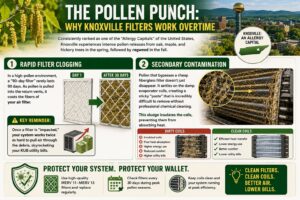
Consistently ranked as one of the “Allergy Capitals” of the United States, Knoxville experiences intense pollen releases from oak, maple, and hickory trees in the spring, followed by ragweed in the fall.
1. Rapid Filter Clogging
In a high-pollen environment, a “90-day filter” rarely lasts 90 days. As pollen is pulled into the return vents, it coats the fibers of your air filter.
Key Reminder: Once a filter is “impacted,” your system works twice as hard to pull air through the debris, skyrocketing your KUB utility bills.
2. Secondary Contamination
Pollen that bypasses a cheap fiberglass filter doesn’t just disappear. It settles on the damp evaporator coils, creating a sticky “paste” that is incredibly difficult to remove without professional chemical cleaning. This sludge insulates the coils, preventing them from absorbing heat.
Protecting Your System: The 2026 Strategy
To combat the unique challenges of the Tennessee Valley, local HVAC experts recommend a proactive, three-pronged approach:
- Upgrade to Specialized Filtration Move beyond the basic 1-inch pleated filters. In Knoxville, MERV 11 to MERV 13 filters are the standard for 2026. These are dense enough to capture microscopic pollen and mold spores without severely restricting airflow.
Tip: For severe allergies, consider a Whole-Home HEPA bypass system or an iWave-R ionizer to clump particles for easier filtration.
- Implement Whole-Home Dehumidification Standard air conditioners cool first and dehumidify second. In Knoxville, humidity often remains high even when the temperature is mild. A dedicated whole-home dehumidifier integrated into your ductwork can maintain a steady 45% humidity level regardless of the AC cycle.
- Professional Drain Line Flushing Given the “sludge” created by the mix of pollen and condensation, Knoxville homeowners should ensure their condensate drain lines are flushed twice a year.
Callout: A clogged drain line is the #1 cause of emergency AC shutdowns during a Tennessee July.
Financial Incentives & Maintenance Benchmarks
Tip: Don’t miss out on the 25C Tax Credit! Federal incentives for energy-efficient heat pumps have been extended through 2032, offering up to $2,000 annually.
If you are managing HVAC in Knoxville, Tennessee, your maintenance schedule should follow these regional benchmarks:
- Filter Checks: Every 30 days during peak spring and fall pollen seasons.
- Outdoor Coil Cleaning: Annually in the spring to remove “cottonwood fuzz.”
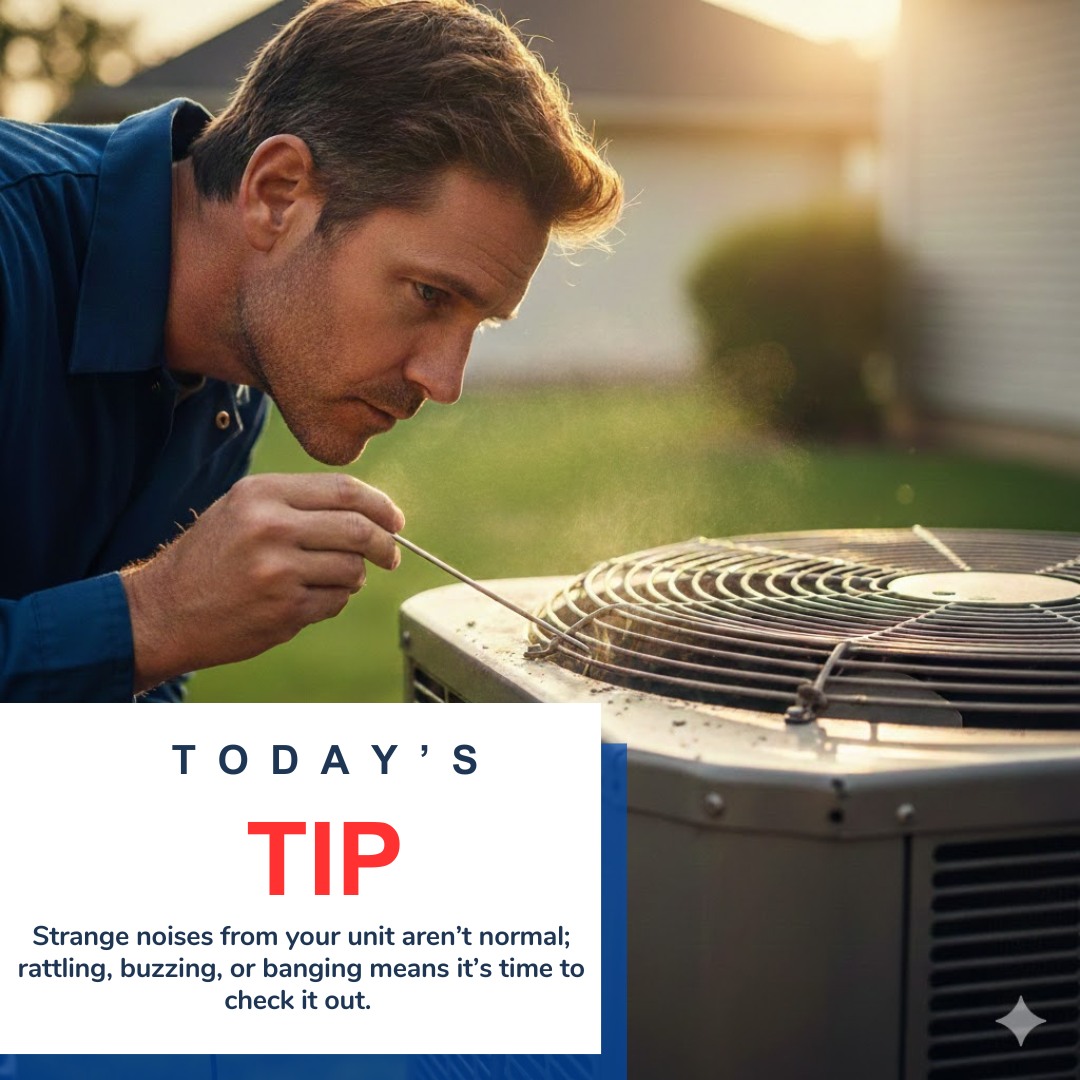
- Professional Tune-Ups: Twice a year (Spring for AC, Fall for Heat Pumps).
For expert help you can trust, contact Chaffee HVAC, Plumbing, & Electrical in Knoxville today to schedule your no-obligation electrical safety inspection.
Frequently Asked Questions
How do high humidity levels affect HVAC systems in Knoxville?
When humidity levels hover above 60%, your system must run longer cycles to pull moisture from the air. This extended run time causes accelerated component wear on the compressor and blower motor. Additionally, high humidity causes condensation to linger on evaporator coils and in the drain pan, which can lead to mold and biofilm buildup—often noticed as a musty odor called “Dirty Sock Syndrome.” This buildup can choke off airflow and cause the system to freeze up.
What happens if an HVAC system is slightly oversized in a humid climate?
An oversized unit will experience a problem known as “short-cycling.” The system cools the home down so quickly that it shuts off before it has a chance to successfully extract moisture from the air. This leaves your indoor air feeling uncomfortably “clammy” even if the thermostat reads a cool 70°F.
What is "Dirty Sock Syndrome" and what causes it?
“Dirty Sock Syndrome” refers to a foul, musty odor emanating from your vents. It is caused by mold and biofilm buildup that thrives in the dark, damp interior of your air handler when condensation continuously lingers on the evaporator coils and within the condensate drain pan.
Warning: If left unmanaged, this biological buildup can eventually bridge the fins on your coils, choking off essential system airflow and causing the entire unit to freeze up.
Why do standard "90-day" air filters fail to last three months in Knoxville?
Knoxville is frequently ranked as one of the top “Allergy Capitals” of the United States. Due to intense seasonal pollen dumps from oak, maple, and hickory trees in the spring, followed by ragweed in the autumn, airborne debris quickly coats and impacts filter fibers. During these peak seasons, a standard filter will clog long before its 90-day rating.
What damage can occur if pollen bypasses a low-quality air filter?
When cheap fiberglass filters fail to trap pollen, the particles settle directly onto the damp evaporator coils. This creates a sticky, sludge-like “paste” that insulates the coils, directly preventing them from absorbing heat. This secondary contamination can skyrocket your KUB utility bills and requires professional chemical cleaning to remove.
What is the recommended air filtration standard for Knoxville homes in 2026?
Basic 1-inch pleated filters are no longer sufficient for the region’s heavy allergen load. The standard upgrade recommendation is to use MERV 11 to MERV 13 filters. These are dense enough to trap microscopic pollen and mold spores effectively without putting undue stress on your system’s airflow.
For severe allergy sufferers: Experts recommend adding a Whole-Home HEPA bypass system or an iWave-R ionizer to clump particles together for easier filtration.
What happens if an HVAC system is slightly oversized in a humid climate?
An oversized unit will experience a problem known as “short-cycling.” The system cools the home down so quickly that it shuts off before it has a chance to successfully extract moisture from the air. This leaves your indoor air feeling uncomfortably “clammy” even if the thermostat reads a cool 70°F.
What is the leading cause of emergency AC shutdowns during a Tennessee July?
The number one culprit behind mid-summer emergency system shutdowns is a clogged condensate drain line. The thick sludge created when heavy pollen mixes with lingering coil condensation easily backs up the drain line, triggering automatic safety switches that cut power to your air conditioner.
What are the key maintenance benchmarks for a Knoxville HVAC system?
To maximize your system’s efficiency and longevity, you should follow this proactive regional schedule:
- Filter Checks: Every 30 days during peak spring and fall pollen seasons.
- Drain Line Flushing: Twice a year to prevent sludge backups.
- Outdoor Coil Cleaning: Annually in the spring to clear away debris like “cottonwood fuzz.”
- Professional Tune-Ups: Twice a year (Spring for the AC setup, and Fall for Heat Pumps).
Are there federal tax incentives available for upgrading to a more efficient system?
Yes. Homeowners can take advantage of the federal 25C Tax Credit, which has been extended to run through 2032. This incentive allows you to claim up to $2,000 annually for installing qualifying, energy-efficient heat pumps.